
Derek Fung
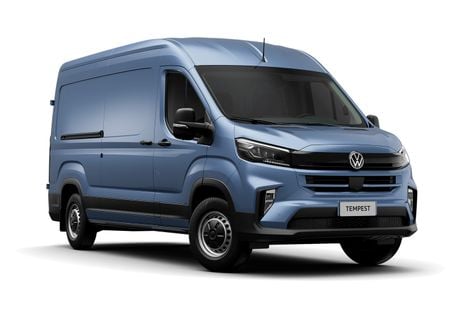
Volkswagen rebadges a Chinese van to create a Tempest
The Tempest that debuted in Brazil last week has the honour of being Volkswagen's first badge-engineered Chinese vehicle.
1 Hour Ago
Ferrari has ditched hybrid power and added a new aerodynamic package to create a lighter, more focused version of its 296 supercar.

Journalist
Journalist
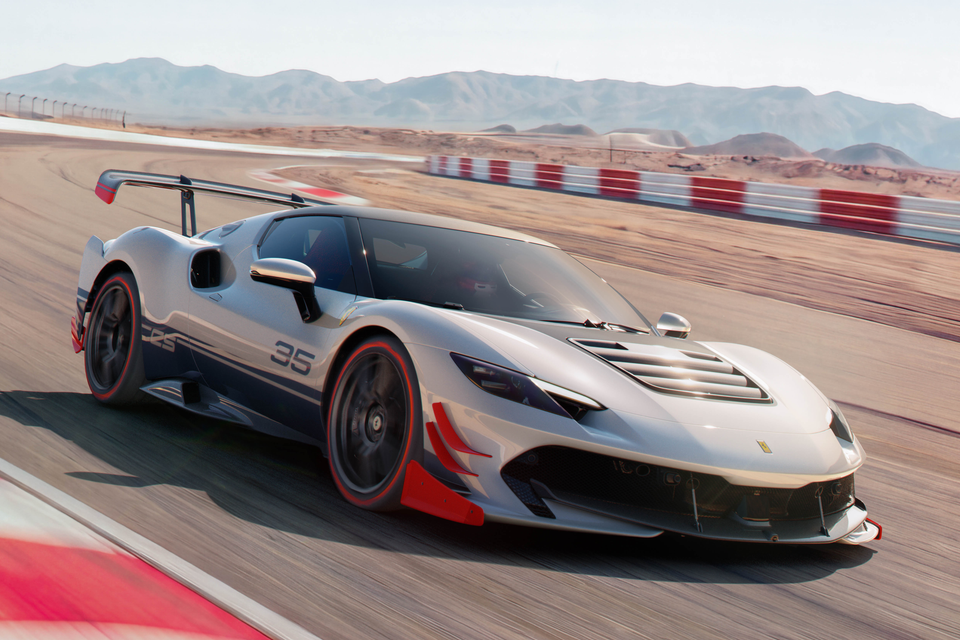
Ferrari has revived one of its most recognisable performance badges for a new road-going version of the 296, ditching hybrid power in favour of a lighter, more focused V6 supercar.
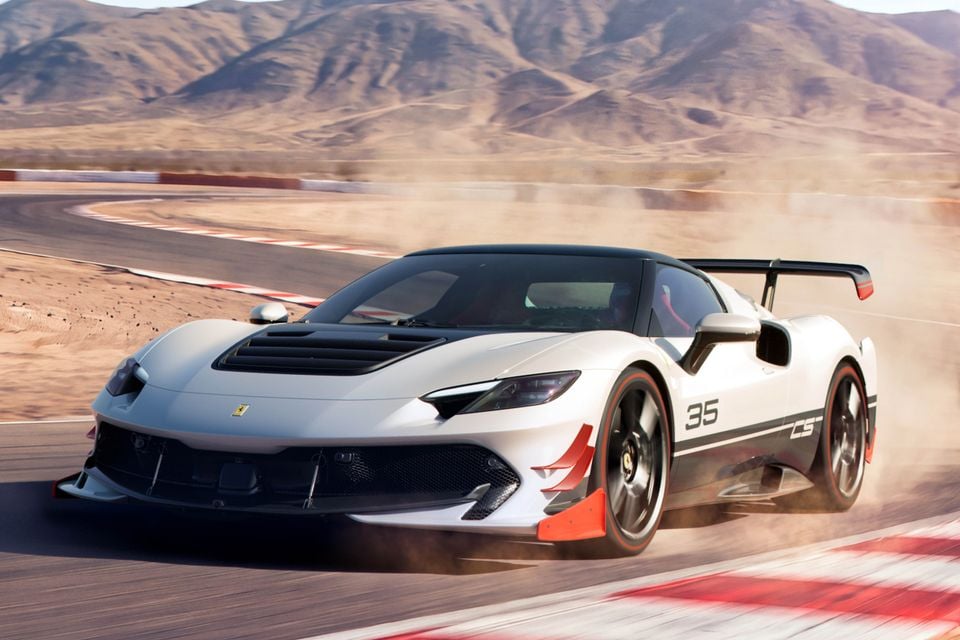
Called the Ferrari 296 Challenge Stradale, the new model takes inspiration from the Italian marque's 296 Challenge Evo race car, with extensive changes to its powertrain, aerodynamics, chassis and interior.
Unlike the standard 296 GTB and more powerful 296 Speciale, the Challenge Stradale does away with the plug-in hybrid (PHEV) system entirely, relying solely on a twin-turbocharged 3.0-litre V6 engine.
The engine produces 493kW and 740Nm, with power sent to the rear wheels through an eight-speed dual-clutch automatic transmission.
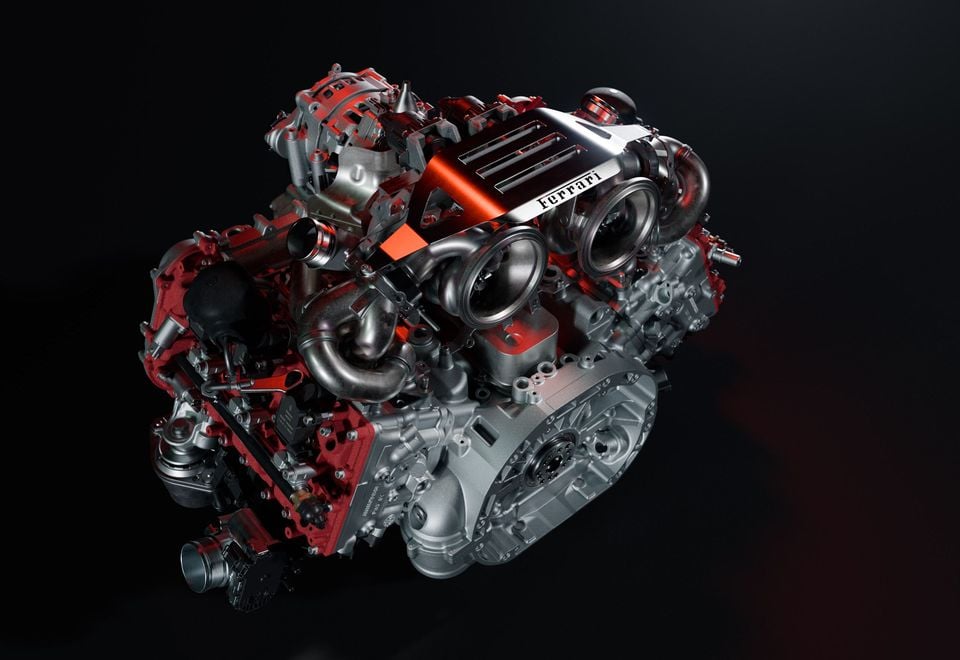
That makes it less powerful than the standard 296 GTB's combined hybrid system, but the removal of its electric motor and battery brings substantial weight savings. Ferrari quotes a dry weight of just 1330kg, 140kg lighter than the 1470kg 296 GTB.
The Challenge Stradale can accelerate from 0-100km/h in 2.8 seconds and 0-200km/h in 7.9 seconds, with a top speed exceeding 300km/h.
For comparison, the standard 296 GTB produces a combined 610kW and 740Nm from its hybrid powertrain, with a claimed 0-100km/h time of 2.9 seconds.
To compensate for the loss of electric assistance, Ferrari has revised the turbochargers, boost pressure management and valve timing to improve throttle response and reduce turbo lag.
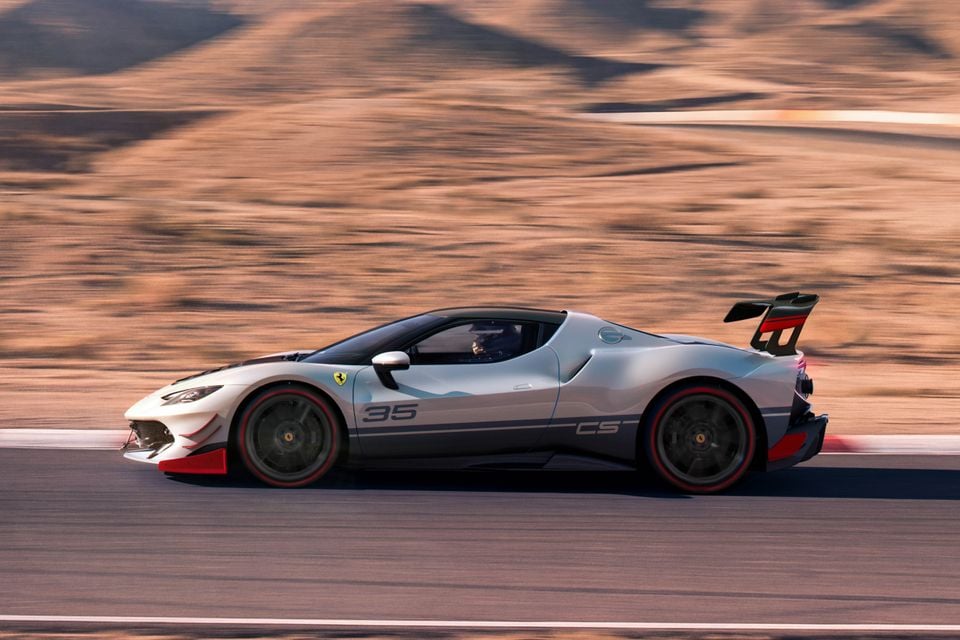
The engine is paired with a revised eight-speed transmission, with Ferrari claiming gear changes take around 170 milliseconds under high load and engine speeds. At lower speeds, a different system prioritises smoother shifts.
The Challenge Stradale also gets a new exhaust system with larger twin tailpipes, designed to reduce back pressure and enhance the V6's higher-pitched engine note. An optional track-only exhaust is available, although it must be fitted and removed by an authorised Ferrari dealership.
The car's aerodynamic package is another major departure from the standard 296.
Developed alongside the 296 Challenge EVO race car, the road-going Challenge Stradale gains a redesigned front splitter, additional flicks and side wings, a revised underbody and a large fixed rear wing.
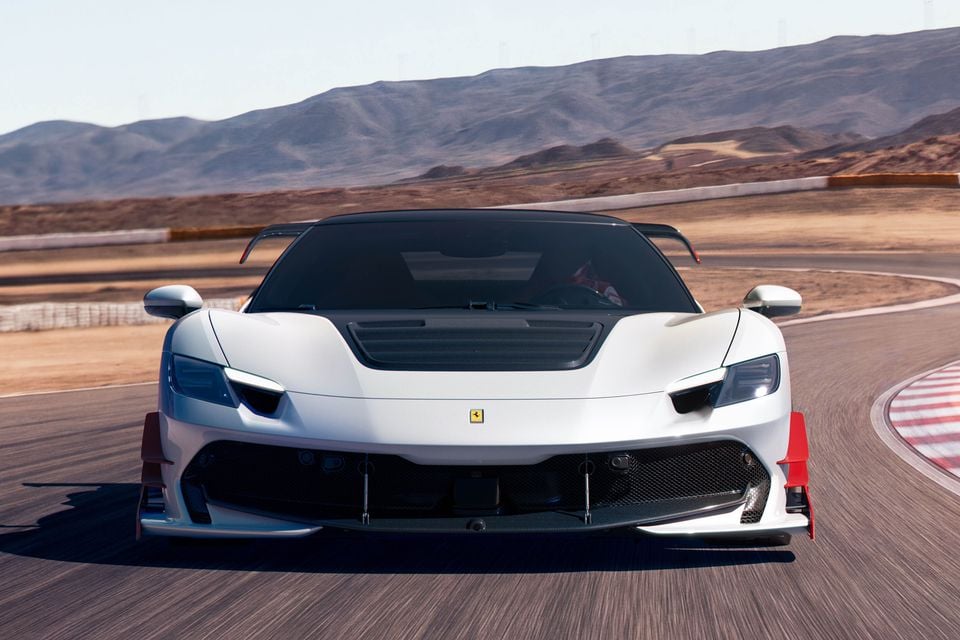
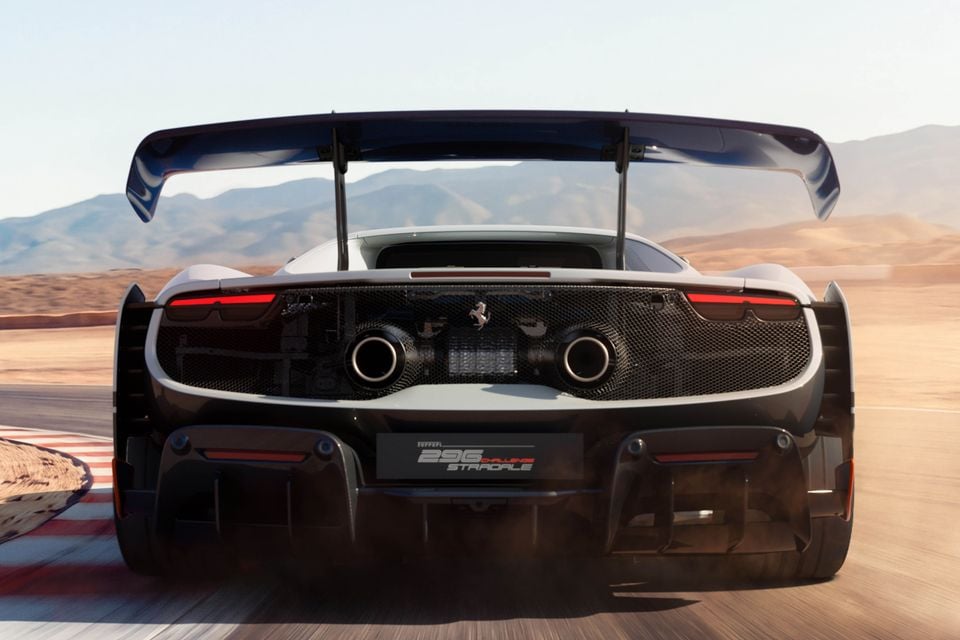
Ferrari says the aerodynamic changes allow the car to generate up to 617kg of downforce at 250km/h, with the rear wing alone accounting for 270kg.
The suspension has also been recalibrated, with dedicated spring rates, revised kinematics and bespoke semi-active damper settings. Ferrari claims lateral performance is up by seven per cent, stability has improved by 34 per cent, and body roll has been reduced by 68 per cent compared with the 296 GTB.
Braking is handled by larger carbon-ceramic discs, measuring 398mm at the front and 380mm at the rear. The cooling system has also been redesigned to compensate for the loss of regenerative braking.
The Challenge Stradale rides on bespoke Pirelli P Zero R tyres, with semi-slick P Zero Trofeo RS tyres also available.
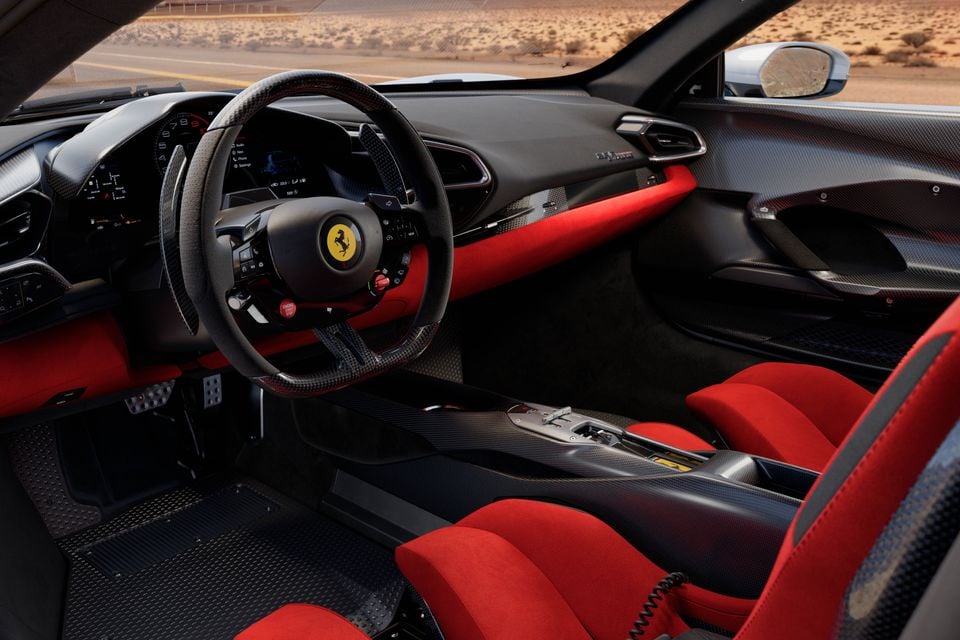
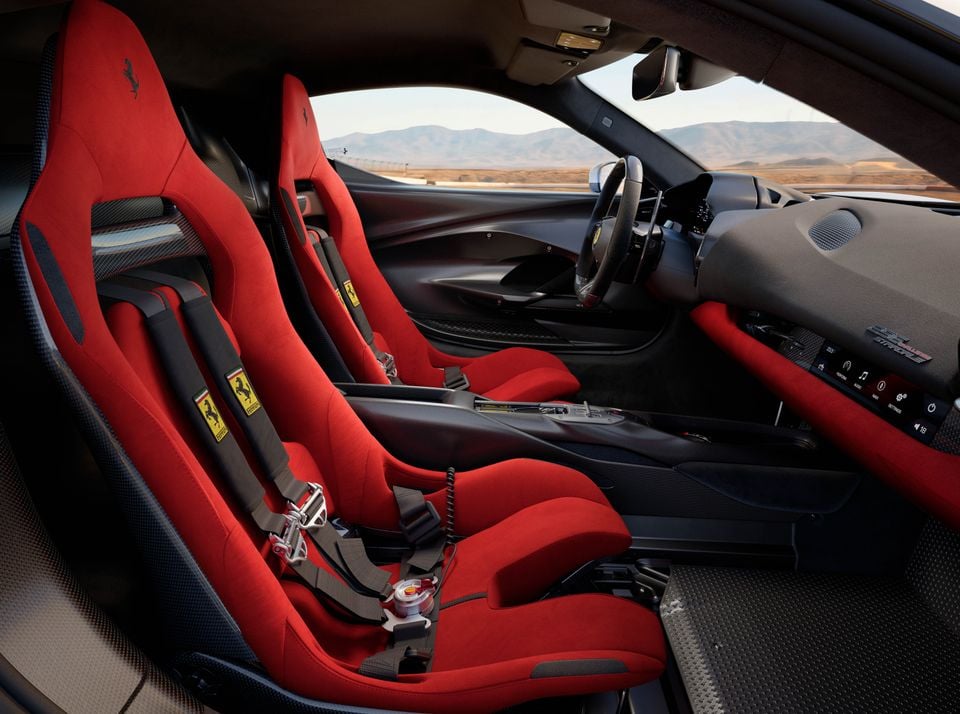
Inside, the cabin retains the same basic layout of the 296 GTB but adopts a more stripped-back, motorsport-inspired approach.
The door panels are now single-piece carbon-fibre components without armrests or storage pockets, while an optional specification removes additional trim beneath the seats and centre console, leaving parts of the chassis exposed.
Ferrari also offers optional carbon-fibre tubular seats, which are 25 per cent lighter than its standard racing seats, along with forged wheels that reduce unsprung mass by approximately 11.9kg.
Despite its track-focused intentions, the Challenge Stradale remains a road-legal production car and retains driver assistance technology like adaptive cruise control, autonomous emergency braking, lane-keep assist and blind-spot monitoring. The model also retains Ferrari's seven-year scheduled maintenance program.
Ferrari has yet to confirm Australian pricing or availability for the 296 Challenge Stradale, but UK pricing has been reported at £260,000 (~A$513,000).
The Challenge Stradale name was previously used on the 360 CS in 2003, a lightweight, track-focused version of Ferrari's mid-engined V8 supercar.
The new model continues that philosophy, prioritising reduced weight, improved aerodynamics and a more direct driving experience over outright power.
Dave is a Kiwi motoring journalist with experience in motorcycle racing, new car sales, radio and communications.
Derek Fung
1 Hour Ago

Max Davies
2 Hours Ago


Damion Smy
2 Hours Ago

William Stopford
17 Hours Ago
William Stopford
18 Hours Ago

James Wong
20 Hours Ago
Add CarExpert as a Preferred Source on Google so your search results prioritise writing by actual experts, not AI.