




Damion Smy
Ford Australia says recalls haven’t damaged its brand image
Ford Australia has issued more recalls than any other automaker so far in 2026, after also topping the list last year, but says they haven't damaged its brand image.
2 Days Ago
The second model in the German brand’s upscale Mythos range brings more power, ferocious pace and a limited global production run.
Deputy News Editor
Deputy News Editor
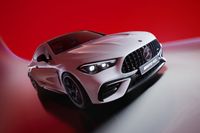
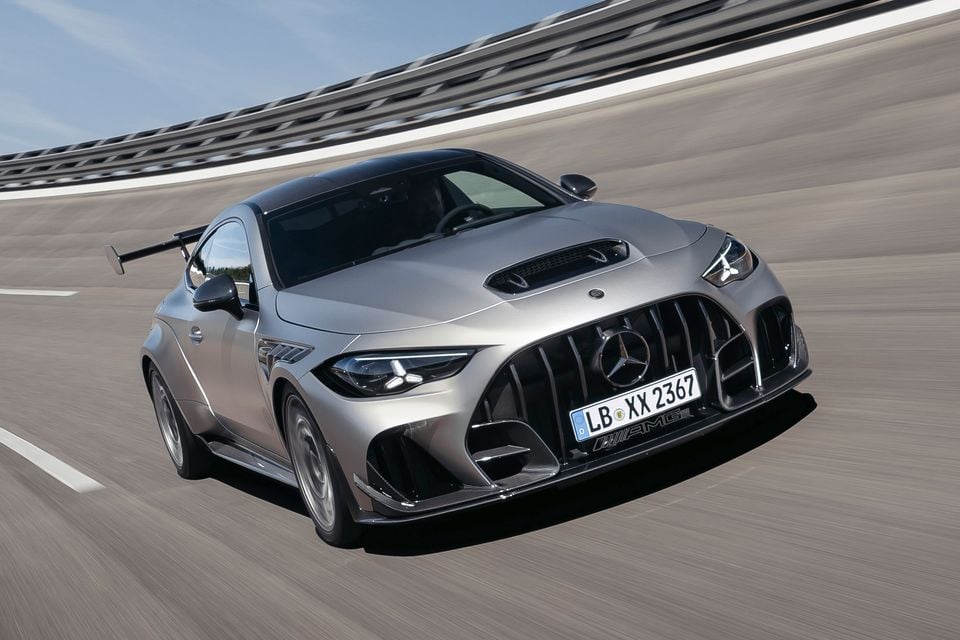
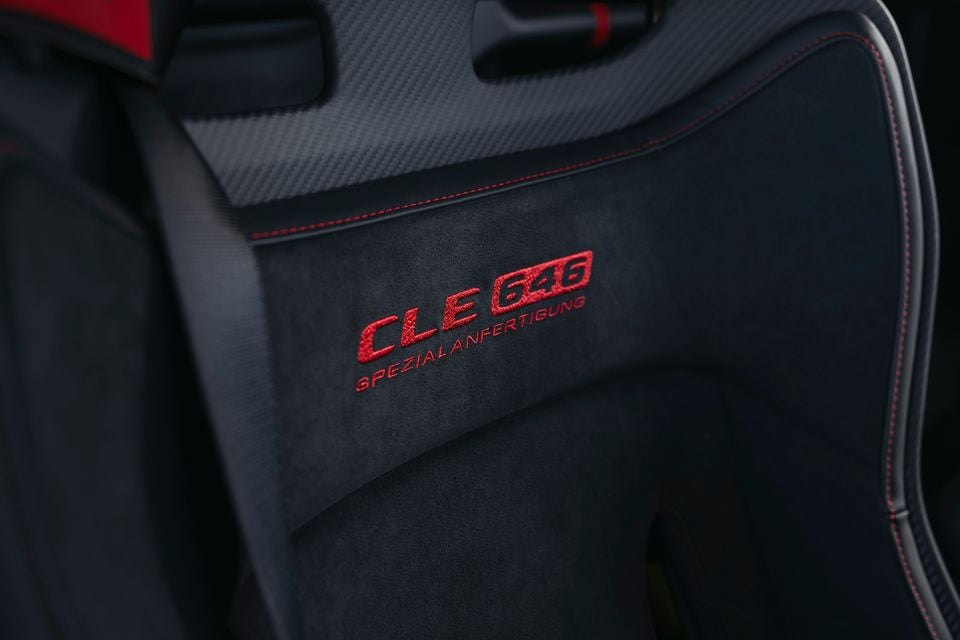
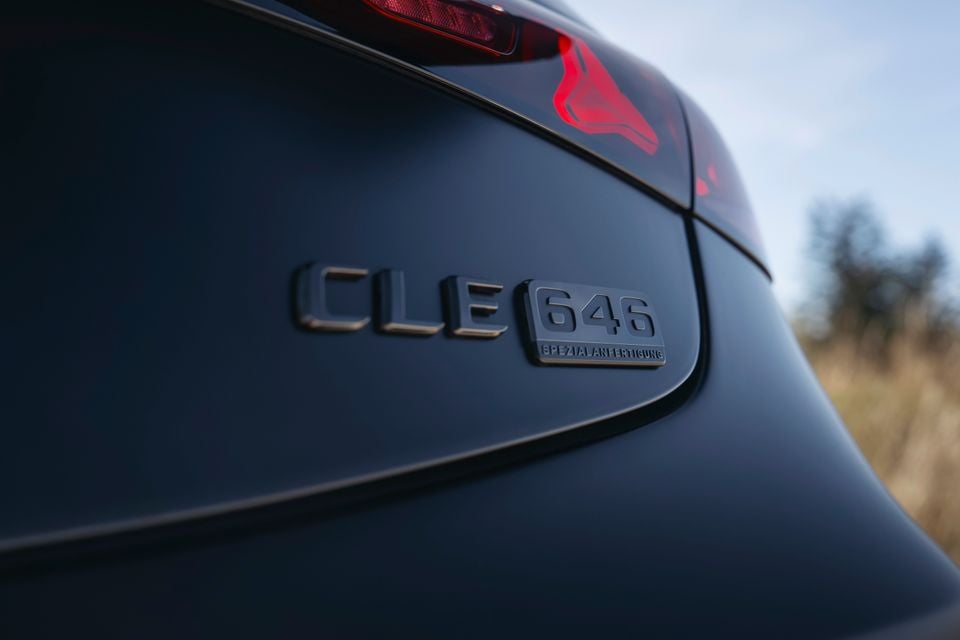
The Mercedes-AMG CLE 646 Spezialanfertigung coupe has been revealed, packing a twin-turbo petrol V8 engine that produces 475kW (646hp, hence the name) and featuring a track-honed rear-wheel drive chassis.
Limited to a global production run of just 250 cars, only 30 of which will be road-legal, the CLE 646 coupe is claimed to hit 100km/h in 3.9 seconds, reach 200km/h in 11.4 seconds, and hit 300km/h in 36.2 seconds, on its way to a 310km/h top speed.
The CLE 646 is the second model from the Mercedes-Benz Mythos Series, which was announced as a sub-brand in 2022, following the wild, Formula 1-inspired 2024 Mercedes-AMG PureSpeed which was based on the Mercedes-AMG SL roadster.
Mercedes-Benz Australia told CarExpert there are currently no plans to offer the CLE 646 Spezialanfertigung to customers here.
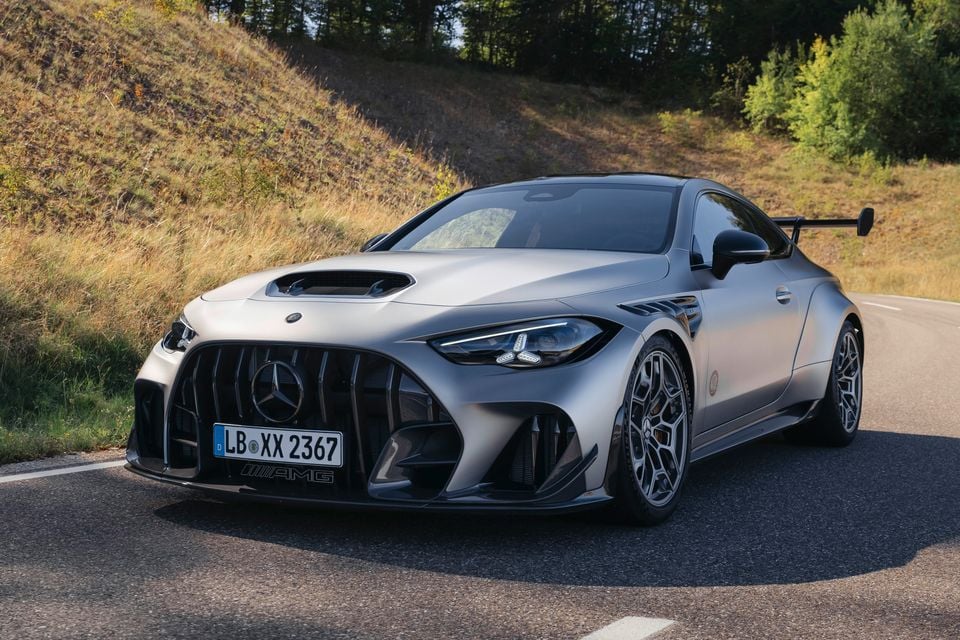
The German word ‘Spezialanfertigung’ translates to ‘custom-built’ in English, and while Mercedes-AMG will produce a total of 250, only 30 of the new flagship CLEs will be street-legal.
This underlines its top-end, high-performance racetrack focus, which sees the regular six-cylinder CLE 53 on which the 646 is based given two extra cylinders, considerably more power and less weight.
Debuting in the 646, which is effectively a limited-edition CLE 63, the most powerful production version yet of AMG's 3982cc twin-turbo ‘M177 Evo’ V8 easily shaded the 330kW six-cylinder Mercedes-AMG CLE 53 currently in showrooms.
It’s also more than the 450kW peak power output of the V8 engines that power both the AMG GT 63 S E Performance and AMG S 63 E Performance, although their hybrid systems lift their total outputs higher.
While it’s the horsepower king, the special-edition coupe’s V8 does not quite match the S 63’s peak torque of 900Nm, but the 646 has a serious 850Nm on tap between 2500 and 4500rpm.
It sends all this through a nine-speed transmission to the rear wheels only, with an electronic limited-slip differential aiding traction.
Adding to the power is 48V mild-hybrid technology but, given its performance bent, many customers are unlikely to care for the addition of the 17kW/250Nm integrated starter generator (ISG), as seen in a raft of Mercedes-Benz models.
Ditching all-wheel drive, a common feature in most top-end AMG models including the GT 63 Pro we track-tested earlier this year, helps the 646 shed 170kg from the mass of its CLE 53 donor car, bringing it to 1895kg.
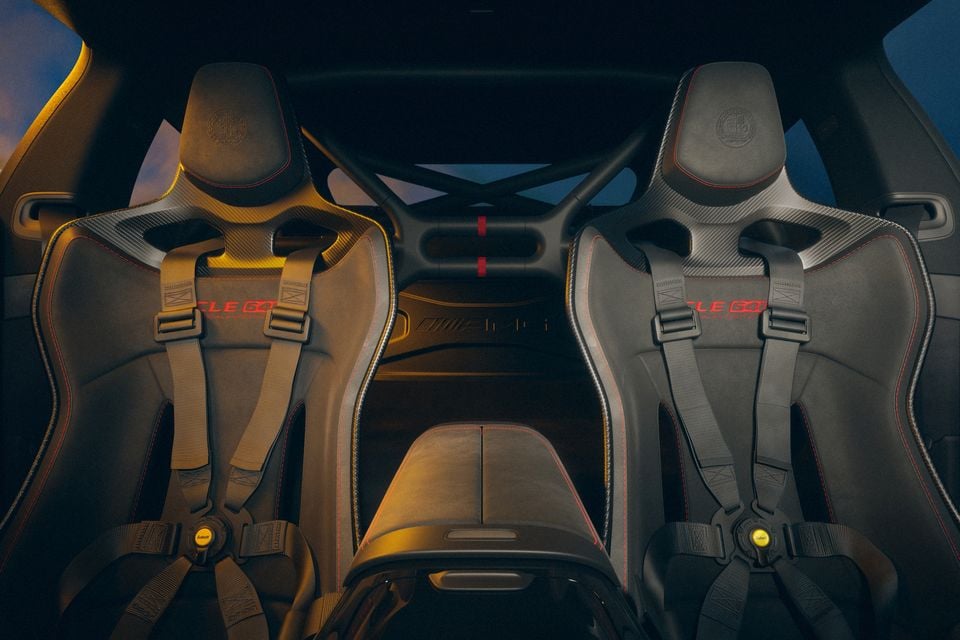
That gives the low-volume performance coupe a power-to-weight ratio of 250kW per tonne, alongside front/rear weight distribution of a 56/44, with the weight loss achieved through targeted body modifications. These include an integrated roll cage, helping increase torsional rigidity.
Like the GT 63 Pro, work has been done on engine cooling for sustained performance, with three separate cooling circuits respectively managing the charge-air, transmission and 48V electrical systems.
It should also breathe and sound better thanks to a unique exhaust system from renowned brand Akrapovič, which also aids weight reduction through the use of lightweight titanium.
The chassis employs a steel coil-over spring-and-damper setup developed with KW Suspension, including four-way adjustable dampers designed to aid low-speed agility and high-speed stability.
The braking system comprises AMG ceramic rotors measuring 420mm in diameter up front with six-piston calipers, with 360mm rear rotors squeezed by single-piston floating calipers.
The system is bigger yet lighter than the standard CLE brakes, with the calipers painted gold.
Mercedes-AMG said the brakes also use ‘long-fibre’ technology, which helps dissipate heat faster, reducing fade and prolonging stopping effectiveness.
The technical package is housed in unique bodywork, which sits 22mm lower at the front axle and 16mm lower at the rear, and is a substantial 60mm wider at both ends.
This enables the fitment of 20-inch wheels measuring 11 inches wide up front and 12 inches at the rear, fitted with 305/30 and 335/30 tyres, respectively.
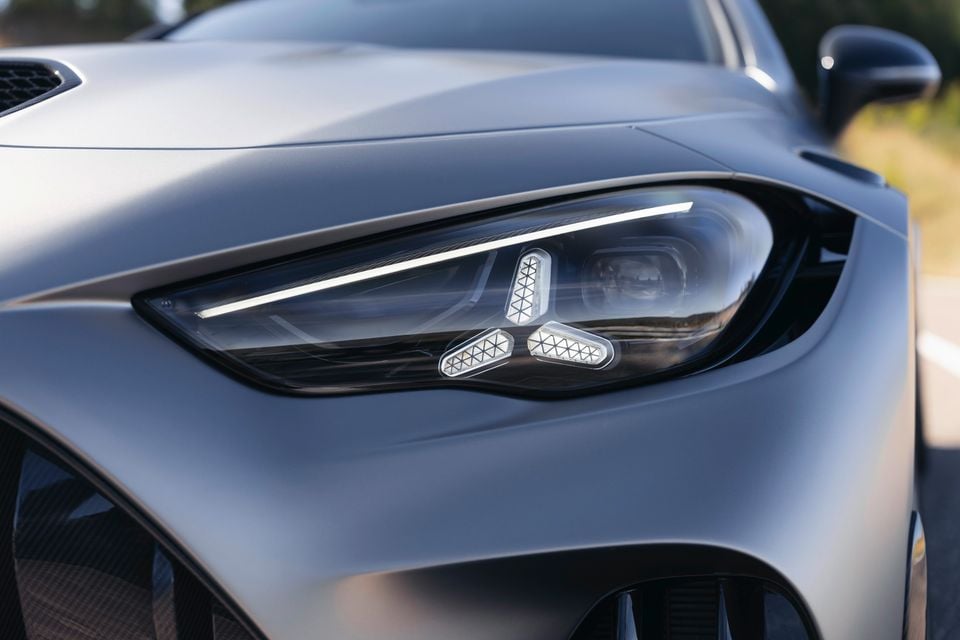
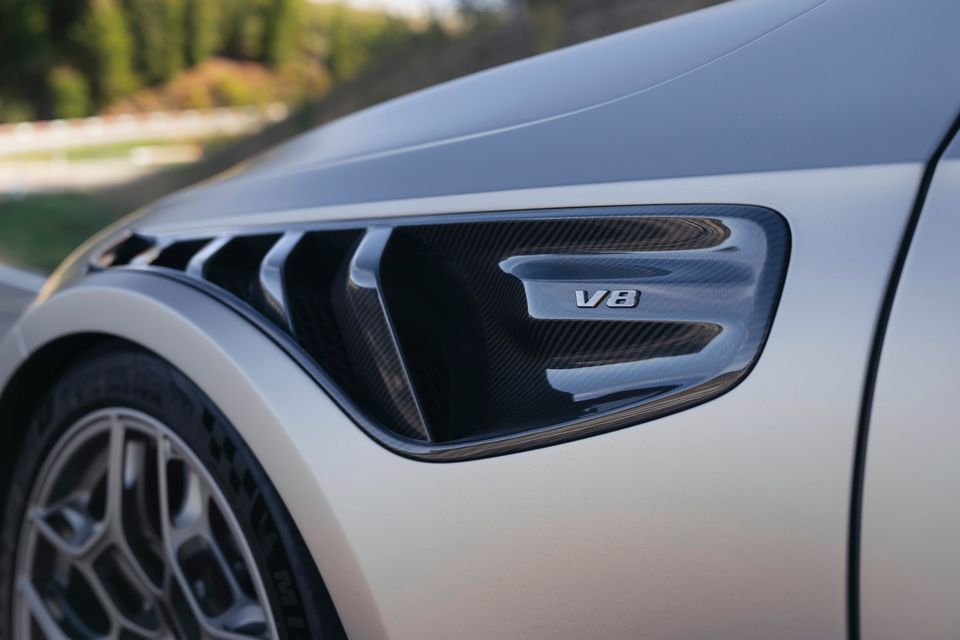
They sit beneath carbon-fibre front guards with open louvres above the wheel-arches, while intakes next to the headlights channel air through the fenders and out through other outlets.
Redesigned front-bumper air intakes provide additional cooling, along with a central cold-air bonnet intake.
The front aerodynamic strakes can be manually adjusted between Street and Race positions, with the Race setting adding front-axle downforce via a venturi effect to aid steering response.
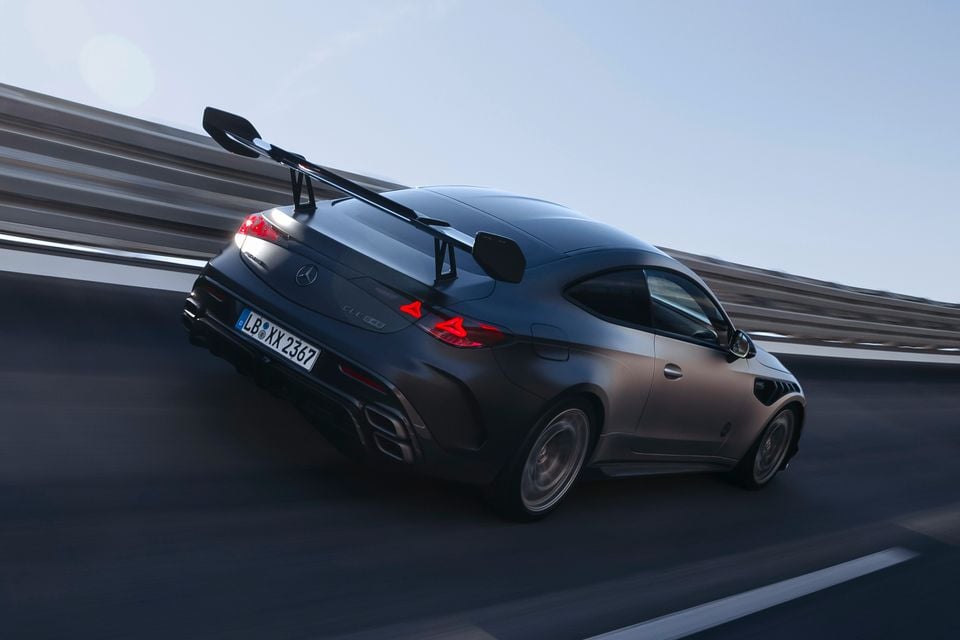
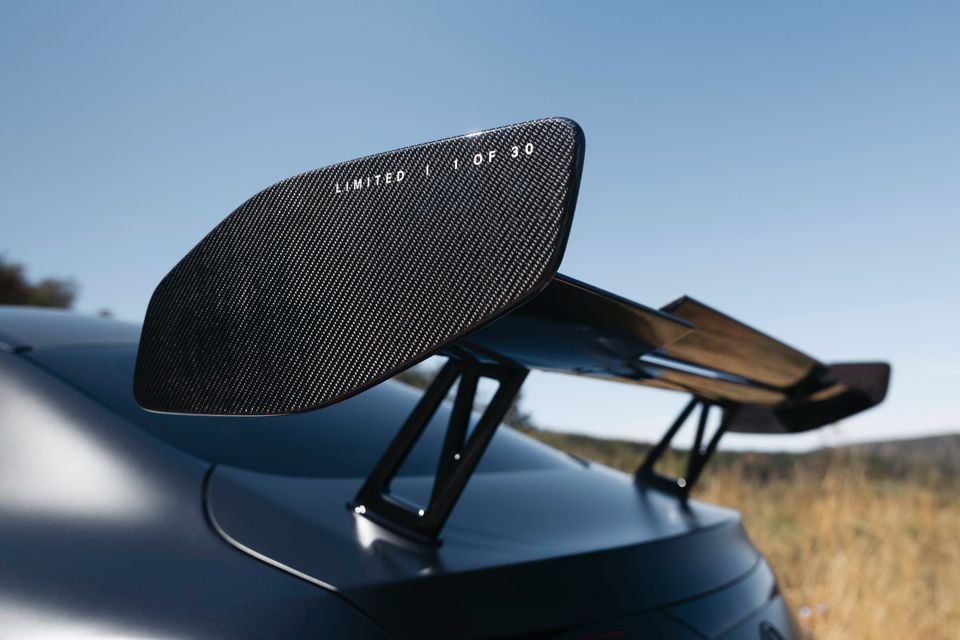
The 646 also boasts a flat floor, while a pair of carbon-fibre mounts sit on a reinforced boot lid for the massive rear wing, which is also adjustable. Its drag coefficient is 0.402Cd in the Street setting, and 0.417Cd in the Race position.
Mercedes-AMG says the aerodynamic package generates 250kg of downforce at the wild coupe’s 310km/h top speed.
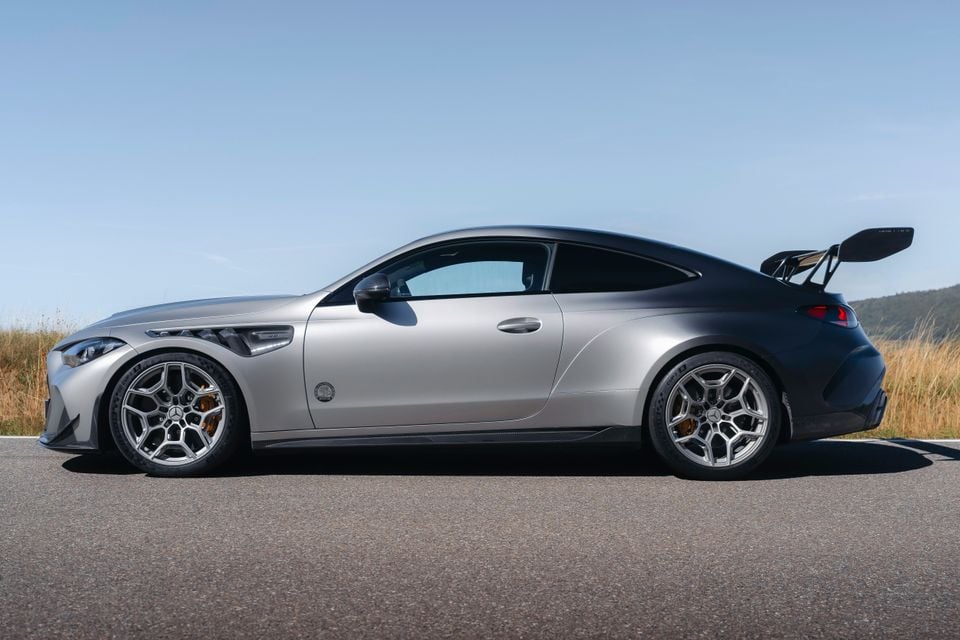
The body is offered in a one-off exterior colour scheme, with the front section finished in Mojave Silver Magno, and Obsidian Black paintwork extending from the B-pillar back.
Inside, the rear seats have been dumped, as have the stereo and automatic parking system, with a pair of ultra-lightweight racing bucket seats offering more lateral support up front.
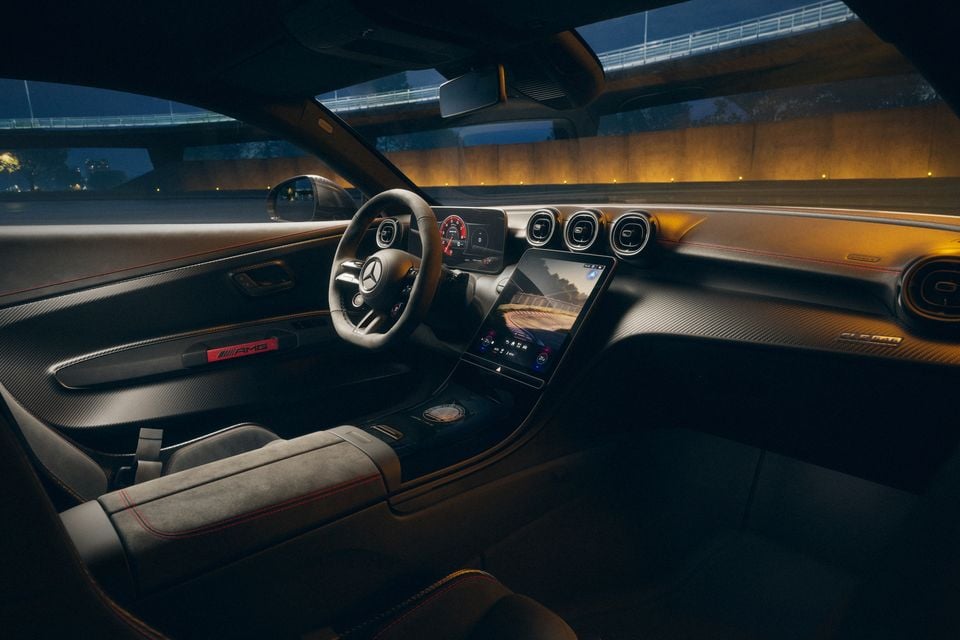
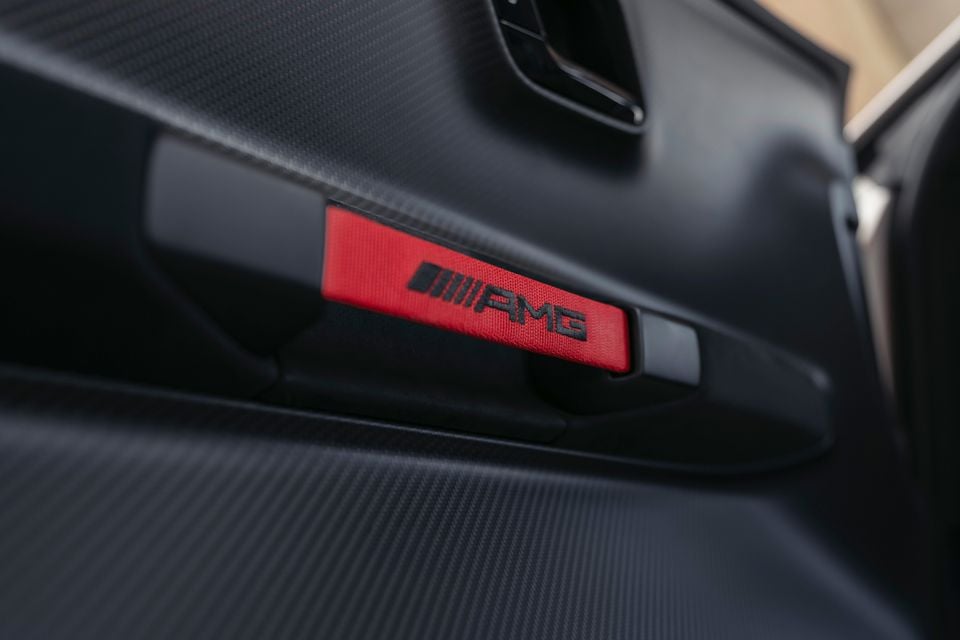
The door panels are made from carbon-fibre, while the flat-bottom AMG steering wheel is wrapped in microfibre and has fewer buttons thanks to the removal of several driving modes and features deemed not track-worthy.
Research cars in our Showroom, compare your options or let our New Car Specialists do the running around to find you a great deal.
Damion Smy is an award-winning motoring journalist with global editorial experience at Car, Auto Express, and Wheels.
Damion Smy
2 Days Ago

Dave Kavermann
5 Days Ago

Max Davies
6 Days Ago

Gautam Sharma
8 Days Ago

William Stopford
14 Days Ago

Derek Fung
24 Days Ago
Add CarExpert as a Preferred Source on Google so your search results prioritise writing by actual experts, not AI.