
Tace Clifford
Top 10 family PHEVs with the longest electric range
There are now plenty of plug-in hybrid family cars that are well suited to the school run and commute, but here are the ones with the longest EV range.
4 Days Ago
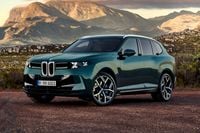
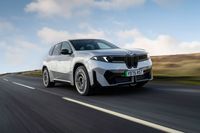
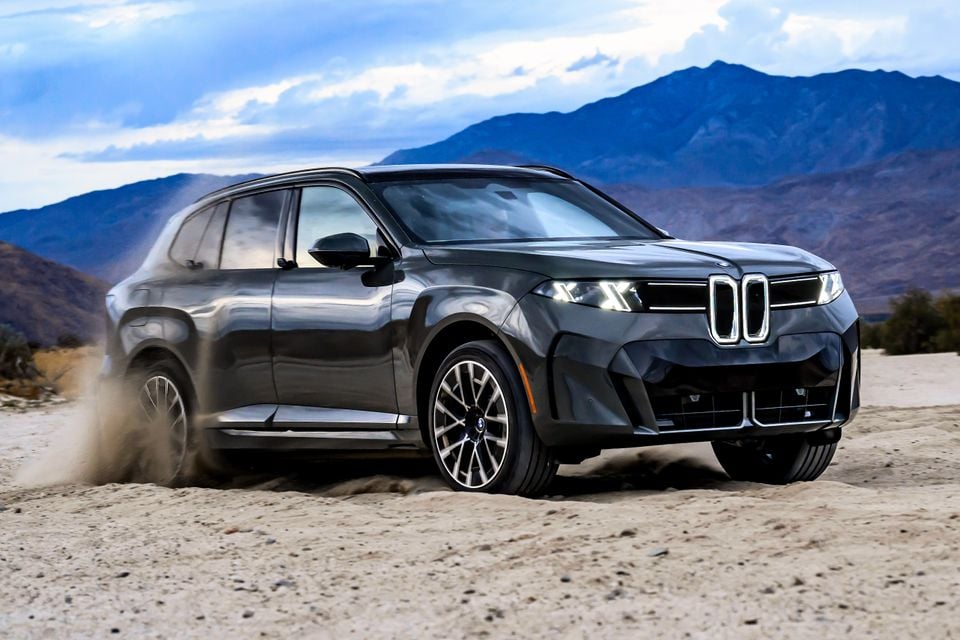
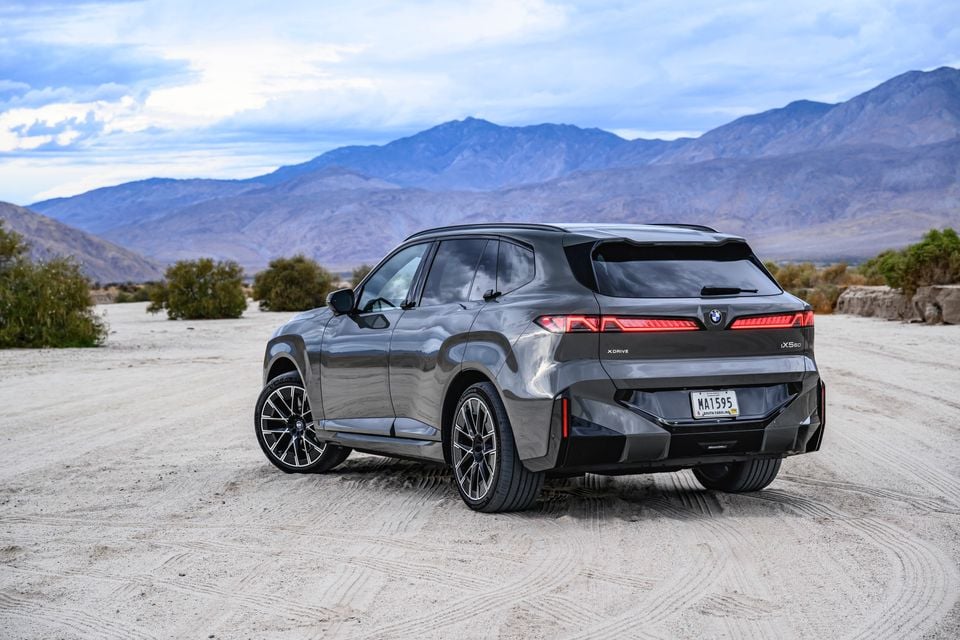
An electric BMW X5 was inevitable, but one that can travel 800km on a single charge and outgun many sports coupes is pleasantly unexpected.
If this is the car for you, we’ll compare offers from trusted dealers, handle the back and forth and manage your purchase from enquiry to delivery.
Sales of urban and family SUVs are booming in Australia, but is the market ready for the first-ever, all-electric BMW X5? The inaugural iX5 will be available here in a matter of months, as part of the fifth-generation X5 lineup that will be launched Down Under in late November.
Worry not, engine diehards, as BMW is hedging its bets on the new X5 by offering it with a wide choice of powertrains, including mild-hybrid-assisted petrol and diesel engines, and an excellent plug-in hybrid (PHEV) as well. The only one we’re not getting in Oz, in fact, is the hydrogen-fuelled model. At least not for now.
What powers the X5 isn’t the only new thing about it, of course, as the big SUV adopts BMW’s ‘Neue Klasse’ suite of technologies, its new design language, and a screen-heavy cabin.
To see how it all stacks up, we attended the international media launch of the new model in California in the USA, driving both the iX5 and the petrol-powered X5 40 xDrive.
Deliveries of both the petrol X5 40 xDrive and diesel X5 40d xDrive will take place in Australia before the end of this year, but the bad news is that they’ll cost more than the models they replace.
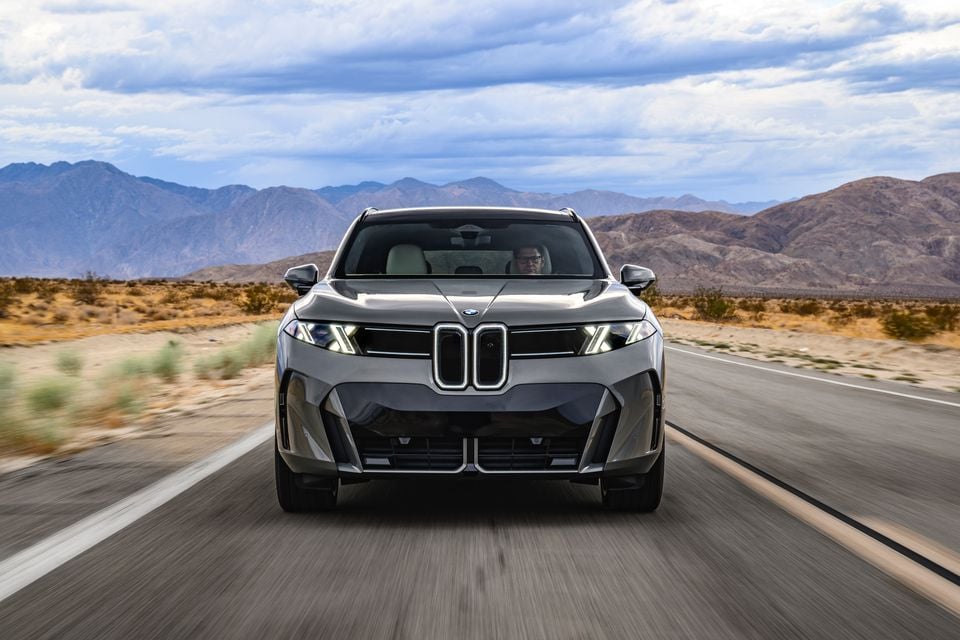
The 40d xDrive is priced from $143,900 before on-road costs – up $4000 on the outgoing xDrive30d – and the petrol-powered 40 xDrive will be $2000 more expensive than its xDrive40i predecessor at $145,900 plus on-roads.
As with those older cars, the new one will be sold in sportier looking M Sport specification only, featuring M alloy wheels, M brakes, M adaptive damping and other exterior parts. Inside, a panoramic glass roof is standard, as are power-adjustable seats, though the default upholstery is ‘Veganza’ synthetic leather and the real stuff is likely to be an expensive upgrade.
Pricing for the all-electric iX5 and the X5 50e xDrive PHEV have yet to be confirmed, and they won’t hit Australian shores until early 2027.
To see how the BMW X5 lines up against the competition, check out our comparison tool
All four doors of the X5 can open to greet you if you’ve ticked the right options box at ordering time. When the driver jumps in and presses the brake pedal, they close automatically.
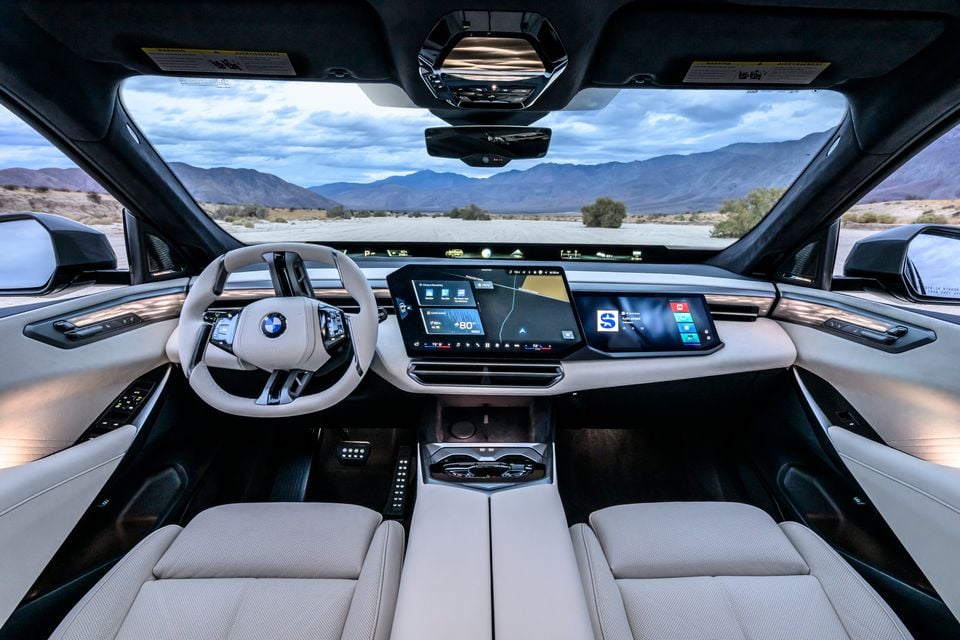
The interior quality is immediately apparent, with tasteful stitching and detailing throughout, plus a mix of materials and textures that lifts the X5’s cabin above that of the smaller and already pretty decent BMW iX3.
It's a shame that the default upholstery is synthetic leather rather than the real thing, and it’ll be tempting for buyers to spend a considerable amount on upgrading it. We highly recommend the ‘Vintage Coffee’ option.
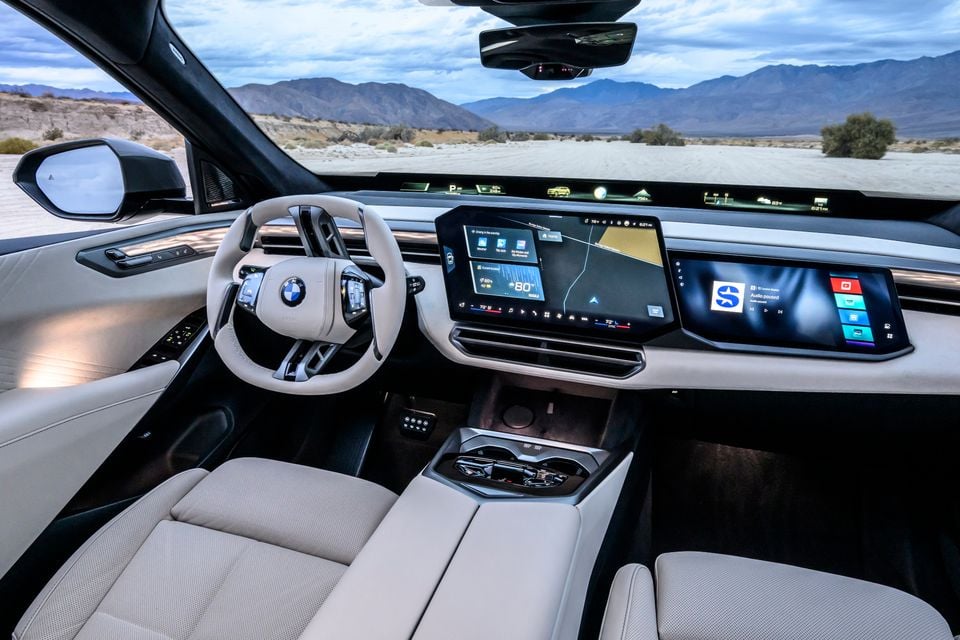
In contrast to that is the high-tech dashboard we’ve seen on several other BMWs, called ‘Panoramic iDrive’ by the company. All versions of the X5 get the ‘Panoramic Vision’ display along the base of the windscreen, an unusually shaped 17.9-inch infotainment touchscreen in the middle, and an equally odd-looking steering wheel with a mix of physical and haptic-feedback switchgear on its spokes.
A 3D head-up display seems superfluous next to all that, while an extra touchscreen can be specified for the passenger’s side of the dashboard, which is a cinch to use, allowing easy download of various streaming and entertainment apps.
The middle screen and steering wheel may appear unusual, but the latter feels good in the hands and response to touch on the display is rapid, backed up by a powerful processor and BMW Operating System X. The Panoramic Vision screen is a triumph, however, displaying information in a sequence of customisable widgets not far away from your eyeline to the road.
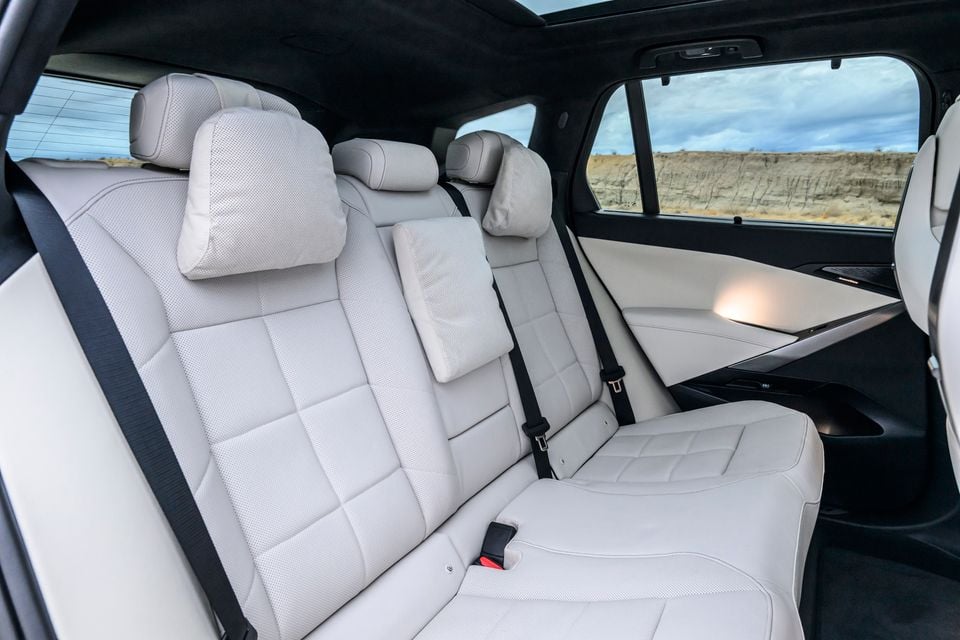
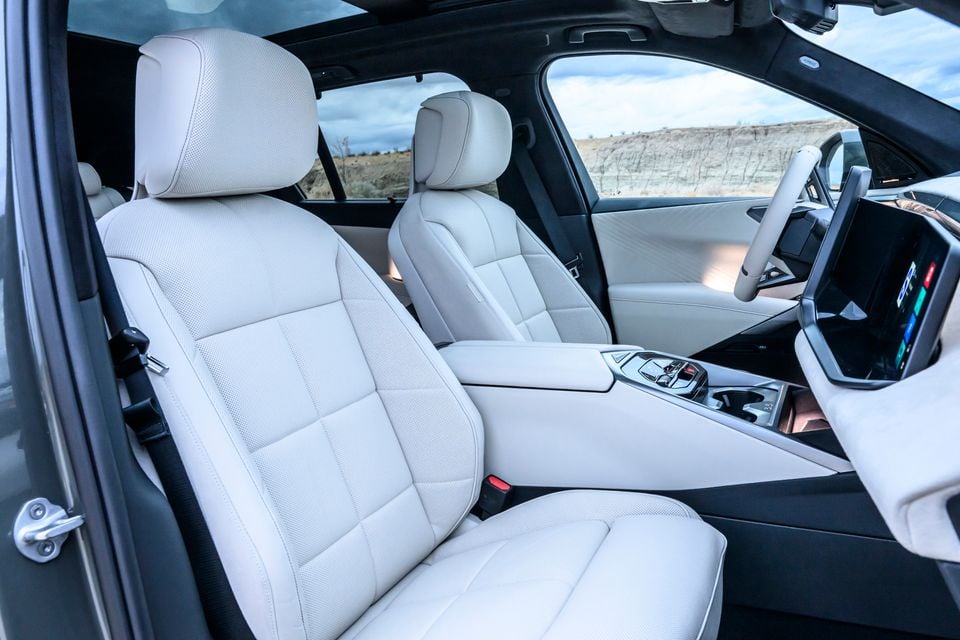
Once you’ve finished ogling at the technology, you’ll spot large storage areas throughout the cabin and – depending on options – an unfamiliar grey, textured material in places. This turns out to be slate, and it’s paired with solid crystal glass for the drive selector and the door-mounted front seat controls.
You may as well add in the ‘Silver Bronze’ accents for the full designer spec. It’s not as blingy as it sounds, but it certainly is more interesting than plain black.
Regardless of which way you go, it’s spacious front and back in the X5, with room for three adults across the rear and a panoramic glass roof as standard above. There are device-charging options galore, with numerous USB-C ports and even magnetic wireless charging pads both front and rear to hold phones in place.
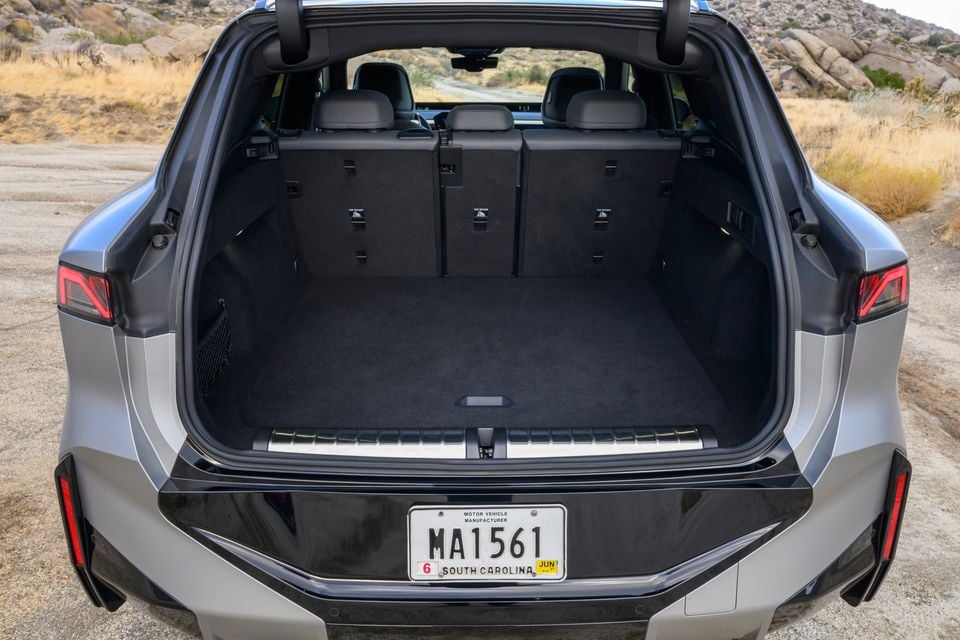
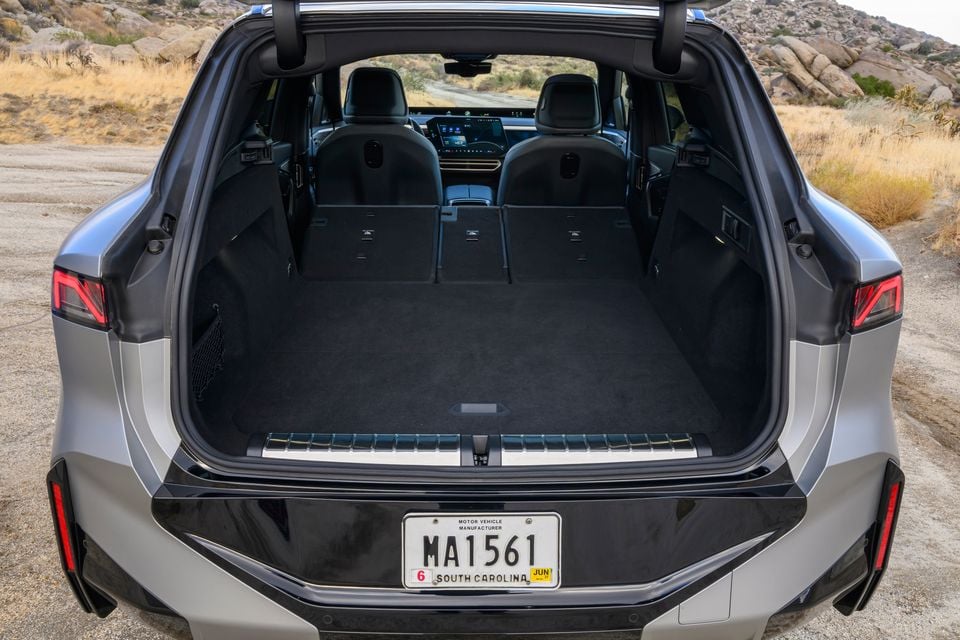
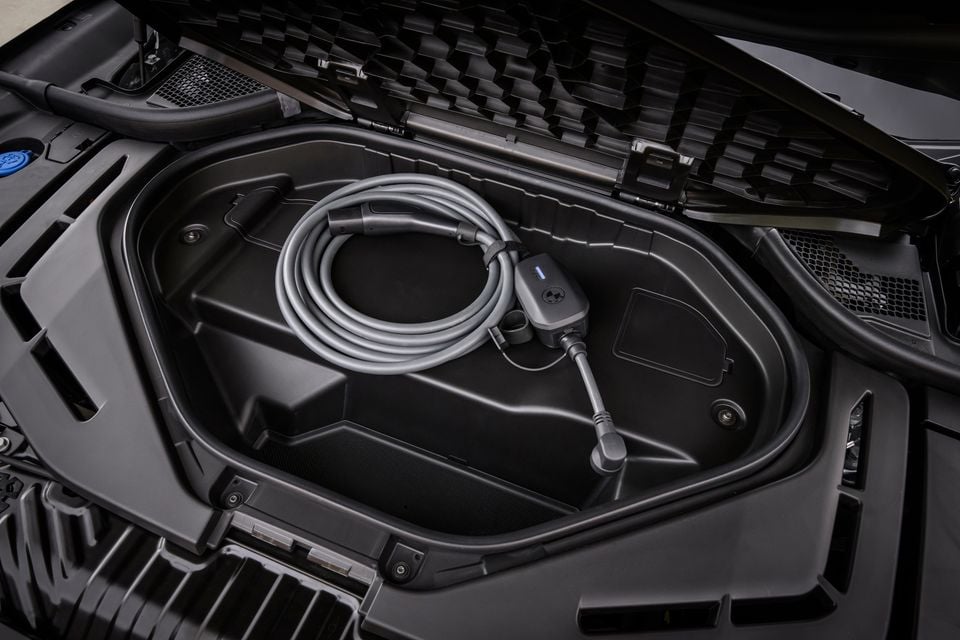
The boot in the iX5 holds a quoted 665 litres of cargo, expandable to a ginormous 1850L, just as in the petrol and diesel models, and beating that of the X5 50e PHEV. The iX5 has an ace up its sleeve though, in the shape of a 53L frunk, which is more than enough space to keep charging cables out of the way.
| Dimensions | BMW iX5 |
|---|---|
| Length | 4994mm |
| Width | 2000mm |
| Height | 1748mm |
| Wheelbase | 3035mm |
| Cargo capacity | 665L – rear seats up, incl. under-floor storage1850L – rear seats folded53L – under-bonnet storage |
To see how the BMW X5 lines up against the competition, check out our comparison tool
In terms of powertrains, the sole iX5 electric variant announced so far is the 60 xDrive, with two electric motors for all-paw traction. It’s the most powerful grade with up to 425kW of power and a massive 805Nm of torque, though it’s also the heaviest at a minimum weight the wrong side of 2800kg.
| Specifications | BMW iX5 60 xDrive |
|---|---|
| Drivetrain | Dual-motor electric |
| Battery | 141kWh lithium-ion |
| Power | 425kW |
| Torque | 805Nm |
| Drive type | All-wheel drive |
| Kerb weight | 2825kg |
| 0-100km/h (claimed) | 4.6 seconds |
| Energy consumption (claimed) | 20.1-23.9kWh/100km |
| Energy consumption (as tested) | 21.2kWh/100km |
| Claimed range (WLTP) | 645-845km |
| Maximum AC charge rate | 22kW |
| Maximum DC charge rate | 460kW |
| Braked towing capacity | 2700kg |
The lightweight of the range – all things being relative – is the X5 40 xDrive. It retains the turbocharged 3.0-litre petrol straight-six of the old ‘40i’ variant, though with detail changes to enhance performance and efficiency. It puts out 294kW and 580Nm.
The X5 40d xDrive betters that torque output, with up to 670Nm, though its mild-hybrid straight-six peaks at 230kW and so it’s the slowest of the lot, hitting 100km/h from rest in a claimed 6.1 seconds. Again, all things are relative.
If towing is important to you, the plug-in-hybrid X5 50e is worth a look as it manages 300kg more than the petrol and diesel models, at 3300kg, while the iX5 is rated to tow only 2700kg. But this PHEV also puts up to 360kW and 700Nm at its driver’s disposal.
Given the iX5 has such a huge battery, it’s a good thing it also has an 800V electrical architecture for super-fast charging. If you can find such a charger in Australia, it can accept a DC charge at up to 460kW, which BMW says results in a 10-80 per cent charge in as little as 23 minutes, or 350km of range in 10 minutes.
To see how the BMW X5 lines up against the competition, check out our comparison tool
Our test car was loaded up with all the available chassis wizardry, some of which will be optional extras, so bear that in mind when taking an X5 for a test drive.
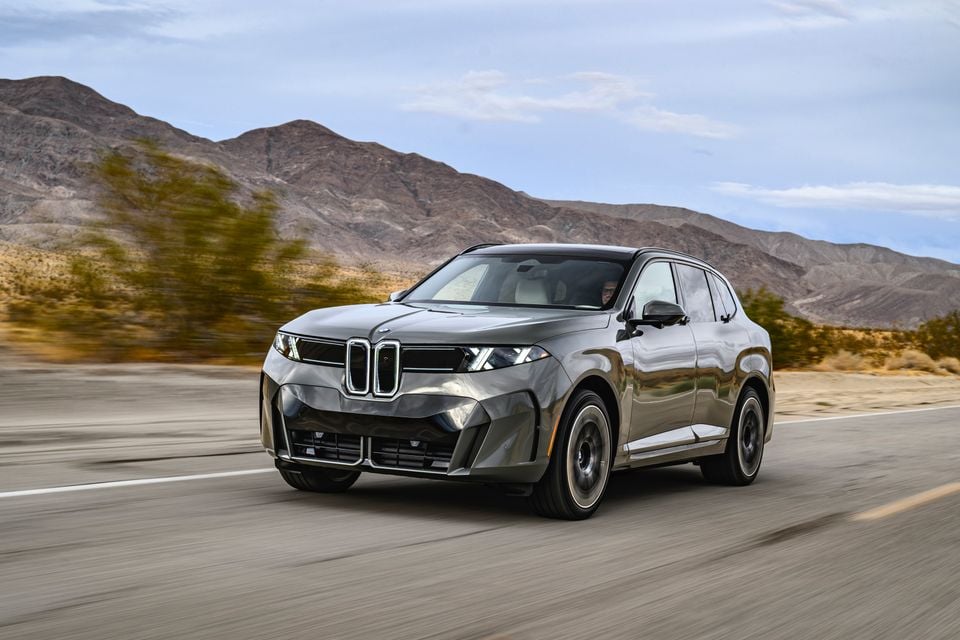
Integral Active Steering, for example, is BMW’s four-wheel steering system, twisting the rear wheels in the opposite direction to the fronts at lower speeds – for agility on the move and a smaller turning circle when parking – while steering them in phase with the fronts at a higher pace, in the name of stability. You only really notice it at work at very slow speeds, where it makes the X5 ridiculously easy to manoeuvre.
All models get electronically controlled dampers, though buyers can add adaptive air suspension with automatic self-levelling. This is well worth having, not just if you’ll use the car for towing big loads. The air suspension gives the X5 a mature, comfortable gait.
Sure, you can select the firmest damper setting for a little more body control, but this can result in a little too much restlessness in the suspension, depending on the surface underneath. And for that matter on the size of the wheels and tyres fitted – up to 23-inch wheels can be specified from the factory.
Our test car rode on 22-inch rims and on the scarred concrete roads of California, there was a good deal of road noise and fidget, with an underlying firmness in the standard damper setting. Nobody could accuse the car of being uncomfortable, but it’s no magic-carpet ride, either. Choose your wheel size carefully.
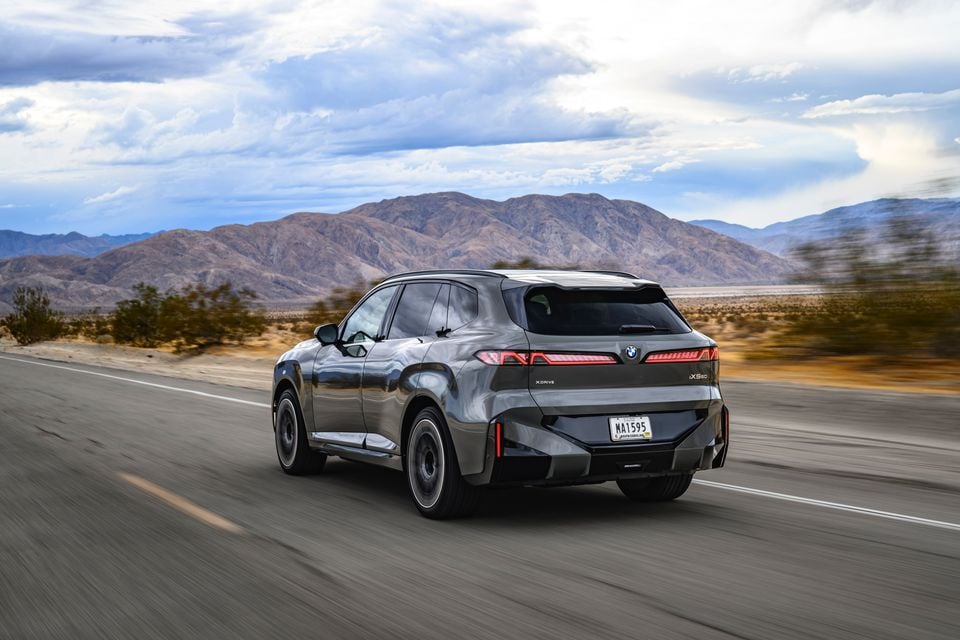
For the ultimate body control, there’s Active Roll Stabilisation, only available with the iX5 and the PHEVs. This actively resists side-to-side movement completely using 48-volt actuators, and it proves both effective and yet more natural-feeling than many systems of its type.
With all these features added, the iX5 felt surefooted, fast and capable, no matter what kind of corner we tackled, though it stops short of being engaging. This is a large, luxurious SUV with plenty of go and a competent chassis.
The performance on tap is superfluous, giving it a wonderfully effortless quality, whether you need to perform a quick overtake or join a fast-flowing highway from a standstill. You can personalise the driving experience to a certain extent, altering the steering, damping and response, but it’s so well balanced in the default settings that we’d be surprised if many owners ever change it.
The one exception is the level of brake energy regeneration. This is set to adaptive by default, and while this is quite clever, adapting to the traffic conditions and topography of the terrain, it also results in inconsistent deceleration, and we found the car far more natural and smooth with the regen reduced to its lowest setting.
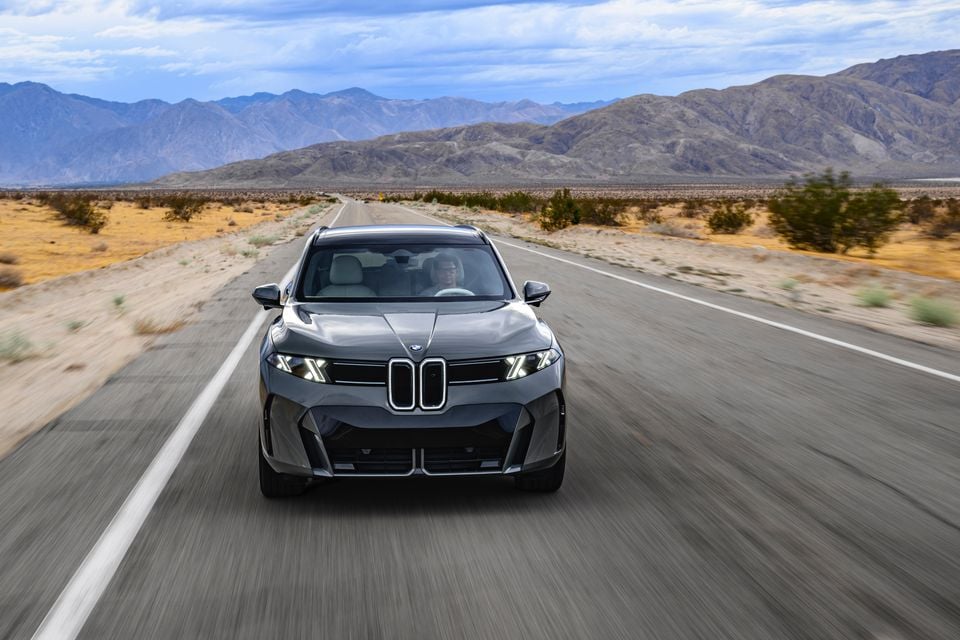
In terms of range and efficiency, we spent the best part of five hours at the wheel and while top speed was limited, there was a chance to stretch the iX5’s legs on a sinuous mountain road that would have done the economy no favours. But an indicated return of 21.2kWh/100km was certainly acceptable and it looked like well over 600km would have been possible before needing charging up.
A stint in the petrol-powered X5 40 xDrive, which isn’t available with Active Roll Stabilisation, remember, didn’t reveal an embarrassing level of body roll in the corners and it drove well, helped no doubt by the fact it’s some 500kg lighter than the EV. The burr of the straight-six was a welcome sound when more performance was required, though there’s no doubt the iX5 would show it a clean pair of heels.
To see how the BMW X5 lines up against the competition, check out our comparison tool
As mentioned above, the X5 will only be sold in M Sport specification in Australia, with plenty of options and packages to upgrade the car further.
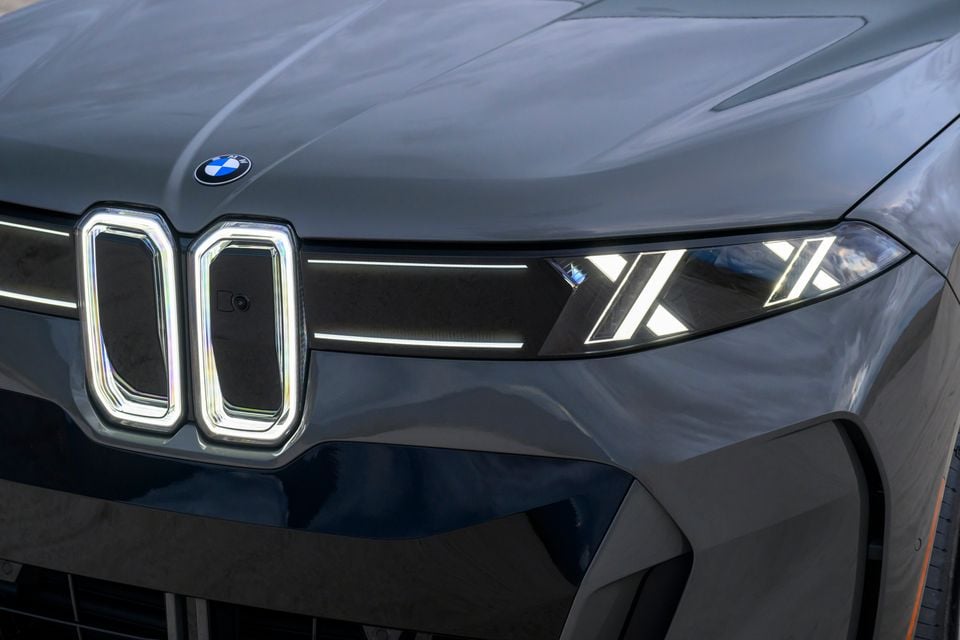
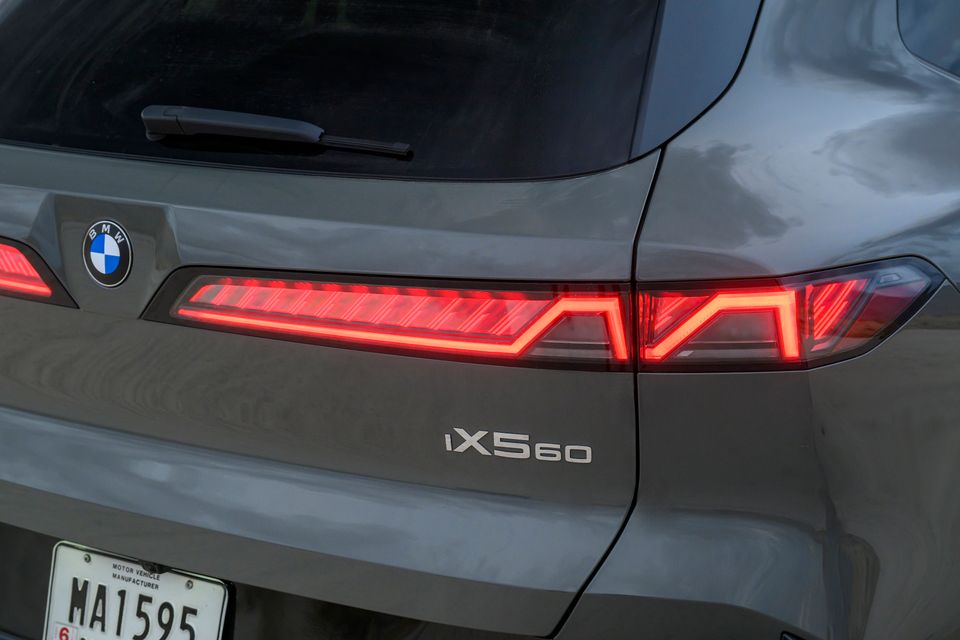
2027 BMW X5 equipment highlights:
To see how the BMW X5 lines up against the competition, check out our comparison tool
The new BMW X5 has yet to be assessed by independent auto safety authorities Euro NCAP and ANCAP in any guise, never mind the electric iX5.

Standard safety equipment includes:
To see how the BMW X5 lines up against the competition, check out our comparison tool
BMW Australia backs its vehicles with a five-year, unlimited-kilometre warranty, while the battery packs come with a longer guarantee – up to eight years or 160,000km, whichever comes first.
| Servicing and Warranty | BMW iX5 |
|---|---|
| Warranty | 5 years, unlimited kilometres – Vehicle 8 years, 160,000km – EV battery |
| Roadside assistance | 3 years |
| Service intervals | TBC |
| Capped-price servicing | 4 or 6-year service plan |
To see how the BMW X5 lines up against the competition, check out our comparison tool
Electric power isn’t yet the default option for buyers of big, dynamic, luxurious SUVs such as the BMW X5, but the iX5 may represent a tipping point in that regard.
If this is the car for you, we’ll compare offers from trusted dealers, handle the back and forth and manage your purchase from enquiry to delivery.
The battery-powered version is the fastest in the new X5 range, it has the most cargo space, it can tow a decent load, it gets the same high-quality, high-tech cabin as any other variant, and its electric powertrain helps with comfort, refinement and running costs.
Still want that diesel?
CarExpert can save you thousands on a new BMW. Click here to get a great deal.
Click the images for the full gallery
MORE: Explore the BMW X5 showroom
Editorial Disclosure
CarExpert attended this event as a guest of BMW.
If this is the car for you, we’ll compare offers from trusted dealers, handle the back and forth and manage your purchase from enquiry to delivery.
Quickly see how this car stacks up against its competition. Select any benchmark to see more details.
BMW X5
BMW X5 Sales rolling 12-months#
*Based on VFACTS and EVC data
Looking for complete BMW X5 price history?
Our BMW X5 Pricing Page shows exactly how prices have changed over time.
2026
$149,013
2026
$149,013
2025
$156,363
2026
$188,913
2026
$262,308
Add CarExpert as a Preferred Source on Google so your search results prioritise writing by actual experts, not AI.
Tace Clifford
4 Days Ago

Damion Smy
10 Days Ago

William Stopford
10 Days Ago

Alborz Fallah
14 Days Ago
Damion Smy
14 Days Ago
Damion Smy
15 Days Ago
Add CarExpert as a Preferred Source on Google so your search results prioritise writing by actual experts, not AI.
# Based on VFACTS and EVC data
† Displayed prices are based on the drive-away price of the vehicle, which includes delivery charges, registration fees, number plates, and applicable road taxes, based on a Sydney location. However, prices may vary between states and territories, and additional costs such as compulsory third party (CTP) insurance, dealer delivery fees, and optional extras are not included. These prices are subject to change without notice and may not reflect current market pricing or dealer offers.
 Automotive Vehicle Spec Data & 4K images Powered by JATO Dynamics Ltd