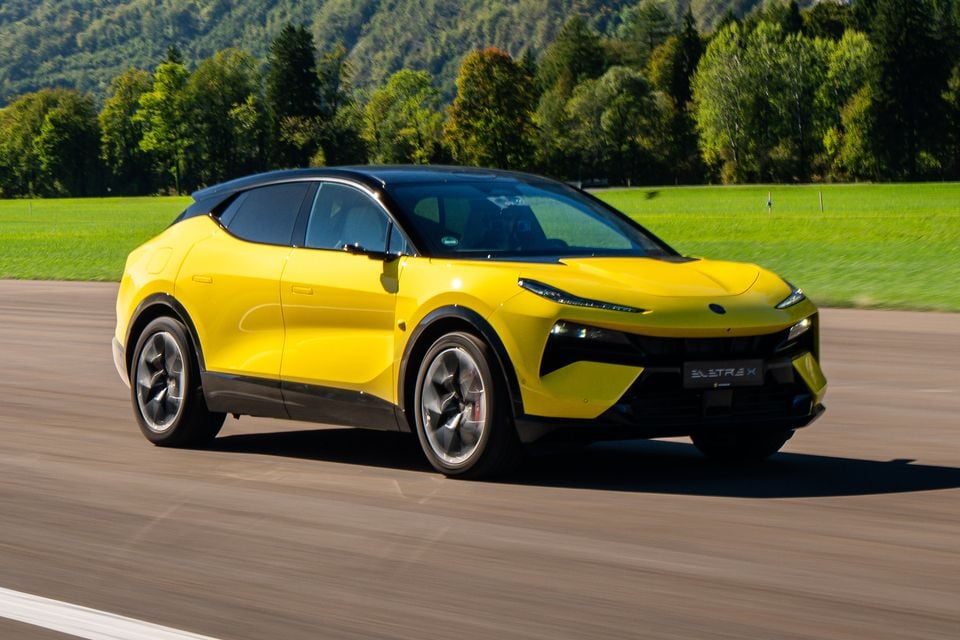
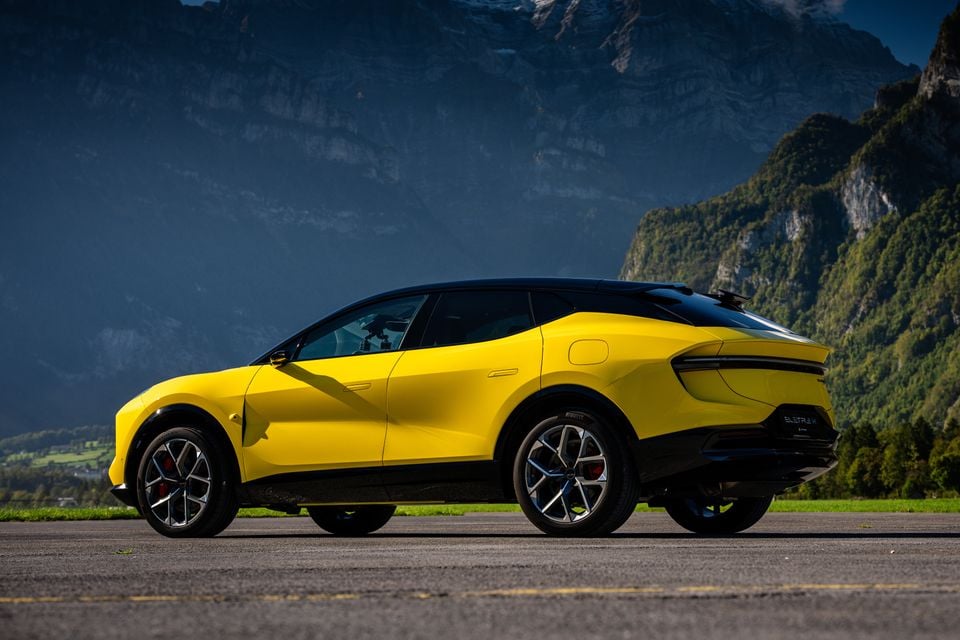
The hulking 2.6-tonne Lotus Eletre X is the antithesis of company founder Colin Chapman’s famous “simplify, then add lightness” mantra, so sceptics may be inclined to dismiss the big electrified SUV on this basis alone.
However, they’d be doing the Lotus leviathan a disservice as the hefty girth and enormous complexity of the 700kW plug-in hybrid vehicle (PHEV) don’t detract from what is a rapid, practical and cossetting family hauler.
Crucially, it crushes any range-anxiety concerns that handicapped the pure-electric Eletre. Where the Eletre EV is realistically limited to a 450-500km touring range, the new Eletre X’s petrol-electric powertrain – in which the combustion engine functions primarily as a range-extender – means it can cover 1000km-plus (up to 1200km according to the WLTC cycle) before needing a refill/recharge.
While it's technically a PHEV with a big battery, the Eletre X can function as both a series hybrid and a parallel hybrid, blurring the line between PHEVs and extended-range electric vehicles (EREVs), which never physically couple their combustion engines to the wheels for mechanical propulsion.
As a large and luxurious PHEV SUV, the Eletre X is up against tough opposition from German premium brands including Audi, BMW and Porsche, not to mention Range Rover, but if the British-Chinese automaker can nail the value equation, it may well carve out a small niche in the premium performance SUV segment
How much does the Lotus Eletre X cost?
The Lotus Eletre X is expected to be launched in Australia in the second quarter of 2027 and, while local pricing and spec levels are yet to be announced, we can estimate the entry point based on where the model is positioned in Europe vis-à-vis the standard Eletre EV.
In Australia, the base Eletre starts at $189,990 plus on-road costs, so applying the same 25 per cent premium that the X commands over the entry variant in Europe, we arrive at a figure of $237,500 plus ORCs.
Find your perfect new car with CarExpert
This would position it between the Porsche Cayenne S E-Hybrid (from $187,800 plus ORCs) and Cayenne Turbo E-Hybrid (from $288,400 plus ORCs). The new fully electrified Cayenne Turbo Coupe costs from $272,000 plus ORCs, while BMW’s XM kicks off at $339,521 plus ORCs.
One could argue the Lotus doesn’t have the carpark cred of the Cayenne or XM, but the Eletre X does have the trump card of a 1000km-plus touring range to back up its 700kW clout, which is a combination that no competitor from any marque can match.
To see how the Lotus Eletre lines up against the competition, check out our comparison tool
What is the Lotus Eletre X like on the inside?
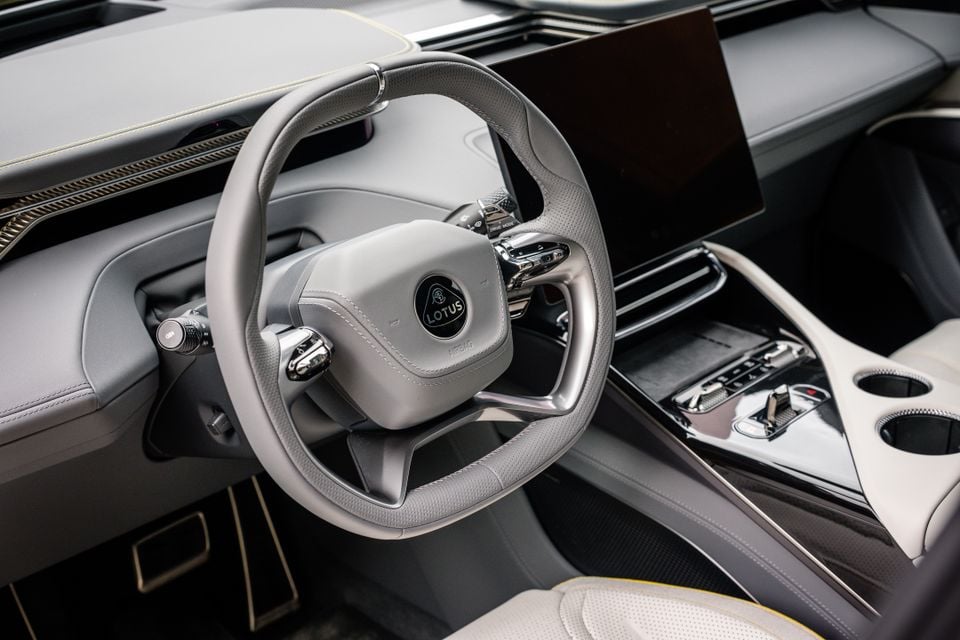
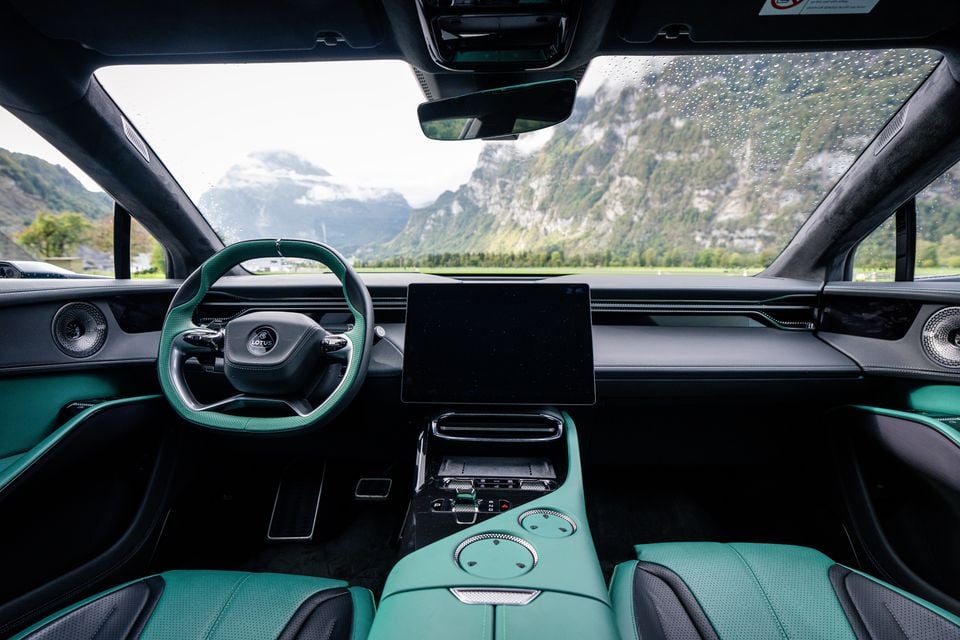
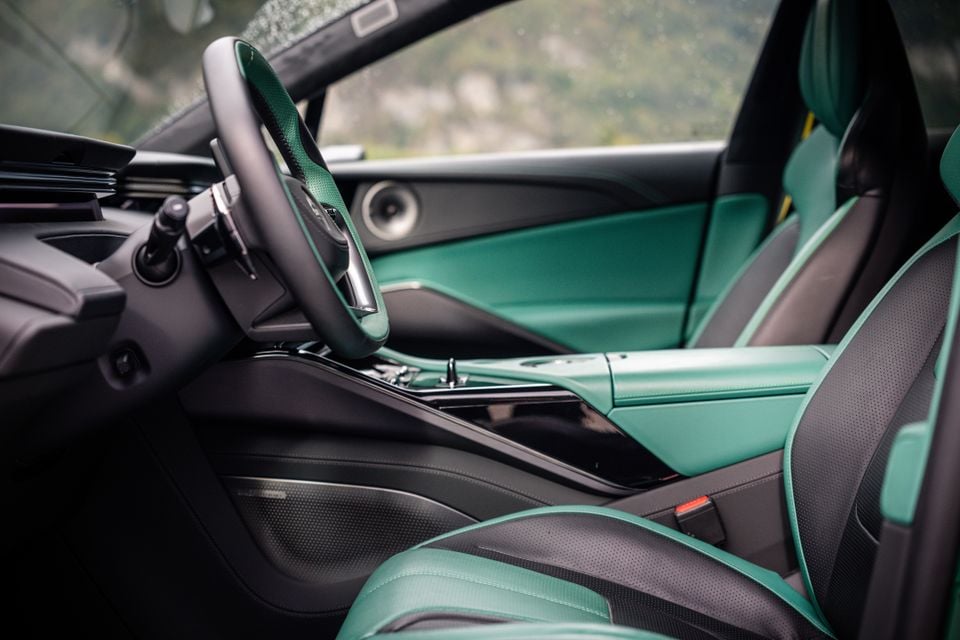
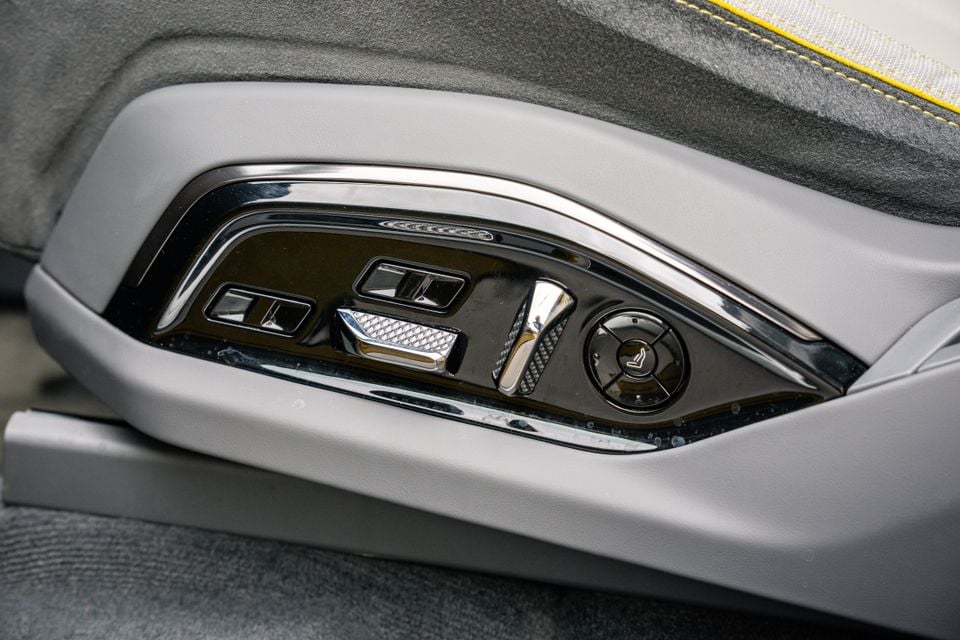
A large luxo SUV it may be, but the Lotus Eletre X still has a sporting flavour inside with its driver-focused cockpit complemented by elaborately sculpted seats that hug the torso (even more snugly when you select ‘Sport’ drive mode).
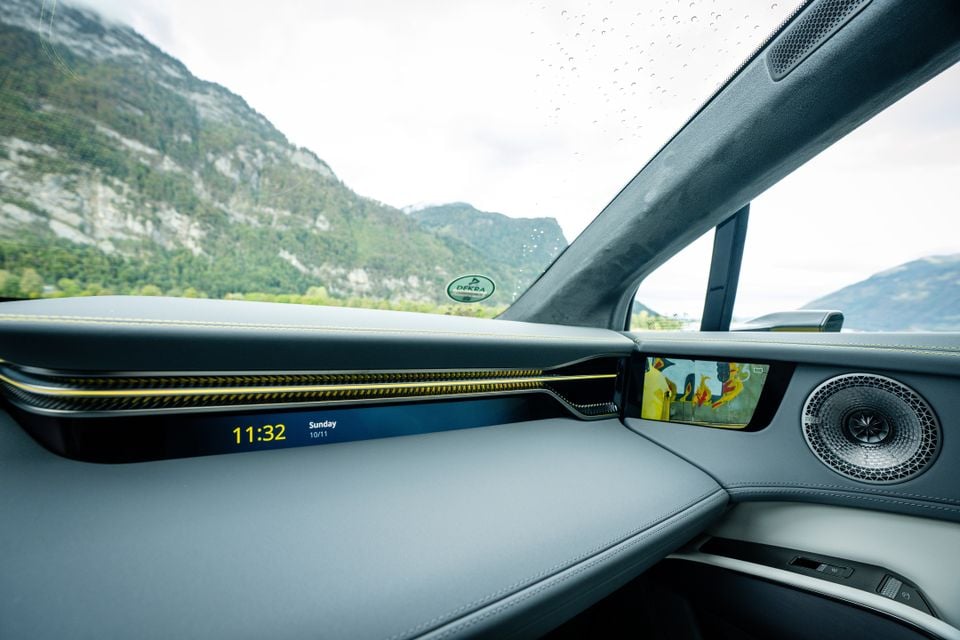
Overall, there’s a relatively premium ambience inside, with a multitude of artfully designed surfaces breaking up any sense of monotony in the cabin. A low scuttle, complemented by the expansive glass roof, makes for an airy feel inside, and visibility in all directions is excellent.
Facing the driver is a hexagonal/octagonal steering wheel that feels good to hold, while behind it are a pair of ‘paddle shifters’ – the left one enables you to switch between the four energy regeneration settings, while the right one enables you to scroll through the drive modes.
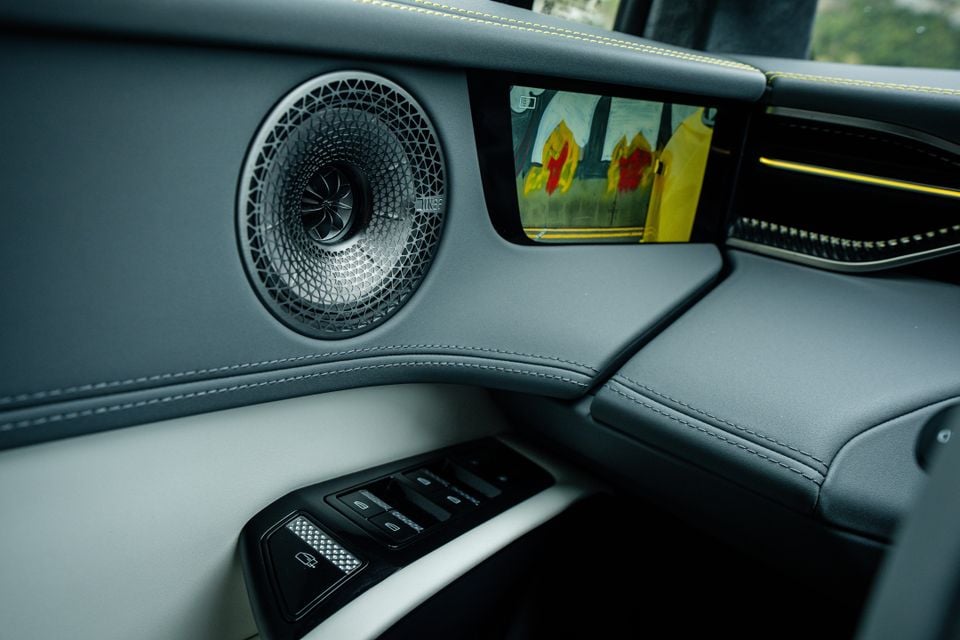
The standard of fit and finish throughout the cabin is impressive, but some of the trim materials seem a bit low-rent for a vehicle in this price segment. Although generally well-executed, the Eletre X’s innards arguably lack the sense of occasion that you’d find in a range-topping Porsche or BMW SUV.
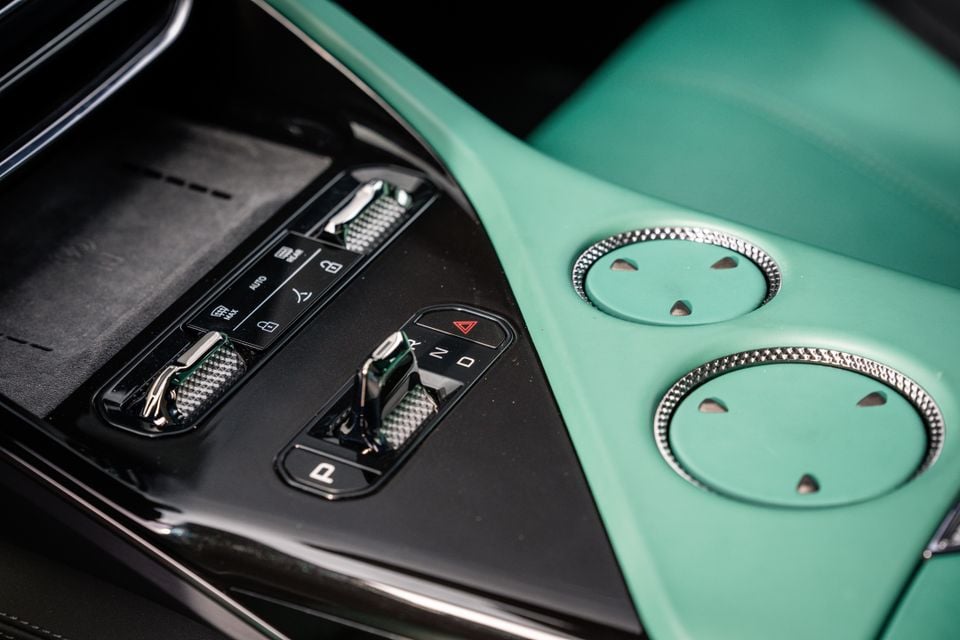
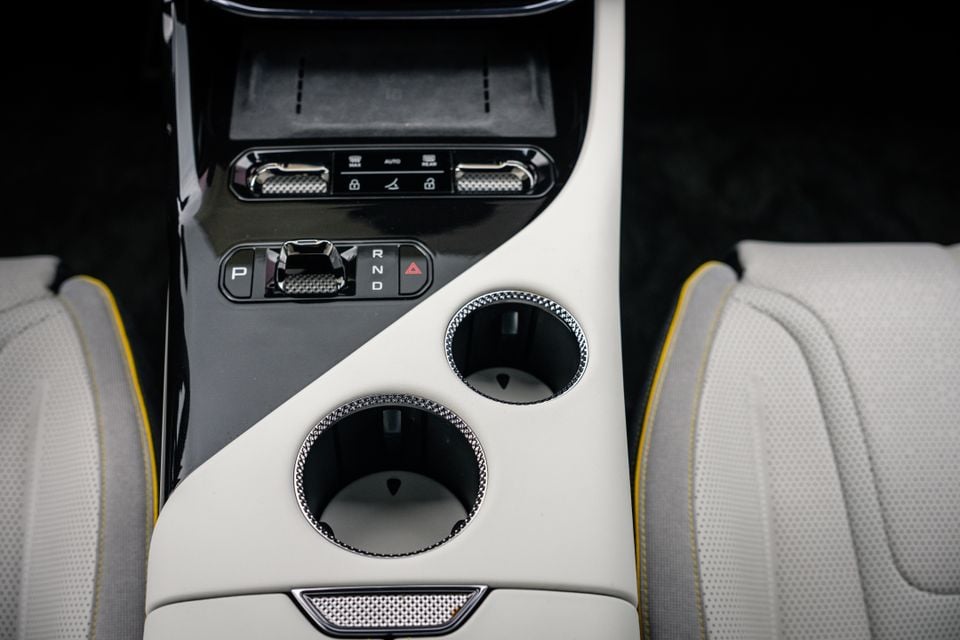
There’s also an overdependence on the infotainment touchscreen for even basic functions, such as adjustment of HVAC settings or activating the seat massage. Even the fuel-filler release is buried in the functions controlled by the screen.
For our drive program, the route navigation instructions were streamed through an iPhone the Lotus events team had provided. Annoyingly, the map would disappear from the screen anytime you changed drive modes or altered any other setting. This meant having to click two icons in succession to make the route map reappear.
The Eletre X eschews a conventional instrument binnacle in favour of a slim digital strip visible through the wheel that shows driving data, and there’s also a head-up display that’s clear and easy to read without having to take one’s eyes off the road.
The Eletre X also comes loaded with the usual ADAS functions like lane-keep assist and various warnings that bing and bong incessantly. In European (and therefore Australian) spec cars, these are always on by default, so you need to deactivate them each time you step into the car, should you choose to do so.
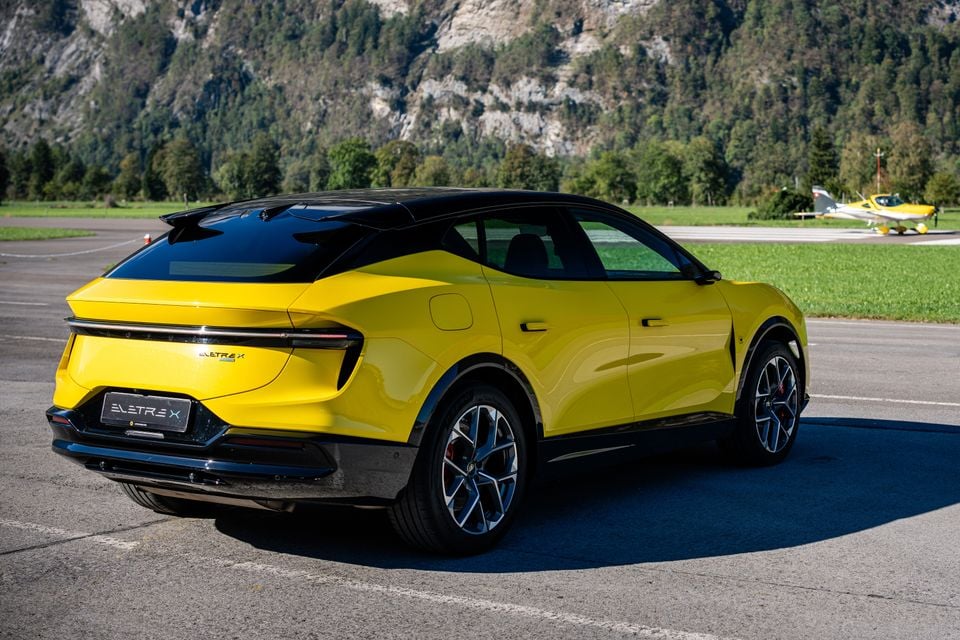
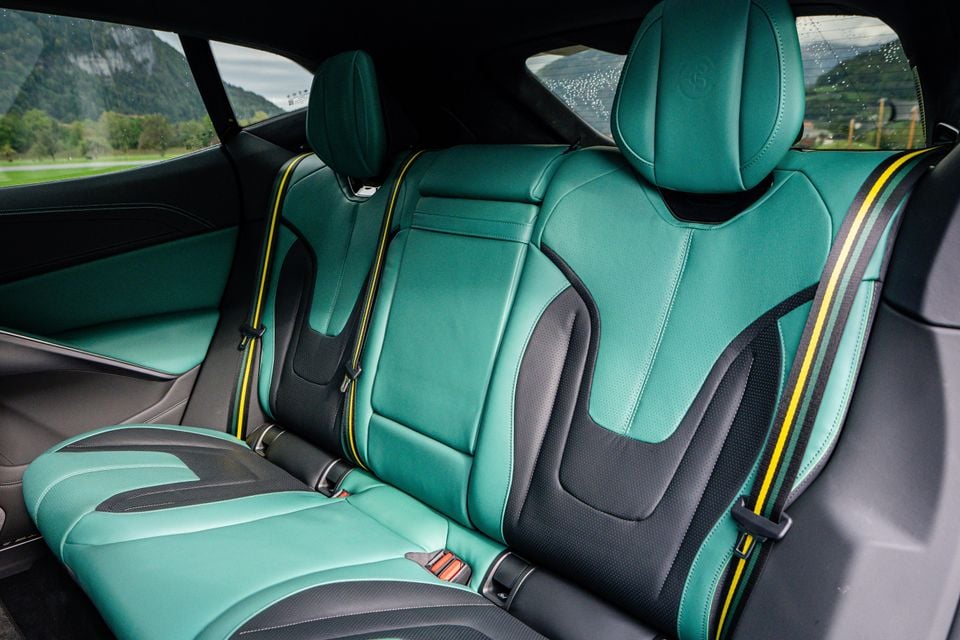
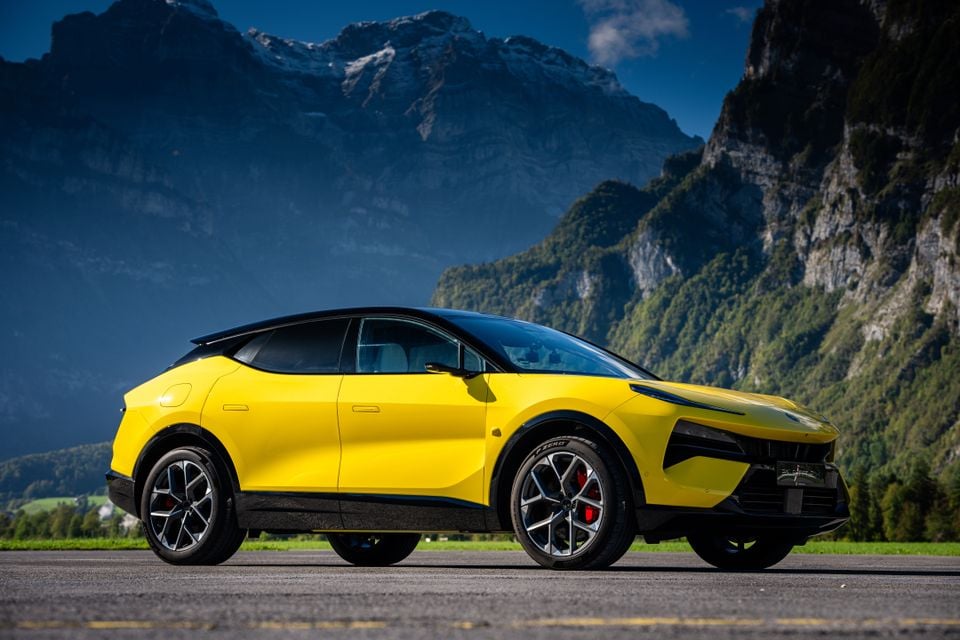
As you’d expect from a 5.1-metre-long SUV with a three-metre wheelbase, there’s acres of sprawling room inside the Eletre X, and the flat floor further enhances the cavernous feel in both the front and rear seats.
Overall, the Eletre X is an excellent long-distance companion, as the comfortable living quarters are complemented by superb refinement. Road/wind/drivetrain noise are comprehensively suppressed (there’s just a trace of wind rustle from around the windscreen pillars) and ride quality is also generally cossetting.
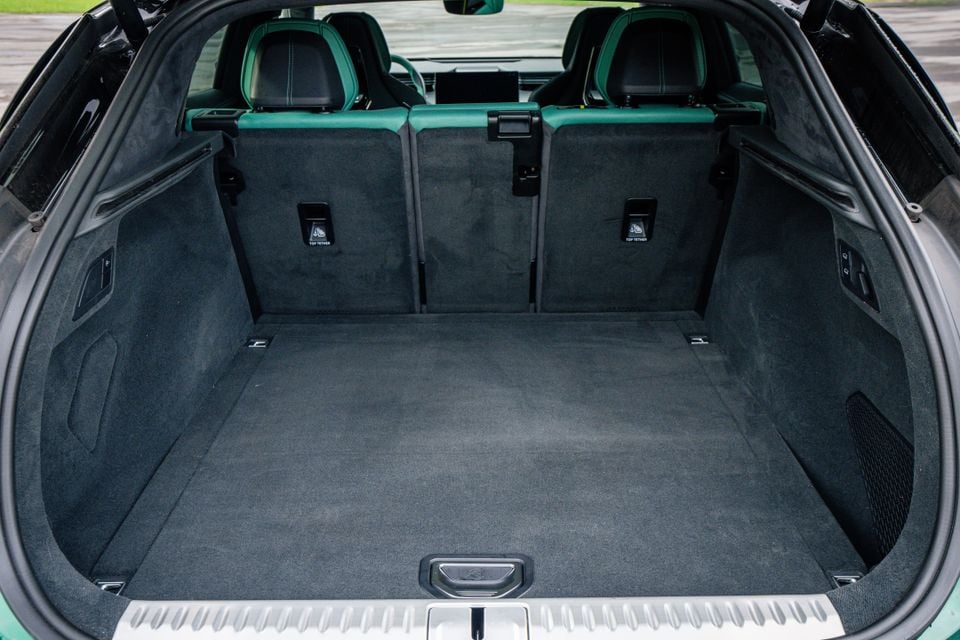
The 688-litre boot can comfortably swallow a couple of large suitcases and other paraphernalia, and there’s also a 46L ‘frunk’ for odds and ends. Folding down the rear seatbacks (they fold flat in five-seat versions) increases rear stowage space to 1532L.
| Dimensions | Lotus Eletre X |
|---|
| Length | 5103mm |
| Width | 2019mm |
| Height | 1636mm |
| Wheelbase | 3019mm |
| Cargo capacity | 46L – front storage
688L – boot (seats up)
1532L – boot (seats down) |
To see how the Lotus Eletre lines up against the competition, check out our comparison tool
What's under the bonnet?
The key change for the Lotus Eletre X versus its EV siblings is the addition of a 2.0-litre turbo-petrol engine that functions primarily as a range-extender for the battery – the petrol mill also sends drive to the front wheels through a single-speed gearbox at speeds above 85km/h.
| Specifications | Lotus Eletre X H550 | Lotus Eletre X H1000 |
|---|
| Engine | 2.0L 4cyl turbo-petrol PHEV | 2.0L 4cyl turbo-petrol PHEV |
| System outputs | 405kW / 935Nm | 700kW / 935Nm |
| Battery | 70kWh NMC li-ion | 70kWh NMC li-ion |
| Transmission | Automatic | Automatic |
| Drive type | All-wheel drive | All-wheel drive |
| Weight | 2550kg | 2615kg |
| 0-100km/h (claimed) | 4.9 seconds | 3.3 seconds |
| Fuel economy (claimed) | 0.83L/100km | 0.73km/100km |
| Electric driving range (PHEV) | 300km (WLTP) | 305km (WLTP) |
| Fuel tank capacity | 52L | 52L |
| CO2 emissions | 18.9g/km | 16.7g/km |
The battery itself has been downsized from 112kWh in the pure-electric Eletre to 70kWh, which is still very big for a PHEV. Lotus says it wasn’t simply a case of carving out a slice of the battery and plonking in a petrol engine as the SEA (Sustainable Experience Architecture) platform had to be substantially reengineered to accommodate the hybrid powertrain.
Even though the petrol engine sits towards the nose of the car, Lotus claims the Eletre X has 50:50 weight distribution over front and rear axles, as the large 390kW electric motor at the rear offsets the weight of the ICE powerplant.
The other drivetrain elements are a 310kW e-motor on the front axle and a generator capable of charging the 70kWh battery with up to 150kW when needed.
Its hybrid format and ability to keep recharging the battery means the Eletre X Hybrid retains strong performance even with a low state of charge. Even at a 10 per cent battery charge, Lotus says it still accelerates from zero to 100km/h in 3.5 seconds (3.3 seconds on a full charge).
It’s an enormously complex system, but the payoff is that the Eletre X’s scorching performance is backed by a claimed 1258km range, including up to 350km of electric driving, according to the more generous WLTC cycle.
Even with the battery drained, the engine and 52L fuel tank ensure the electrified SUV can continue driving. At the end of the opening day of our drive (around 230km), we arrived at the overnight hotel after a spirited charge across the breathtaking Gotthard Pass with the digital display showing 746km of range remaining, even though battery charge was down to four per cent.
Range anxiety therefore becomes largely irrelevant. Lotus claims the 900-volt electrical architecture allows DC fast-charging at up to 430kW, enabling the battery to charge from 20 to 80 per cent in just nine minutes.
The 2.0-litre turbo-petrol engine, supplied by Aurobay and Horse Powertrain, operates imperceptibly (you can’t really hear or feel its presence from within the cabin) as it ticks over at about 2000rpm at 100km/h and roughly 4600rpm at the 230km/h top speed.
In most situations, the Eletre X behaves like a pure electric vehicle, with the combustion engine charging the battery. Out on the highway, the petrol motor sends drive to the front wheels via a single-speed gearbox at speeds between 85km/h and 230km/h.
Drive modes include pure electric, EV Pro, which prioritises electric driving, Sport and Hybrid, in which the system automatically selects the most efficient strategy. For most drivers, the latter will likely be the preferred default option.
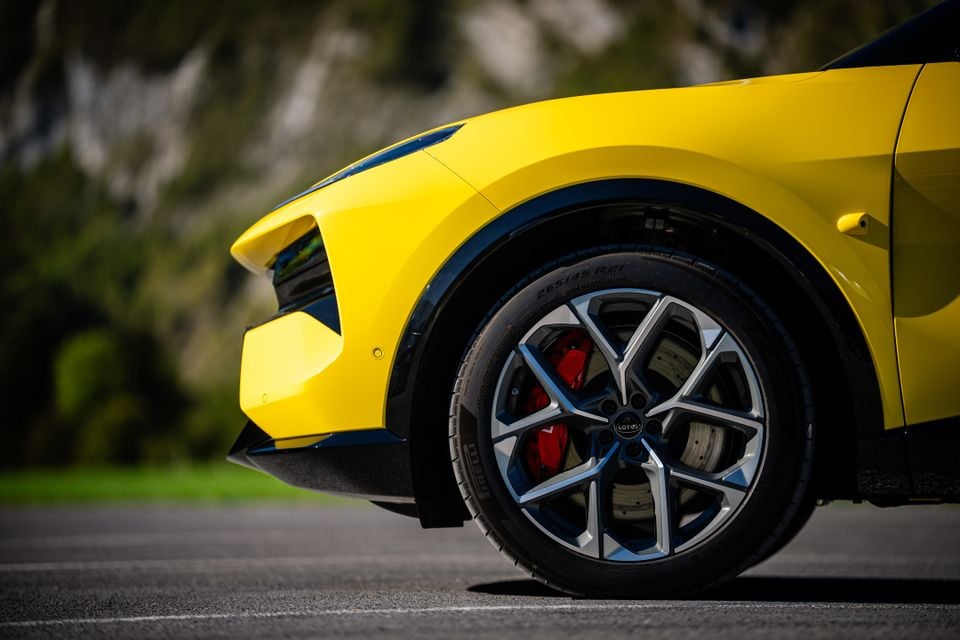
The Eletre X rides on dual-chamber air suspension and dual-valve adaptive dampers. The H1000 model that we’ll get in Australia will also likely have a 48V active roll stabilisation system, plus active torque management and six-piston Brembo front brakes.
Interestingly, though, the Eletre X makes do without rear-wheel steering, even though the latter is offered in EV versions of the Eletre.
To see how the Lotus Eletre lines up against the competition, check out our comparison tool
How does the Lotus Eletre X drive?
The last Lotus I drove was an Exige Sport 410. Noisy, harsh-riding and barebones inside, the hardcore sportster was tiresome to drive around town and on the highway, but of course it came alive once I got it out onto some twisty mountainous roads.
Suffice to say, the Eletre X provided a completely different experience, but it was refreshing to glean that some of the core Lotus DNA had carried across (as unlikely as that may seem in a full-size SUV that functions primarily as an EV).
The Lotus events team had mapped out an interesting and varied drive route that would take us from Zurich, out towards the Alpine ski resort of Andermatt and from there to Munich the following day.
Along the way, we’d be traversing the spectacular Gotthard Pass and Susten Pass, with the final leg of the journey comprising some derestricted autobahn blasting in Germany.
Noiselessly gliding out of the hotel carpark, the initial schlep out through Zurich morning traffic brings home how easy the Eletre X is to commandeer. Visibility in all directions is excellent, and the instant urge on tap from the potent hybrid powertrain makes it easy to effortlessly nip into gaps in traffic when required.
Once out of the city, the effortless loping stride of the Eletre X becomes evident. I recently covered 2300km in the latest Mercedes S580L 4Matic, and my seat-of-the-pants impression is that the Eletre X matches the German limo in terms of quietness and ride comfort.
If anything, the Lotus might be even quieter (especially under throttle) as there’s only a trace of wind rustle from around the A-pillars to disturb the silence. This remains the case even at a steady 150-160km/h cruise on derestricted German autobahns.
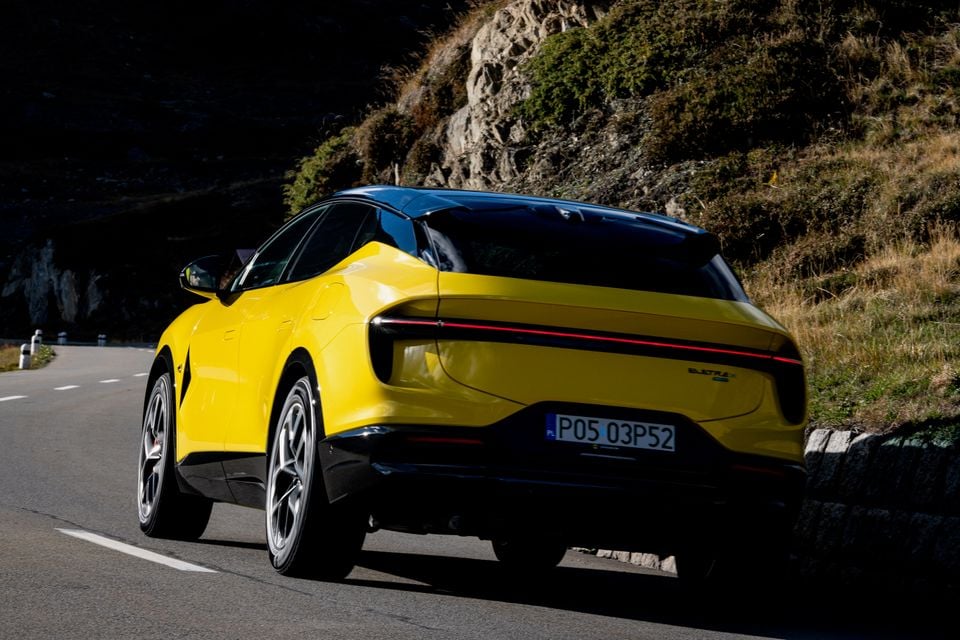
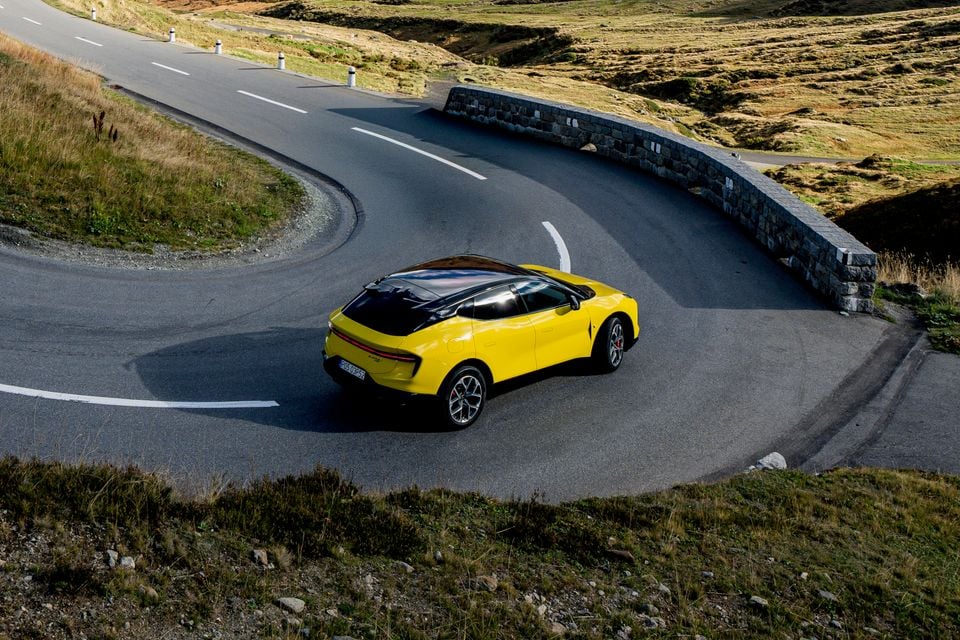
As we reach alpine terrain, the roads become narrow and twisty – almost like spaghetti strands thrown against the landscape. It’s instantly refreshing to discover the Eletre X doesn’t turn into a soft, wallowing blancmange when flung at corners with vigour. Quite the opposite.
Having engaged Sport mode, the dual-stage dampers firm up, the air suspension lowers, and the active aero (rear wing and grille shutters) are optimised for maximum downforce.
The roads are so narrow in parts that there’s barely enough room for two cars to pass in opposite directions, so a 5.1m-long, 2m-wide SUV might not seem tailor-made for the route we’re on.
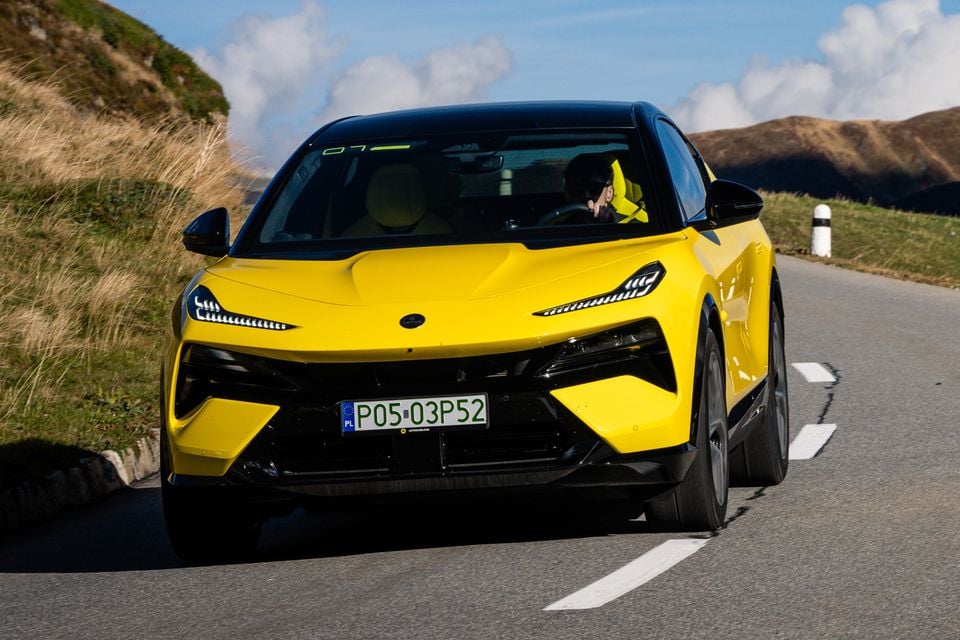
Despite its girth, the Eletre X devoured these hairpin-strewn stretches. It might make do without the four-wheel steering that’s offered in the Eletre EV, but that doesn’t seem to hamper its ability to rotate through tight 180-degree turns.
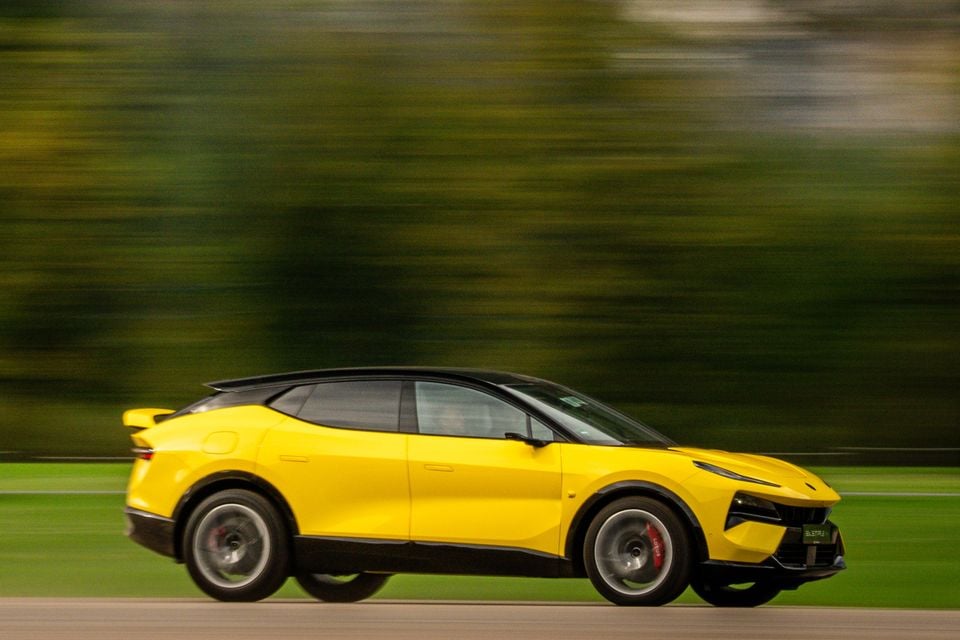
The titanic grunt of the hybrid powertrain enables the Eletre X to rocket from one corner to the next, and any slow-moving cars are dispatched in a virtual blink as overtakes can be quickly and safely executed.
The 2.6-tonne Eletre X certainly exceeds expectations with its agility and dynamism. The steering, too, is accurate and direct, although lacking in the feedback it relays to your fingertips – its weighting is also a tad light, even when you engage Sport mode.
Driven at seven or eight-tenths, the Eletre X remains taut and composed, but if you lean on it harder than that, the front-end tends to push straight ahead through corners as understeer sets in.
That said, the cars we drove at the launch were equipped with winter tyres, which were obviously not as grippy as the bespoke Pirelli P Zero LTS rubber that’s standard-fit on the Eletre X.
Overall, the Eletre X is a pleasant and engaging SUV to pedal – whether you’re in dawdling mode or making the most of its electrifying backroad pace.
To see how the Lotus Eletre lines up against the competition, check out our comparison tool
What do you get?
Australian spec levels will be announced closer to the Eletre X’s local launch, but it’s safe to expect a high equipment quota in even the base model; the likely features are listed below.
Ready to buy? We’ll help you get a great deal.
If this is the car for you, we’ll compare offers from trusted dealers, handle the back and forth and manage your purchase from enquiry to delivery.
If the Australian lineup follows other markets, there will also be a high-spec version that adds active grille shutters, a rear wing, intelligent glass roof, soft-close doors, carbon-fibre interior trim, a comfort seat package (massage and cooling seats), plus a premium 23-speaker audio system.
2027 Lotus Eletre X standard equipment highlights:
- Standard 5-seat layout, optional 4-seat configuration)
- Power-adjustable front seats
- Lotuswear vegan upholstery
- 15.1-inch OLED infotainment touchscreen
- 12.6-inch slim digital driver instrument display
- Head-Up Display (HUD)
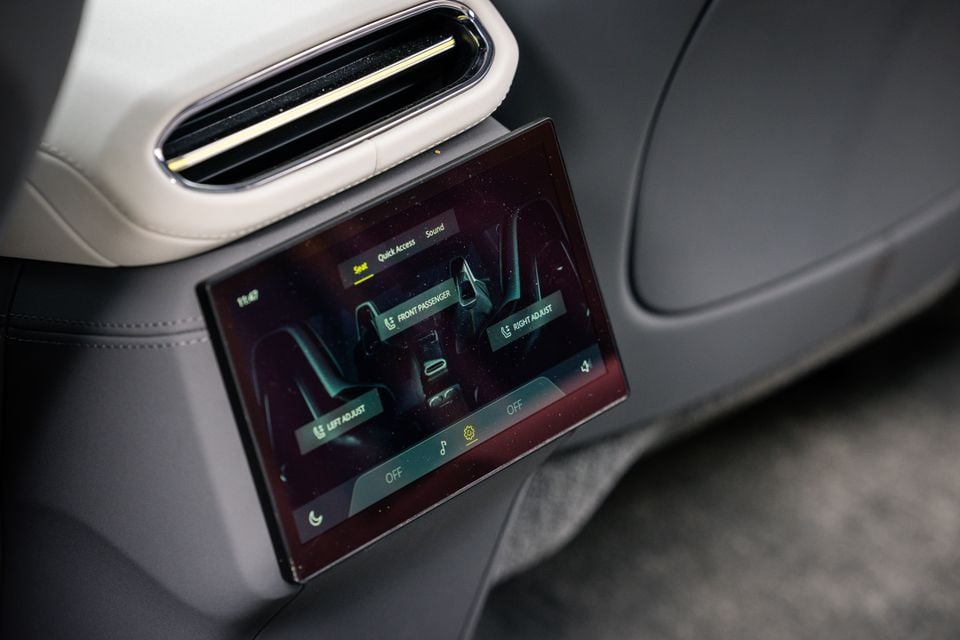
- Dedicated touchscreen display for rear passengers
- KEF 15-speaker sound system
- Multi-zone automatic climate control with air quality monitoring
- Road noise control (RNC)
- Wireless Apple CarPlay
- Android Auto
- Wireless phone charging with NFC
- Over-the-air (OTA) software update support
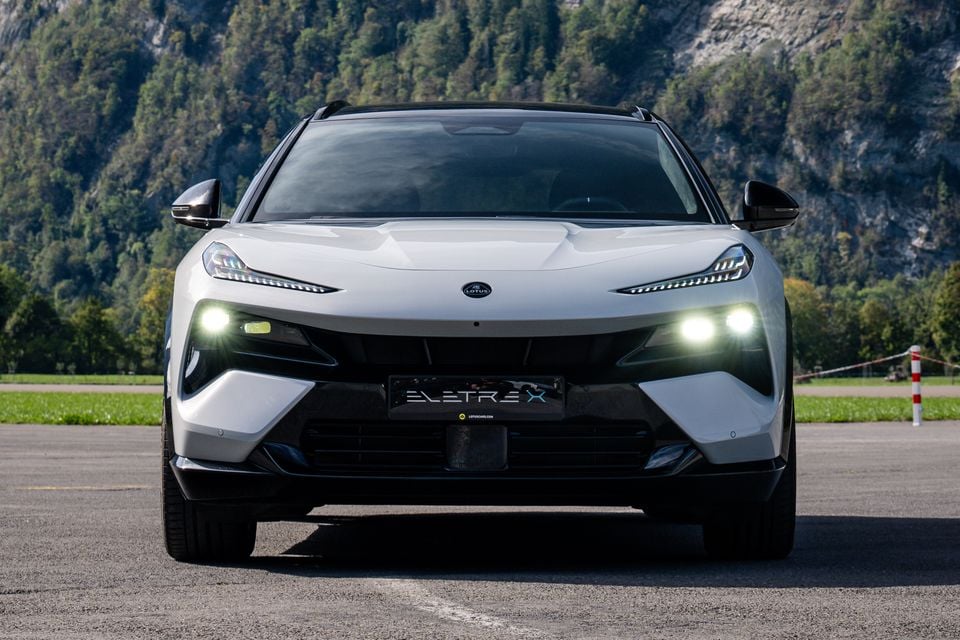
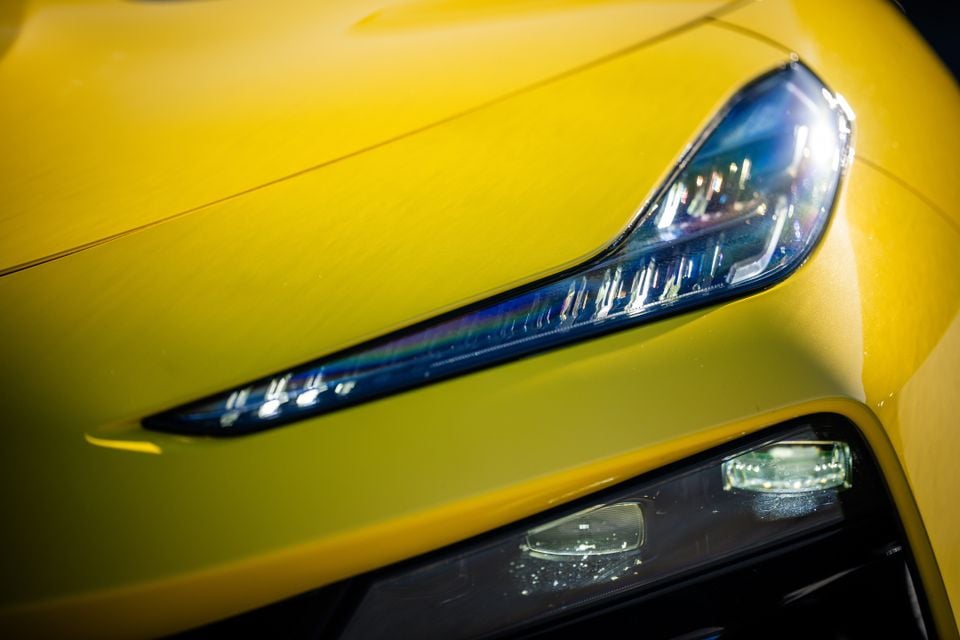
- Super-slim LED daytime running lights (DRLs) with double L-shaped graphics
- Auto adaptive matrix LED headlamps
- Tail lamps – double as battery charge indicators
- Frameless doors
- Flush-fitting exterior door handles
- Hands-free power tailgate
- Rear privacy glass
- Heated wiper nozzles
- Auto-dimming rearview/side mirrors
- 21 or 22-inch alloy wheels
- Bespoke Pirelli P Zero LTS tyres
Eletre X H1000 adds:
- 48V active anti-roll system
- Forged alloy wheels
- Brembo brakes – 412mm with six-piston calipers front; 364mm four-piston rear
- Active rear spoiler
- Carbon-fibre cabin inlays
- Alloy throttle pedal
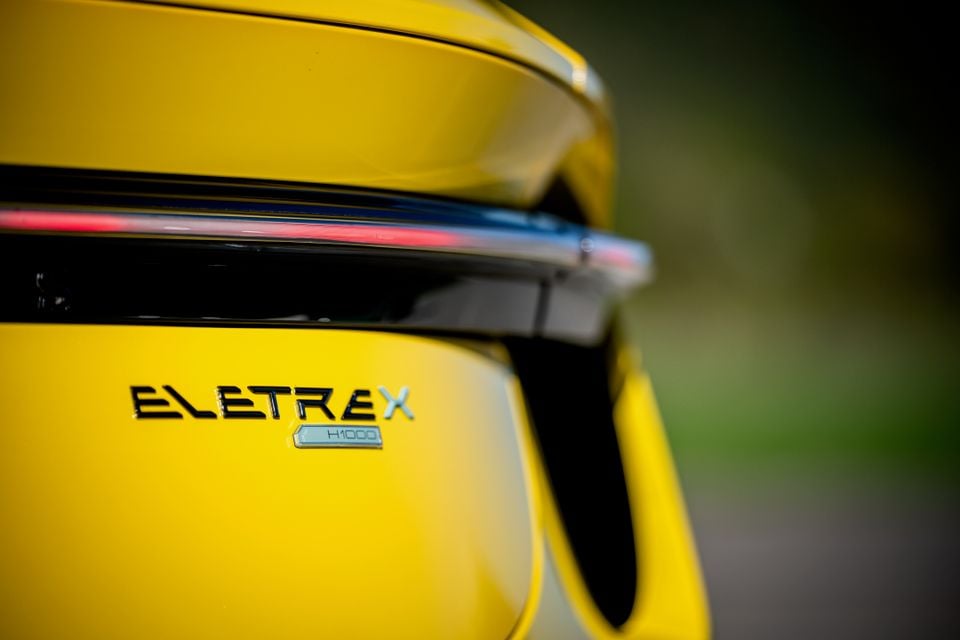
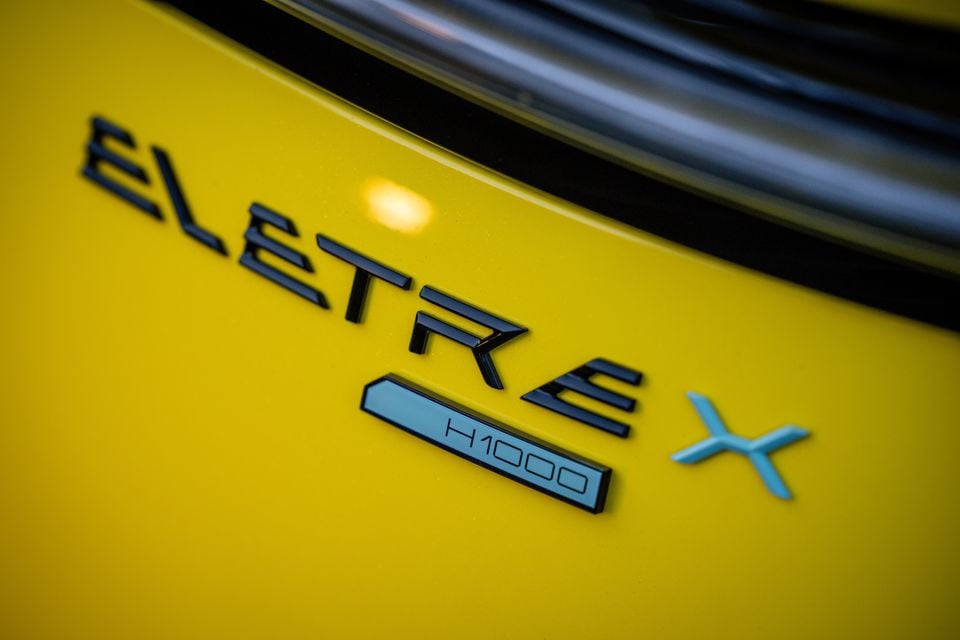
- Gloss-black rear model badge
To see how the Lotus Eletre lines up against the competition, check out our comparison tool
Is the Lotus Eletre safe?
Due to its low-volume status, neither the Eletre nor Eletre X have been crash-tested by Euro NCAP, ANCAP, or any other independent auto safety body.
Even so, it comes armed with an array of active and passive safety features.
Standard safety equipment:
- Driver, passenger, side, curtain and rear-side airbags, plus front-centre airbag
- Adaptive Cruise Control (ACC)
- Autonomous Emergency Braking (AEB)
- Lane Keeping Aid (LKA) & Lane Departure/Open Warnings
- Blind Spot Detection (BSD) & Rear Cross Traffic Assist (RCTA)
- Driver Monitoring System (DMS)
- In-Car Life Presence Detection
- Traffic Sign Information (TSI)
- Integrated Chassis Control (ICC)
- Electronic Stability Control (ESC)
- Traction Control (TCS)
- Rear-view camera
- Front and rear parking sensors
- Hill Descent Control (HDC)
- Post-Impact Braking (PIB)
- Tyre Pressure Monitoring System (TPMS)
To see how the Lotus Eletre lines up against the competition, check out our comparison tool
How much does the Lotus Eletre X cost to run?
Lotus has yet to confirm warranty and servicing information for the Australian market.
But as a guide, the current Eletre and Emeya are backed in Australia by a five-year, 150,000km warranty and an eight-year, 200,000km battery warranty.
To see how the Lotus Eletre lines up against the competition, check out our comparison tool
CarExpert's take on the Lotus Eletre X
The Lotus Eletre X is a mould-breaking large SUV because nothing else in its segment offers the combination of a continent-crossing touring range and searing acceleration that gives you an instant facelift every time you floor the throttle.
That said, the hulking Eletre X deviates so far from company founder Colin Chapman’s simplicity-first ethos that onlookers may be bemused to see the Lotus badge on its bonnet.
The Eletre X’s hefty weight, feel-deprived steering and towering stance prevent it from serving up the sheer driving sizzle and X-factor delivered by ultra-focused Lotus greats such as the Exige, Elise and yesteryear’s Esprit and Super Seven.
Viewed in this context, it might be interpreted as a lukewarm offering from the storied British marque.
However, if you put heritage to one side and see the Eletre X for what it is – a fast, supremely refined and surprisingly agile long-range performance SUV that targets a much larger audience than any hardcore sports car, it begins to make sense.
It’s not a dissimilar transition to the one Porsche made at the turn of the millennium when it launched the Cayenne. We all now know the SUV was a financial saviour for Porsche. Only time will tell whether the Eletre X can do the same job for Lotus.
CarExpert can save you thousands on a new Lotus Eletre. Click here to get a great deal.
Click the images for the full gallery
MORE: Explore the Lotus Eletre showroom













 Automotive Vehicle Spec Data & 4K images Powered by JATO Dynamics Ltd