In the world of finance, it’s called ‘divesting non-core operations’. But to the rest of us, it simply means focusing on what we do best.
Continental made the call in recent years to reorient its efforts to making tyres, dropping business units like ContiTech – known for manufacturing engine drive belts – and selling its Australia-wide mycar servicing business. While it hasn’t completely walked away from both OEM and aftermarket parts, the German tyre giant has drawn a line in the sand: tyres are its core product.
This shift within Continental’s business model hasn’t been the only difficulty, with external challenges around heavier EVs and sustainability playing a greater role in the industry – all with the backdrop of increasing competition from China.
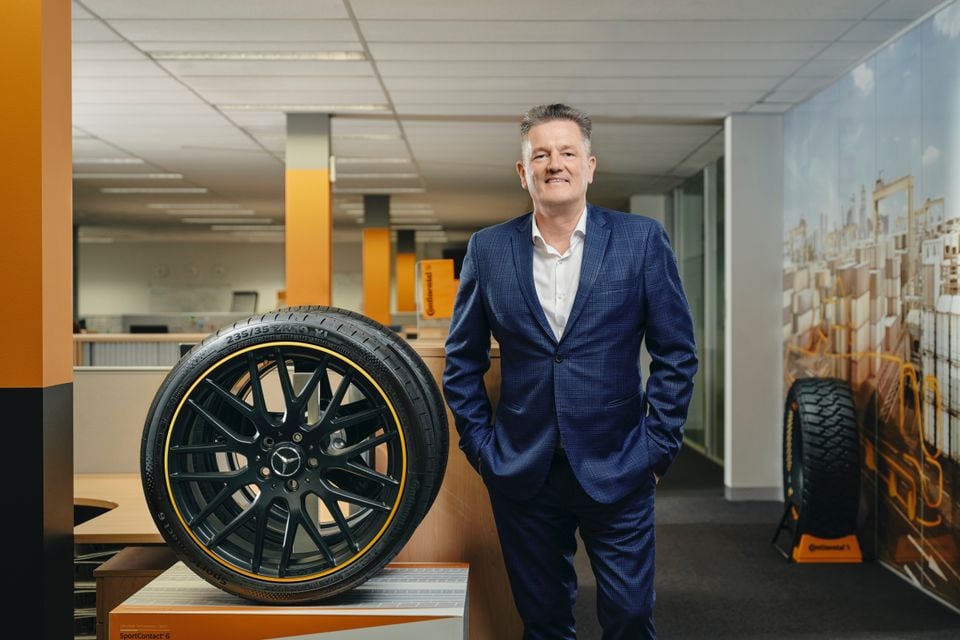
Having been with the company for almost 14 years, Mitchell Golledge was appointed as managing director of Continental Tyres Australia in 2020, and took on the role of head of the East Region Asia Pacific two years later – overseeing the company during COVID, which resulted in global shifts in manufacturing, competition, and logistics.
With the conversation around tyre emissions standards coming to the fore, and the explosion of cheap tyre availability in the market, we sat down with Mr Golledge to get an industry perspective on the changes happening within the tyre market – and how they may affect Australian motorists.
Let's start off with the Continental Cross Contact A/T2. Did Australia materially influence the development of the new tyre?
Mitch Golledge: Continental has a couple of key concepts: One is ‘in the market, for the market’. In the Asia Pacific region, we've got five manufacturing plants, and there are two of those that are actually producing the A/T2. And within Asia Pacific, we have lead markets which have a heavy dominance.
If I was to pick Japan, for instance... Japan has kei cars – which are [on] small rims, 14-, 15-inch tyres – [these are] smaller cars to get into parking lots, and so forth. So, if we're going to develop a [passenger] tyre on a 14- or 15-inch rim size that's got lots of other attributes about it, Japan would be our lead market.
When we get into India, [for] 12-inch tyres on a tricycle type thing, they're the lead market. It doesn't mean other markets don't have any input, but it does mean that because they're so dominant we've got to take more of a preference on the requirements of that market.
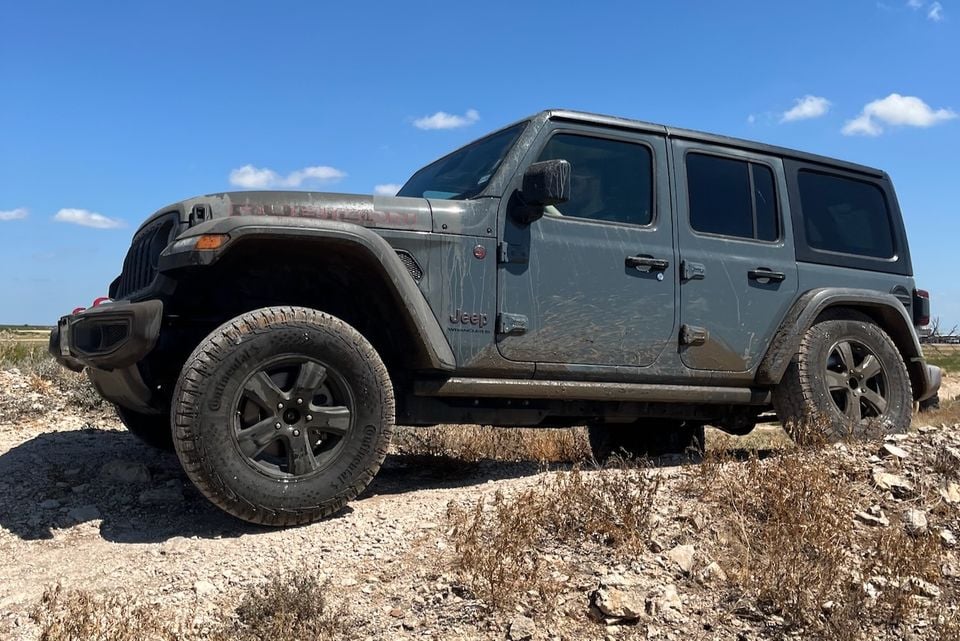
Now, when you talk about the A/T2, [it's] no surprise if you know anything about registrations in the Australian marketplace. If you look at the top 10 selling cars in 2025, [nine of them] happen to be either SUVs, utes, or four-wheel drives. So by the fall, Australia is the lead market when it comes to development of the AT/2 pack.
Doesn't mean that Malaysia or Thailand doesn't have some influences – and those markets, Thailand for instance, has got a different requirement. They actually like white lettering on the sides of their tyres, which doesn't add a great deal other than aesthetics. Looking at it from a performance view, it doesn't.
We get the pattern design and the look and the feel, the braking capacities, the noise levels that we require for the Australian marketplace, and down the track you will see – not in the Australian marketplace – but you will see in other parts of Asia Pacific that same tyre, but it will have a white sidewall lettering on it.
On that point, how different is the same-named tyre between different regions or markets? Are they all absolutely identical across the world?
Mitch Golledge: As a business, we don't have manufacturing in Australia, so we can actually take tyres [from Continental’s] 19 manufacturing plants around the world. We take tyres from all of those manufacturing plants, depending on what the need is for the Australian marketplace.
There are some plants that only produce certain types of tyres, but generally, a tyre that we would take from one of our manufacturing plants is the same. If it's produced in our Hefei plant in China, or whether it's produced in our Slovakian plant, or in our German plant... it's an equivalent tyre that enables us, in more recent times, to be able to manufacture tyres in location, where they're needed.
But then if that production facility doesn't have enough production, [that] enables us to source from another production facility. Hence, the AT/2 for us is produced in Hefei, China, and also in Raong, and the Italian plants, and we source from both of those plants just depending on capacity – [but] most of that production for us comes out of Thailand.
How does the testing happen? Do you bring in tyres from different plants to test them to make sure that the quality is consistent from the different facilities?
Mitch Golledge: We've got different testing facilities. So, in Europe, there's the Contidrom, which we established in 1967, which was where a lot of our testing was done. In China or in Asia, we've got a testing facility in Malaysia and also in Shanghai, and we've got a proving ground also in the US.
Depending on where it is, when we were talking a little bit earlier, 98 or 99 per cent of the product is done in an R&D environment. It's that last little bit that's 'touch and feel' by our test drivers, but any of these changes then get rolled out [to] the workplaces anyway.
Does Continental have any plans to go further into rough-terrain or mud-terrain tyres, or is the the A/T2 deliberately pitched as the all-terrain for all conditions?
Mitch Golledge: Really interesting question, because it really does come back to the market, as the market evolves. You won't be surprised to hear the rise of EVs and hybrids in the Australian marketplace.
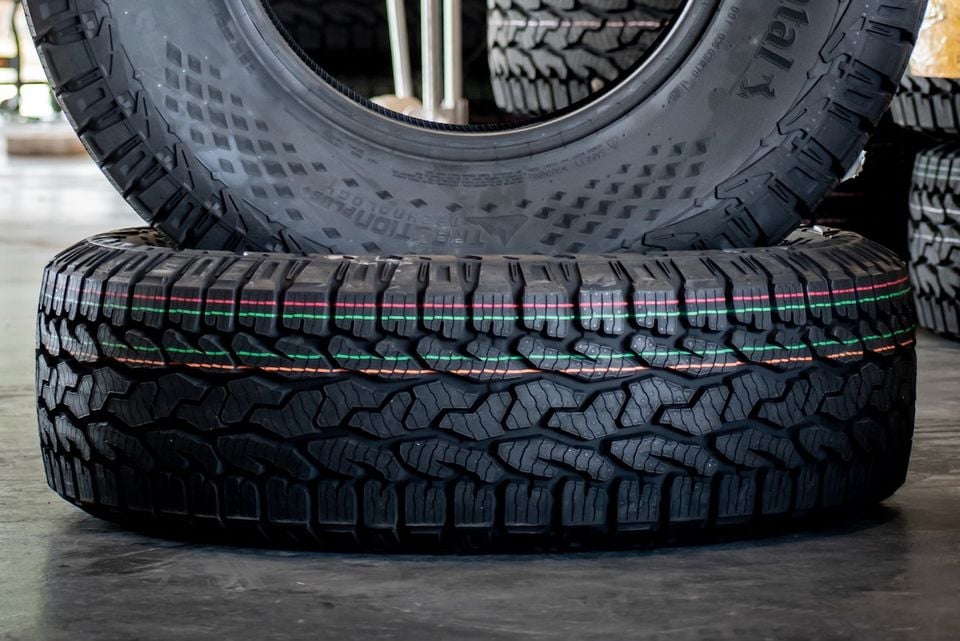
All-terrain tyres in the past have been internal combustion engine-driven and haven't had much need for rolling resistance. So, we've had a real heavy focus on braking and comfort in terms of noise for that pattern. But as new cars come onto the marketplace, that development you will see further as we go through.
Mud-terrains as a global market is a really small end of the market. Continental purchased General Tires in 1987, which is a US-based brand. We've had mud-terrains in the Australian marketplace under the General Tire brand in the past, and it hasn't been that successful for us because the volume's just not there. They do great business in the US, where they produce those tyres, and they also produce them in South Africa. But it's a really small market in Australia.
I suppose the next generation, or the next [question] will be, for us, is what's the development of the 'car park' in the Australian marketplace, and what are the consumers' needs versus the all-terrain pattern? If you look at it, we've designed [the AT/2] specifically to enable the consumer to have an off-road experience, which most people don't do in an SUV or a four-wheel drive vehicle.
I think less than half actually will take their car off-road at any point during the year. It's more on-road use. So, the pattern that's on [the AT/2] is to try and bridge the gap between an off-road pattern and also an on-road pattern.
It needs to be quiet whilst it's on the road and have fabulous braking capabilities, but also be able to handle rough terrain. Moving forward, as the market changes, we will look at development of other attributes that consumers need that they're probably not aware of today.
You mentioned EV tyres. Does Continental believe in dedicated EV tyres, or is the company positioning a broader range that's EV-ready?
Mitch Golledge: A couple of things: I need to talk about EVs in general. Electric vehicles have got a lot more torque, so the wear characteristics on that tyre are different, and the requirements for a pure battery [-electric vehicle] versus a hybrid are different – in terms of the consumer being able to charge a vehicle versus a hybrid, [in] which they don't have to worry about charging capacity.
We have EV-ready tyres in our marketplace that we sell under the Continental Australia business. We've launched recently the XC7, which is trying to address another need that most EVs don't come with, or hybrids don't come with: a spare tyre. The silent technology and the seal technology we've launched into one pattern, which is the XC7, gives them a bit of mobility; it doesn't address battery concerns, but a hybrid vehicle doesn't require that.
We're sitting in between trying to service some consumers' fear about not having a spare tyre and how do they get it fixed. So, all those sorts of things. The XC7 that we've launched in the marketplace [is designed] to try and address that.
What should an EV buyer be asking before choosing replacement tyres?
Mitch Golledge: Really good question, from my point of view. Continental, I believe, is the safest tyre in the marketplace. So, you want your tyres to be able to handle if [the vehicle has] quick acceleration and torque; you need to be able to stop – the first and primary job of the tyre is to stop. After safety, there are a whole host of other factors that come into a consumer's mind about what they perceive to be the most important thing.
I spoke a little bit earlier about getting a puncture; having a seal technology on a tyre becomes really important if you're concerned that you don't have a spare tyre. If you're worried about a pure battery [-electric] car, then in Australia the infrastructure for charging is not at the highest level in the regional areas. So maybe battery performance, and therefore rolling resistance, becomes more of a [criterion]. I think every consumer's got a slightly different requirement of what they want to look for, but safety is paramount from my point of view.
Do you think tyre companies are prioritising EV range over grip and tyre life?
Mitch Golledge: I think there's a whole host of things that are happening in the marketplace at the moment. One is standards that are being adopted in different marketplaces. But a tyre is basically there to do one job, and that is its contact between the person that's driving the car [and] the road.
You need braking capacity, handling, and performance, depending on the type of driver you are, and rolling resistance for longevity of range. So, it's about [deciding on] a priority when we develop a tyre, and each type of tyre we have a priority system [for]. So we identify priority A, B, and C, and priorities are always in conflict. If you want great longevity in a tyre, you sacrifice rolling resistance. You can get 100,000 kilometres in a tyre, but the rolling resistance will be really bad, or braking, and so you always go one against the other in terms of conflict.
We always set a priority of what we have as a minimum, that we need to have in our A priorities, and we'll sacrifice our C's to achieve the A's. So for each tyre line, it's a different requirement that we have. And, as I said about the AT/2, the requirement in our A priorities for that tyre is that we wanted to have a tyre that performed in braking, in wet braking especially, and we wanted to have a tyre that was – in terms of comfort – a quiet tyre, and so you can see that's the outcome of the AT/2. Those two are the standout features of that tyre above our competitors in the marketplace.
You mentioned the changing market. Are you seeing cost-of-living pressures pushing Australian motorists to opt for lesser brands, or delay replacements?
Mitch Golledge: I think that's that'll always be the case. I won't talk about Continental, [but] the difference between a budget tyre and a premium tyre, or a premium brand, is the investment the premium brands [have] taken to develop that tyre in terms of braking, durability, performance, handling.
So, yes, there is some price compression in the marketplace with cost-of-living pressures, but the underlying factor that a consumer needs to evaluate is always: what do they need, and are they prepared to give up safety and performance and handling for a cheaper price? And to the point earlier, when you need it, unfortunately, is when you're in a situation where, when you put your foot on the pedal to stop the car, you want it to stop. Most premium brands stop 14 metres quicker than budget tyres.
Do you think freight costs, raw materials, and currency volatility will see tyre prices go up in the next 12 or 24 months?
Mitch Golledge: Lots of factors go into that. The world is an interesting place at the moment. We've got a couple of wars that are in play. We've got the Strait of Hormuz that is closed and then opened, then closed again, and you can see that at the petrol bowser.
You know, I was recently overseas, and [when] I left the country petrol prices were at $1.99, and I've come back in [and] they’re at $2.44. That's a 25 per cent increase in less than a week. That has a knock-on effect on a global basis in terms of raw materials.
The price will move based on raw materials, but then you have exchange rates that go in different ways as well, [like] the Australian dollar appreciating against the US dollar. So it's all about balance. Most manufacturers run lean operations and distribution, and therefore any cost pressures that they see coming from their supply base or their manufacturing base normally has to be passed on.
From a global perspective, we've seen Continental drastically reduce its business portfolio so it can focus on tyres primarily, and as part of that, we've seen Continental Australia sell off its mycar business.
If mycar decides to expand its tyre range, how is Continental going to defend its market share without having a retail chain?
Mitch Golledge: Good question. In our commercial dealings, we try and have as much market share with all of our commercial partners and all our commercial retailers in the marketplace. Mycar is no different. We're not 100 per cent supplied to the mycar business at the moment. We have competition already in that retail network, so we'll continue to fight the good fight and try and get as much market share and not give up any with any of our retail partners.
What do you think is the biggest tyres-related issue that perhaps isn't spoken about in the community?
Mitch Golledge: I think one [area] – and it's one of my own personal things that I want to try and help the Australian marketplace achieve – is circularity of tyres.
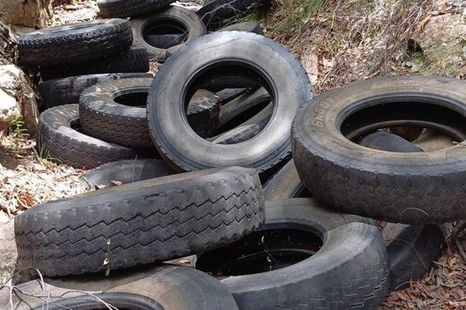
We've currently got a voluntary system in terms of [there being] 16 members that belong to the Tyres Stewardship Australia association. Not all tyre manufacturers and importers contribute to that. So, we currently are able to fund R&D projects for the development of using recycled tyres back into the marketplace – but we have a government that won't mandate a mandatory system, and therefore I think recycling is going to become a bigger issue for the Australian marketplace for tyres.
Do you think every tyre importer, and potentially vehicle importers, should contribute to the tyre stewardship program?
Mitch Golledge: So, at the moment, it's voluntary, and there's only 16 members that contribute to that, so it's a $1 amount for every tyre that you sell or you bring into the country. You contribute to that scheme, and that scheme then invests in research and development programs. There's only 16, and it's voluntary.
There are a lot of free riders that bring tyres in, don't contribute, don't involve themselves in recycling of the products that they're bringing into the country. So it's almost, you know, they're in it for a quick buck, whereas the likes of the premium manufacturers and the other 16 that are in that group are invested in trying to develop a way of making sure that the waste product that we generate because we manufacture it gets recycled in some way, shape, or form.
Let me give you a couple of stats. In 2024, Conti produced 26 per cent recycled reclaimed materials into every one of its tyres on a global basis. At the end of 2025, that's 28.1 per cent. At the end of this year, we will have made a significant step towards our goal of 40 per cent of recycled or reclaimed materials into our tyres. It's not 100 per cent, but we are a significant way down the path of ensuring that what we produce is actually being put back into the tyre or being reused in another format, whether it's been roads, in gym mats – or whatever it may be – but in our own tyres, 28.1 per cent last year.
Can sustainable tyres still deliver wet braking performance, low noise, longevity, price competitiveness, and all the things buyers expect from a premium tyre?
Mitch Golledge: Let me go about this way. In 1904, Conti developed the first groove tyre. In ‘43, we took out a patent on the tubeless tyre. In ‘02, we developed the first run-flat tyres in the marketplace, and in more recent years… Conti Seal and Conti Silent.
We always get confronted with challenges, and we seem to always be able to work out a way to be able to overcome those challenges and deliver a tyre which the consumer needs and requires to drive safely on Australian roads and roads around the world.
Are you able to give us an insight into what performance metric is the hardest to protect when sustainability content rises in a tyre?
Mitch Golledge: It depends on [the path of] sustainability, right? So, sustainability in most – if you were to look at electric vehicles – comes into rolling resistance, but sustainability also comes into PET bottles that we recycle and use. [Continental takes] the polyester out of the PE and uses polyester yarn that goes back into the tyres. Or the rice husks, where we extract the silica, and we put that back into the tyre. So, sustainability is a really wide topic.
If you talk about performance of the tyre, I think everything [is] in conflict, and it's about setting the priorities of A, B, and C on the type [of product] line that we're bringing to the market at any point in time. So, I can't give you an answer, but sustainability is a huge topic that I could probably spend a couple of hours on with you.
If you had one policy request for federal or even state governments on tyres, what would that be?
Mitch Golledge: Make recycling a mandatory requirement, or make a cost for every tyre importer into the Australian marketplace – to pay a fee for the recycling or making a closed-loop system for tyres.
On tyre safety, what do you think is the biggest tyre-related road safety issue in Australia?
Mitch Golledge: Road conditions, unfortunately – it's got nothing to do with tyres. It's actually road conditions. The state of the roads, particularly [in] Victoria, means that a tyre in a car has a hard time trying to perform in any conditions like that.
You know, I just can't give you any more specifics. I can tell you that some of your earlier questions around electrification of cars and the conflict that happens in how we do our development of tyres that creates a problem… that it's not a problem that we can't solve. It's just the focus that we need to put on it. But if you're talking about the Australian environment at the moment, I would say road conditions are the biggest challenge for drivers.
What is one behavioural change that you think would make the biggest difference to increase the safety of ordinary drivers when it comes to tyres?
Mitch Golledge: It's a really simple message: inflation of tyres to the correct pressure, and checking of tyres on a regular basis, is probably the fundamental thing that we don't do in the Australian marketplace. We call into a service station, fill our car up with petrol or diesel or whatever it may be, and we don't check our tyres. And we should do that as a fundamental thing. We should do it once a week, but we don't.
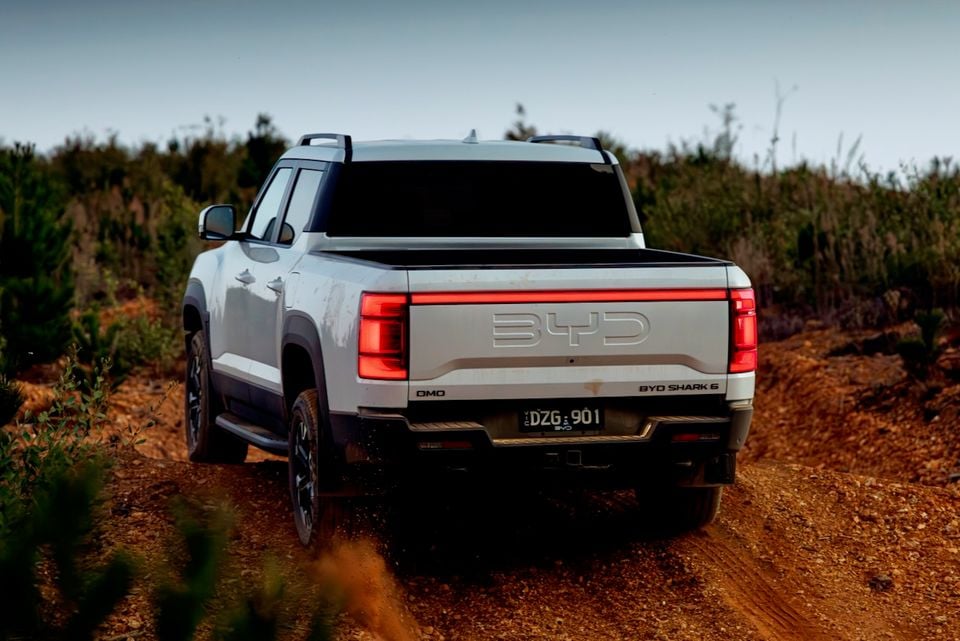
I was on a BYD Shark 6 launch recently, and one of the entry-level variants has Giti tyres, while the Premium and the Performance grades have Continentals fitted.
Mitch Golledge: Cross Contact!
How much time and effort goes into matching that particular tyre to a particular car if you're approached by [an automaker]?
Mitch Golledge: I love stats, so I'll give you a couple: out of the five electric vehicle brands that are produced in China, we are OE-fitment – not on every model, but on at least one of their models.
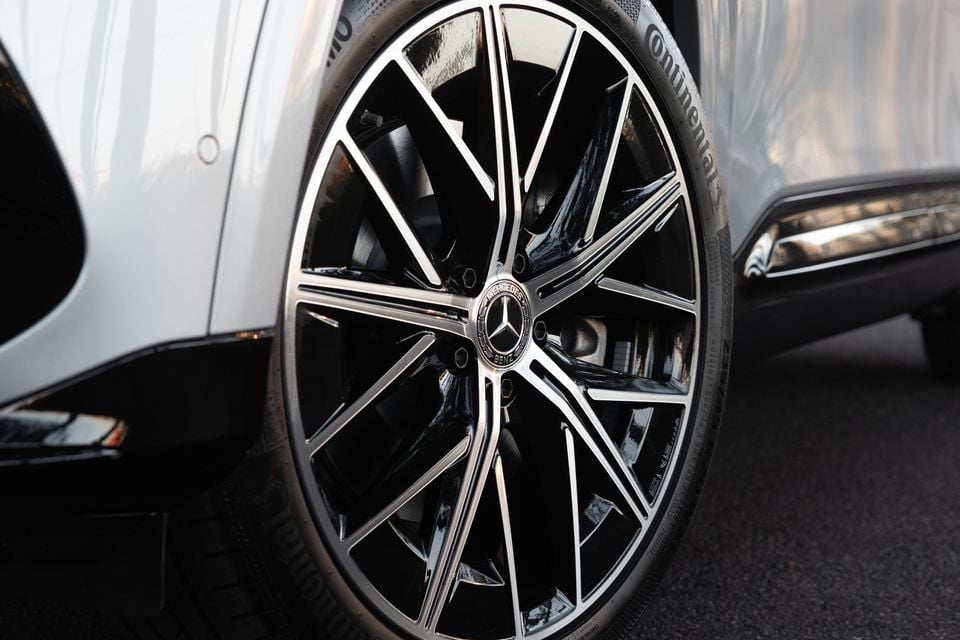
We spend a lot of time in the development of a tyre to make it suit that vehicle. The characteristics of the tyre are matched to that car, and I can talk a lot about OE-designed tyres versus non-OE tyres. If I talk about a Mercedes... so, an MO-marked tyre on a Mercedes is matched to that model.
The engine management system, the braking systems, all of the handling systems, are designed to work with that tyre. You put a non-marked tyre onto that car, you've now got a mismatch between the digital system versus the mechanical system in terms of the tyre. That tyre doesn't perform [with] the same characteristics. It's similar, but it's not equal to an OE tyre.
When you're talking about the five biggest manufacturers in China, we work closely with them to make sure that the tyres that we put onto those cars are matched to the characteristics that they want in terms of rolling resistance – in performance, in handling, and so on.
And every car manufacturer has got a different level of requirements that they have. Some have a higher focus on sustainability and rolling resistance. Some have, if you go to an AMG Mercedes, for instance, performance – in terms of handling and braking – has got different characteristics once again.
There's a priority on that, so it does come down to what I said before as a general tyre line, where the priority is for A, B, and C. That's very similar to an OE in their development. They're asking us to develop tyres that suit their requirements, not the general requirements of the overall market looking for a replacement tyre.
If somebody has a Mercedes-Benz and they go into their local tyre shop and see two tyres from Continental that are the same product, the same size, the same load rating – but one of them is marked for Mercedes and one of them isn't, and one is cheaper, is there going to be much difference between those two tyres?
Mitch Golledge: In terms of the performance, one is matched to the car, and one is a replacement. So, it's like saying you've got a specific tyre versus a general tyre. Yeah, it'll still perform, but in extreme conditions the OE tyre will always perform better. It's designed to match that car, especially when you talk about performance vehicles.
There's been a lot of chatter recently – particularly coming out of California – about tyre emissions, and we're seeing that being written into some legislation coming out of the European Union.
How is your company responding to that, and do you think Australia could be doing more to potentially regulate against tyre emissions like microplastics that are a reality of tyre wear?
Mitch Golledge: So, you're probably talking more specifically about Euro 7, which is abrasion standards, which [are coming in] 2028. Our plans will adjust and manufacture to the relevant standards in each of the countries that we sell tyres. So, for us, it's not a problem. And the 19 plants I spoke about earlier are going to produce tyres that are available to be sold throughout the world. It's just that we comply to the relevant standard in each of the jurisdictions that we're selling.
We produce tyres that are 250 grams in weight, up to 450 kilos. So, a bicycle tyre versus an earth-moving tyre – and in terms of diameter, the smallest tyre we make… [is] a bicycle tyre, is about 622mm, [while] an earth-moving tyre is 2.1 metres in diameter.
So it's a hard portfolio, but we spend a lot of time… testing our tyres to ensure that they perform in the right conditions for the right consumer in all of those different variants. We've got lots of proving grounds to test not only summer tyres but all-season tyres and winter tyres, depending on where in the world you are.
And the stat that I love best, that explains it and puts it in the most simplest of forms for people to understand: we drive around the circumference of the Earth 5000 times every year, testing tyres to make sure that they're suitable for consumers to drive on.
That's a commitment that premium tyre manufacturers and Continental makes to ensure that we've got good tyres – so that you can turn the traction control off and we're comfortable that the tyres will perform.