




Ben Zachariah
2026 Kia Tasman X-Pro review: Long-term conclusion
The Kia Tasman caused quite a stir when it arrived on the scene, but what's it like to really live with? We spent several months with one to find out.
5 Hours Ago
The Kia Tasman caused quite a stir when it arrived on the scene, but what's it like to really live with? We spent several months with one to find out.
Road Test Editor
Road Test Editor
Road Test Editor
Road Test Editor
If this is the car for you, we’ll compare offers from trusted dealers, handle the back and forth and manage your purchase from enquiry to delivery.
There was much anticipation when Kia first announced it was bringing a proper ute to market, and there’s no doubt the Tasman made a splash when it finally landed after great fanfare in mid-2025.
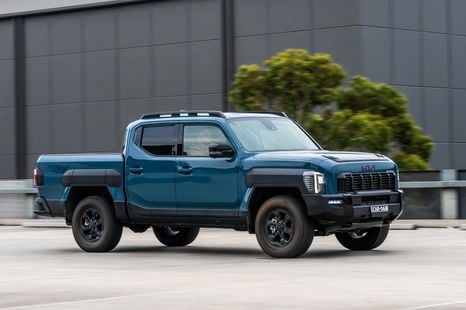
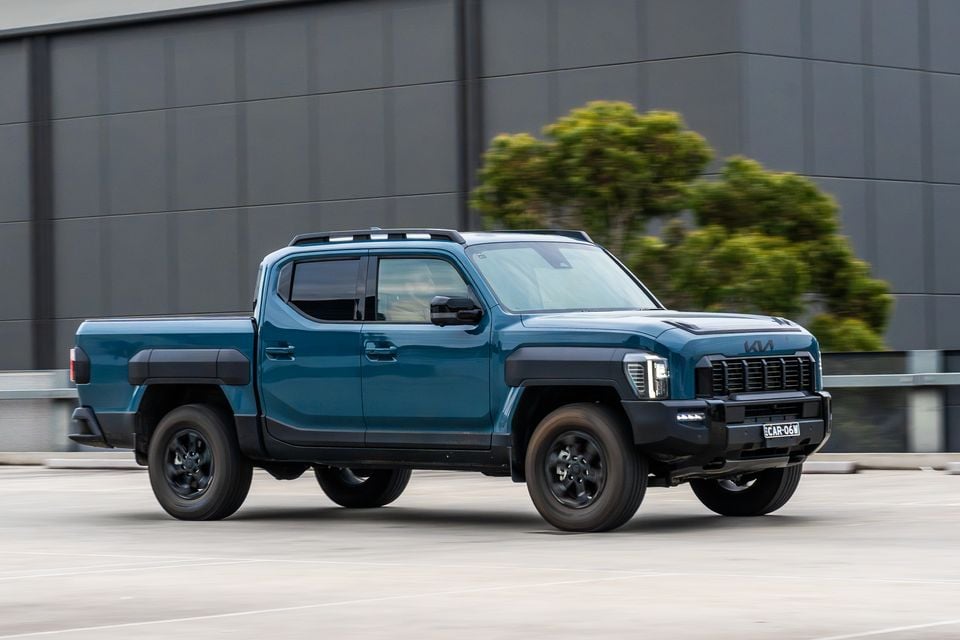
Plenty has been written about the Tasman’s looks since it first debuted in late 2024, and while nobody will argue that it’s the greatest design in automotive history, I think a lot of the criticisms levelled at Kia have been taken to the extreme.
That's not to say some of those criticisms were without merit, but it did feel like there was a bit of a pile-on. Which made me wonder: is this the ute for the contrarian? The person who likes to go against the grain; who gets into their vehicle each morning with a quiet satisfaction, knowing they have something that everyone is missing out on?
The old saying about judging a book by its cover feels particularly relevant here, so we decided to adopt a Kia Tasman as a long-term test vehicle to see if there's more to it besides its controversial dust jacket. As this is the conclusion, you can read our introduction by clicking here.
We’ve reviewed the Kia Tasman a handful of times in the past, across a variety of environments, but there’s something to be said for living with a vehicle – because that’s arguably where you learn the most.
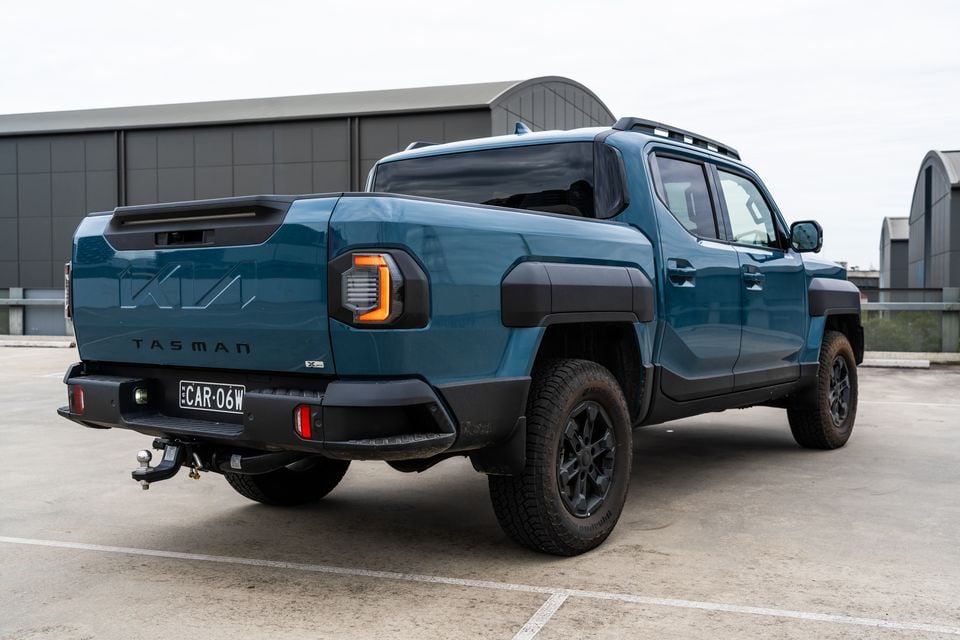
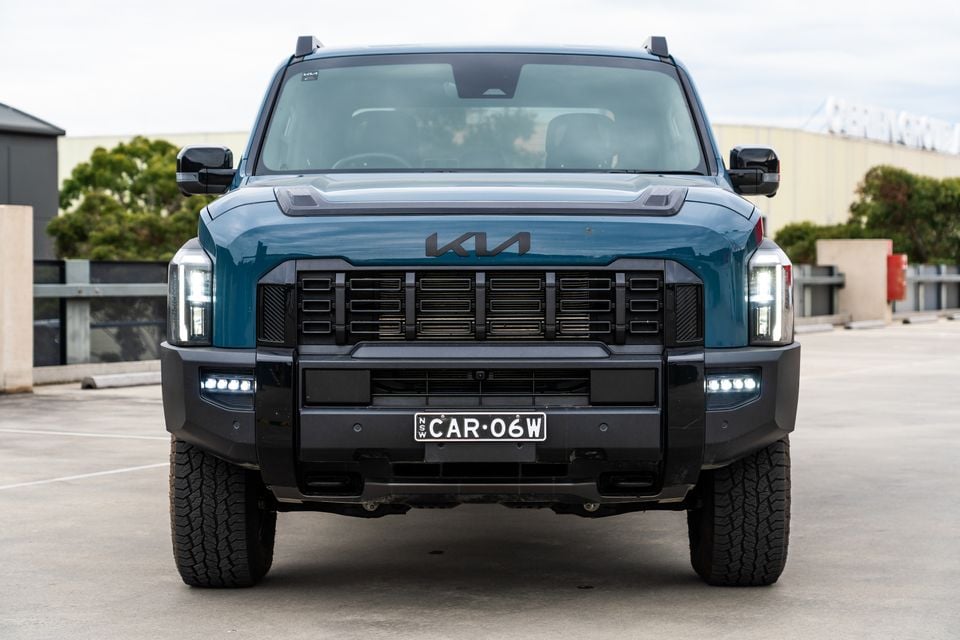
Spending a few months living with the Tasman was particularly worthwhile, because seeing it every day in your driveway changes the way you see it. That initial shock fades, and then you start noticing it for what it really is: a quasi-military-inspired square design created to avoid fading into a sea of HiLuxes, Rangers, and Chinese utes flooding the market.
It’s by no means my favourite design, but I’m not as offended by its looks as others appear to be. Regardless, I’ll be interested to see what kind of styling changes Kia makes in the coming years, because after getting to know the Tasman, it’s clear the vehicle would suit many Aussie families.
The majority of our time with the Kia was spent commuting – travelling through suburbia, along freeways, and battling city traffic – and doing airport runs between launch events. And though it wasn’t a comprehensive test of its off-road abilities, we did get a chance to hit some trails before we handed back the keys.
If you’re willing, drop your preconceived notions about its design, and come with us as we conclude our long-term review of the Tasman.
The Kia Tasman starts at just over $38,000 before on-road costs for the single-cab/chassis model with two-wheel drive, while the four-wheel drive Tasman X-Pro pickup bookends the range at almost $75,000 before on-roads.
| Model | Price before on-road costs |
|---|---|
| 2026 Kia Tasman S 4×2 single-cab/chassis | $38,010 |
| 2026 Kia Tasman S 4×2 dual-cab pickup | $42,990 |
| 2026 Kia Tasman S 4×4 single-cab/chassis | $45,010 |
| 2026 Kia Tasman S 4×4 dual-cab/chassis | $48,240 |
| 2026 Kia Tasman SX 4×4 single-cab/chassis | $49,510 |
| 2026 Kia Tasman S 4×4 dual-cab pickup | $49,990 |
| 2026 Kia Tasman SX 4×4 dual-cab/chassis | $52,740 |
| 2026 Kia Tasman SX 4×4 dual-cab pickup | $54,490 |
| 2026 Kia Tasman SX+ 4×4 dual-cab pickup | $62,390 |
| 2026 Kia Tasman X-Line 4×4 dual-cab pickup | $67,990 |
| 2026 Kia Tasman X-Pro 4×4 dual-cab pickup | $74,990 |
It's worth noting that these prices seem to be more of a guide, with plenty of deals available at dealer level.
However, at these list prices, the Tasman has a lot of tough competition. The Ford Ranger Wildtrak is priced from $75,090 plus ORCs, and comes with a lot of features, arguably less controversial looks, and a 3.0-litre turbo-diesel V6 to boot. There's also the Mitsubishi Triton GSR at $65,590 plus ORCs, and the Toyota HiLux Rugged X for $71,990 plus ORCs.
One of the most interesting developments comes from GWM. The company recently released a Cannon Alpha dual-cab with a 3.0-litre turbo-diesel four-cylinder engine, offering 170kW/620Nm, and excellent fuel economy – with the well-equipped Vanta flagship priced at $63,990 drive-away.
To see how the Kia Tasman lines up against the competition, check out our comparison tool
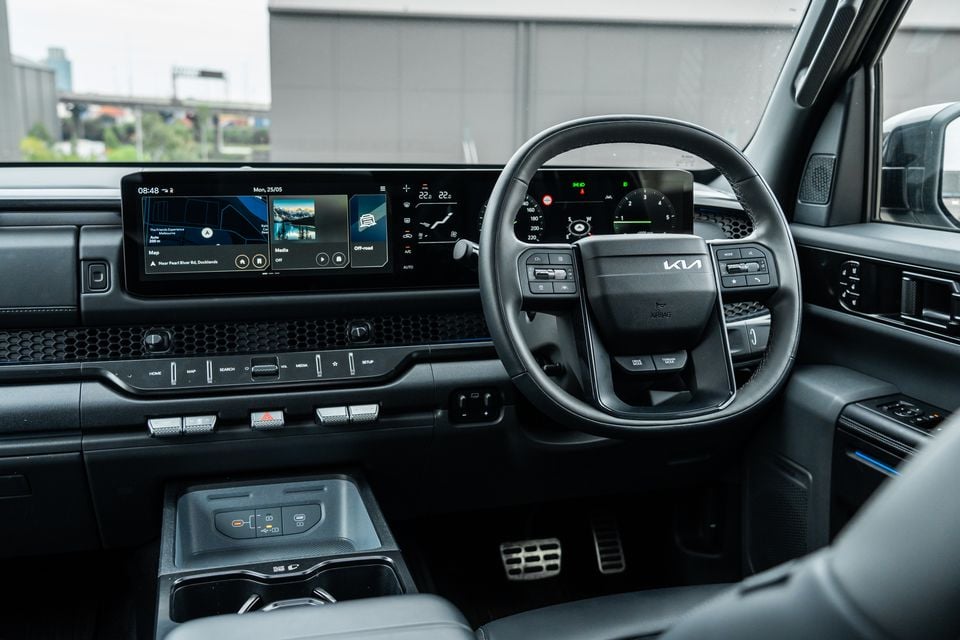
We touched on this in the introduction, but the cabin of the Kia Tasman is particularly impressive.
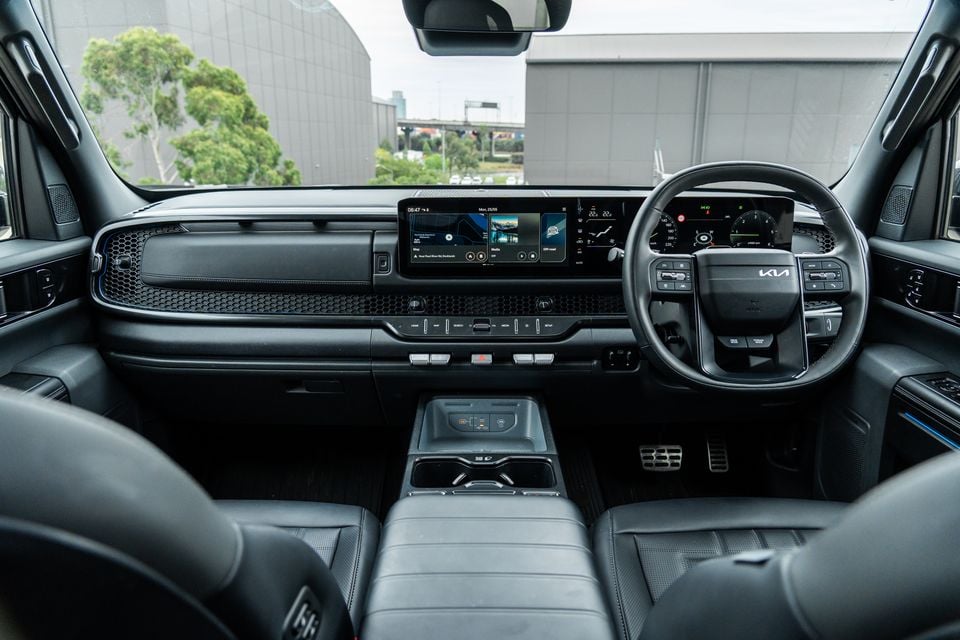
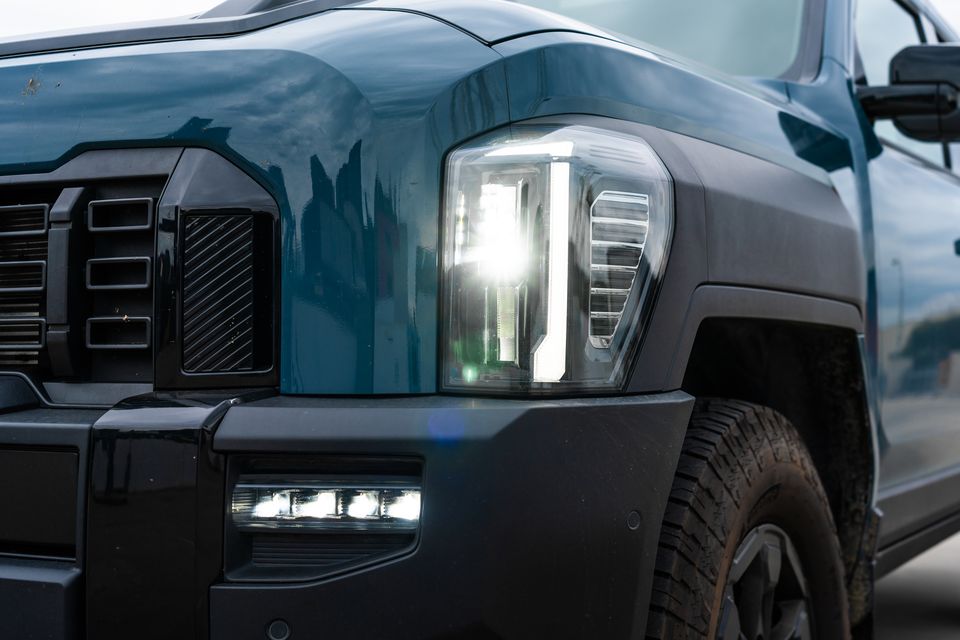
It’s clear this ute hasn’t been designed to be used in the mines of Western Australia or for mustering in Queensland’s outback. That isn’t to say it’s not well built, because it certainly has a robust quality to it, but Kia has opted for a premium interior feel – particularly in this range-topping X-Pro – with soft-touch materials, artificial leather-stitched upholstery, and knurled aluminium highlights. In other words, there are no big slabs of cheap and hollow injection-moulded plastic.
In fact, it says a lot that the interior of the Tasman is very similar to the Kia Telluride – the large range-topping SUV sold in the US, related to the Hyundai Palisade. Kia positions the Telluride as its premium product for North America, and there are clear parallels with the Tasman.
In some ways, the Tasman has a more interesting dashboard design, with the vents integrated into the honeycomb pattern that extends the full width of the cabin.
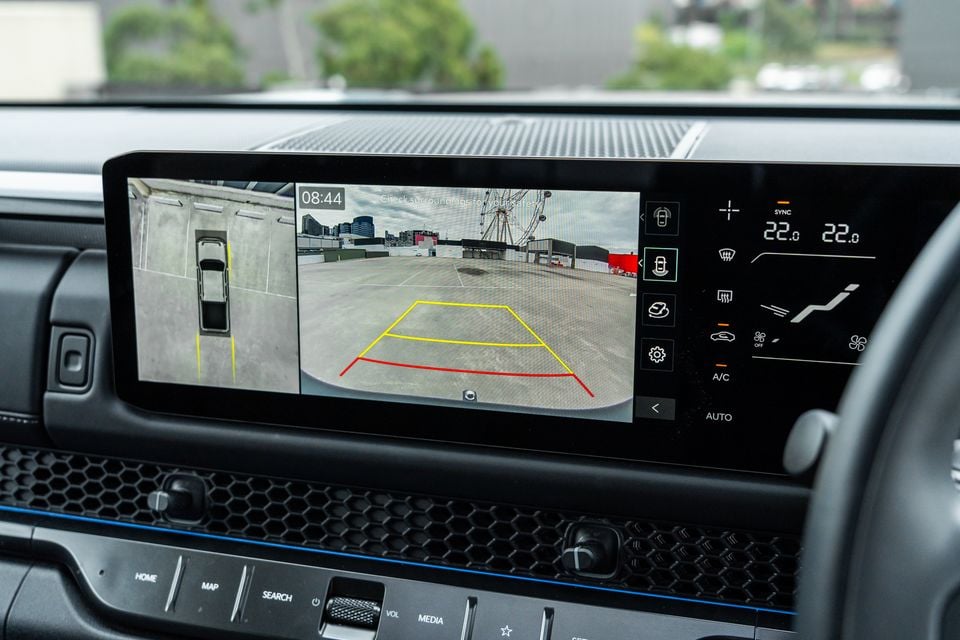
Most of the car’s functions are handled through the infotainment screen, which continues across to the digital instrument cluster. Between them is a small screen for climate control functions, and though it's appreciated, the panel is somewhat obscured by the steering wheel. But there are thankfully physical buttons for the dual-zone climate temperatures and the fan, located below the physical infotainment shortcut buttons.
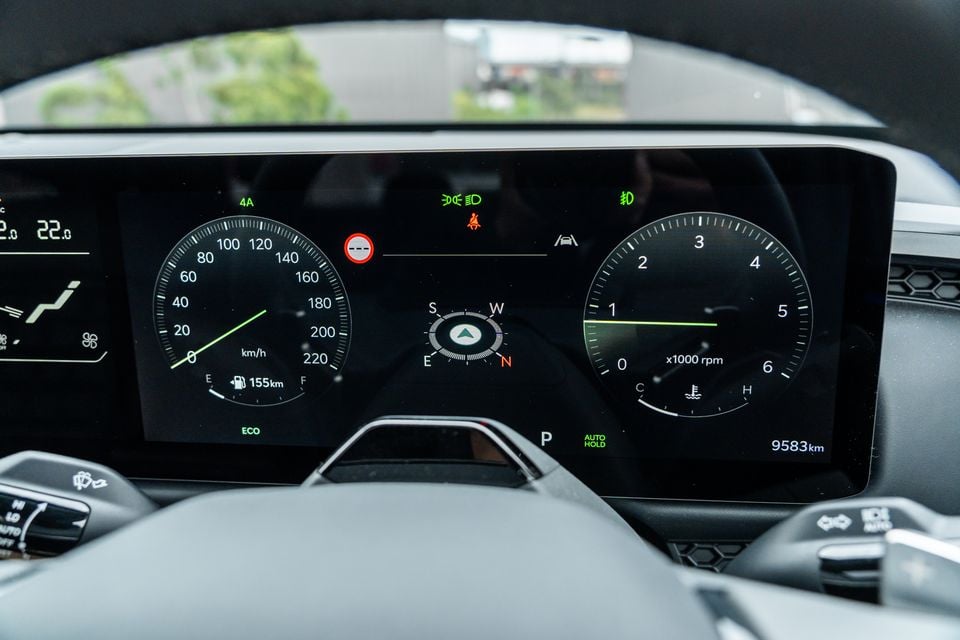
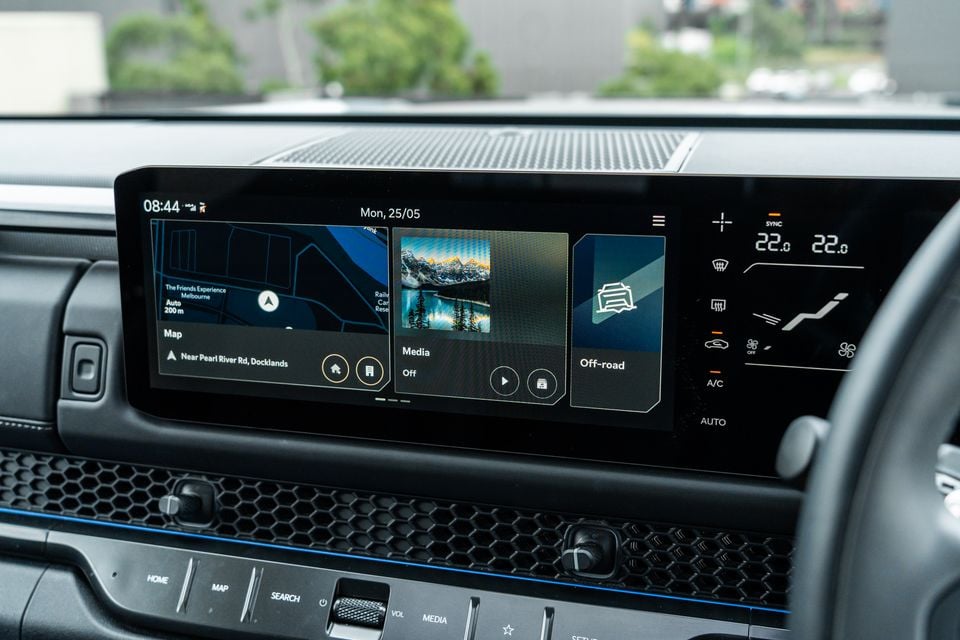
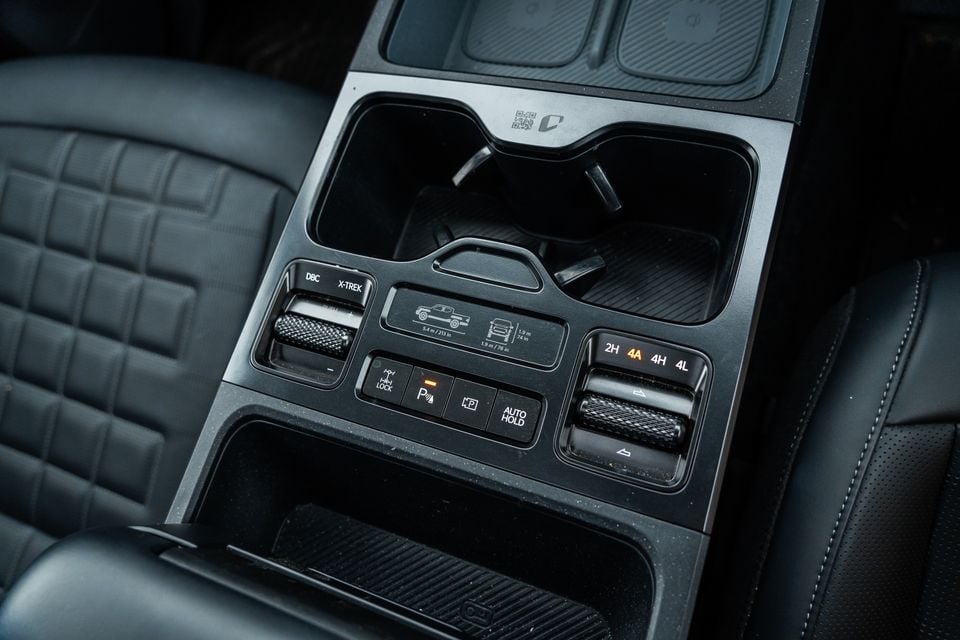
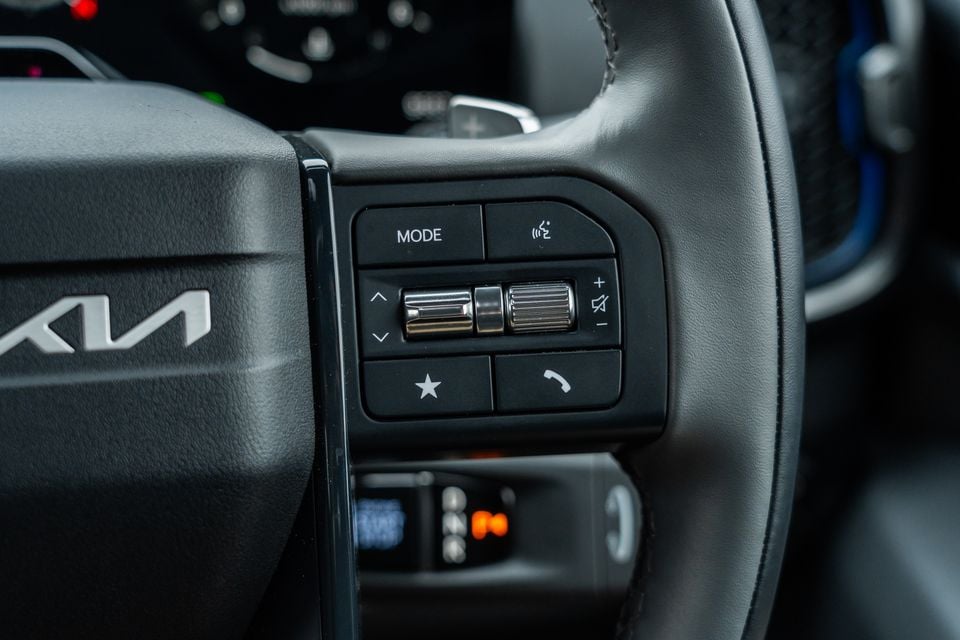
There are also buttons for the seat heating and ventilation located on the door, while the off-road controls are on the centre console – with the exception of the driving and terrain mode selectors on the steering wheel.
Even though this is a dual-cab off-road ute, Kia hasn’t skimped on the screens. But there was obviously a conscious decision to prioritise physical controls and buck the money-saving trend of making everything go through the touchscreen.
Then there’s the fact the buttons themselves are high-quality, with a satisfying action upon use. With the exception of the volume thumb wheel, the infotainment shortcut panel is haptic, but it suits it well. The aluminium climate buttons with knurling are especially nice to use, as are the aluminium pieces on the steering wheel.
The theme continues with the inside door handles, which are brushed aluminium and knurled, and enjoyable to work with. They also highlight just how lazy most other automakers are when it comes to touchpoints like door handles.
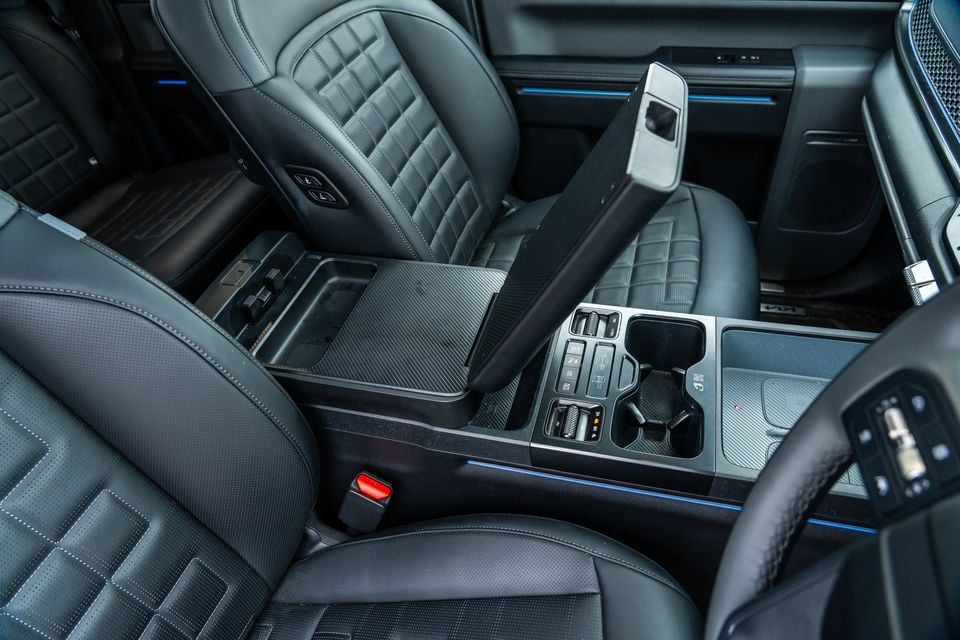
There’s the typical drive selector nubbin sticking out from the four o’clock position of the steering column, and though it’s not my favourite, it’s easy to use and not even close to being the worst out there. Opt for an entry-level grade, and you’ll get a more traditional T-bar shifter.
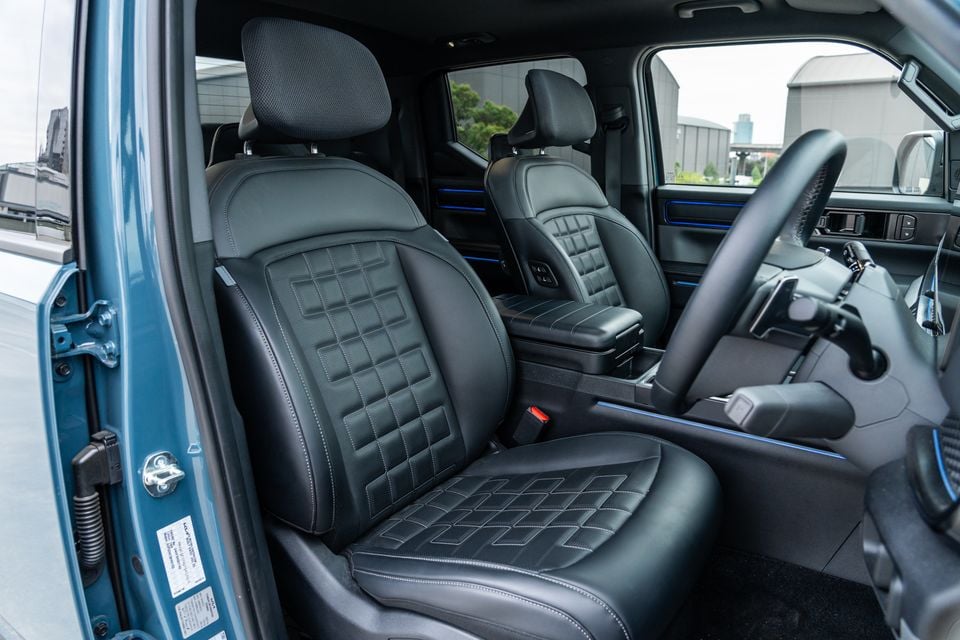
I found the box-quilted leather-trimmed seats to be very good, too. The shape of the front seats doesn’t look like anything to write home about, yet they fit well and have good padding, while still offering some lateral support. I alluded to it last time, but these mesh head restraints are almost certainly the best I’ve experienced in any car. It looks like Kia no longer offers the option of a brown leather interior, which is a bit of a shame.
Jump into the back, and you’re greeted with tiltable seats that are more akin to a family SUV than a commercial ute, which is to say the bench is sculpted and padded – with ample space for adult legs, and thoughtful storage buckets underneath.
However, there are thick C-pillars, with the windows of the back doors being further ahead of where you sit.
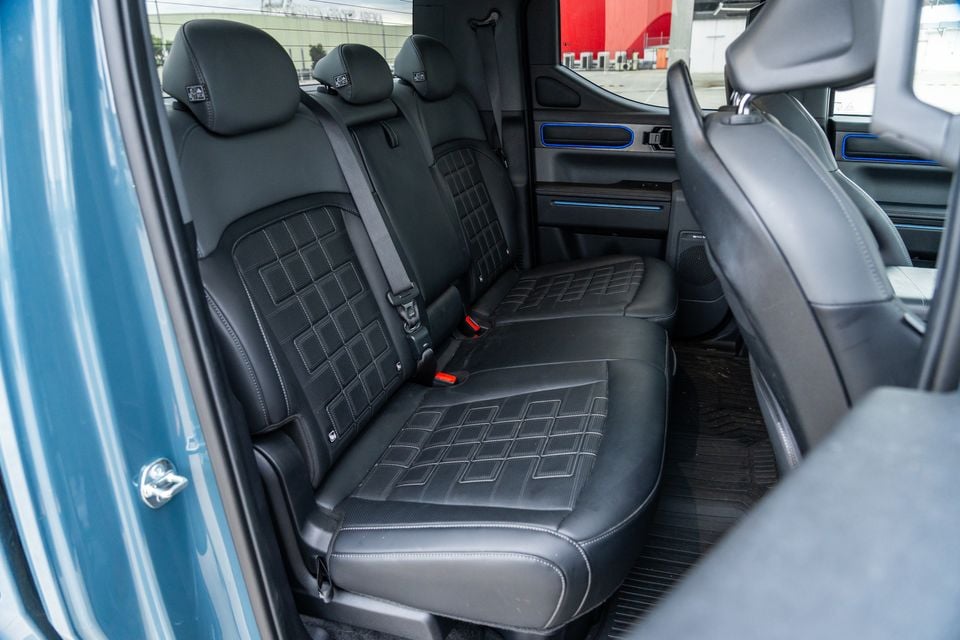
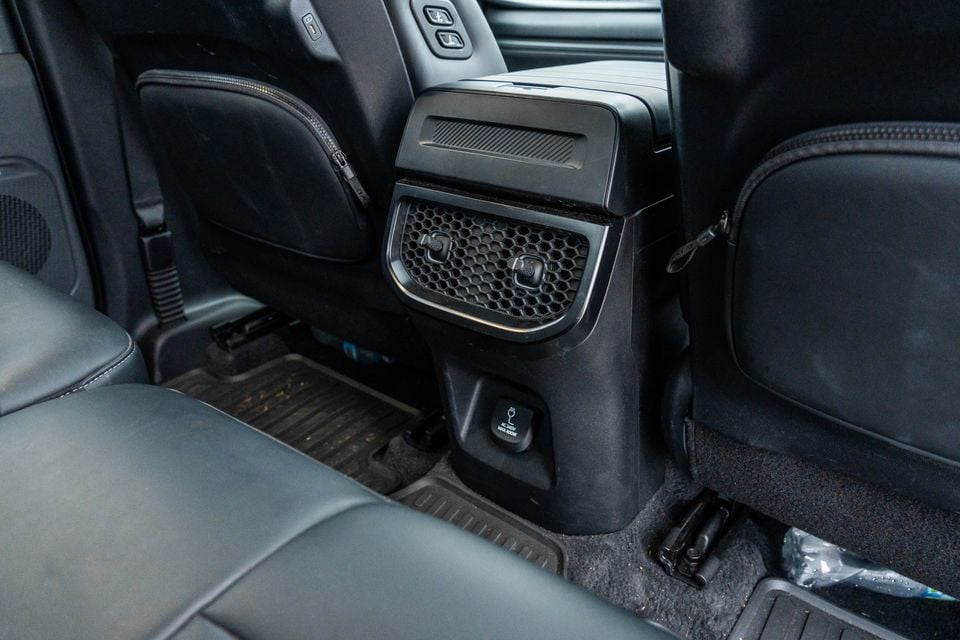
In the X-Pro, Kia gives second-row passengers air vents, USB-C ports, ISOFIX child seat anchors, and a 240-volt household power outlet, along with zip-up storage that is reminiscent of Rip Curl pencil cases.
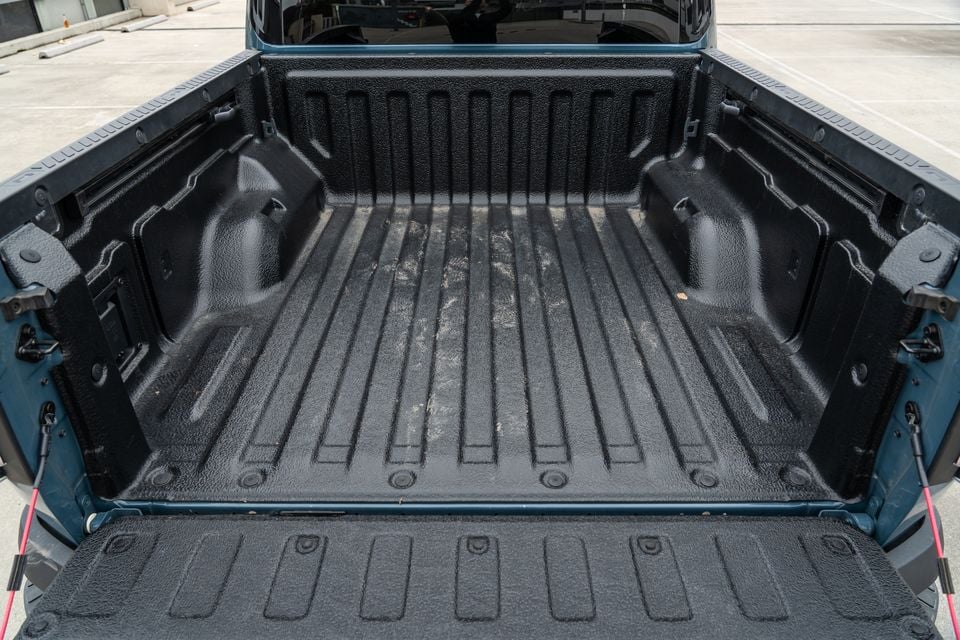
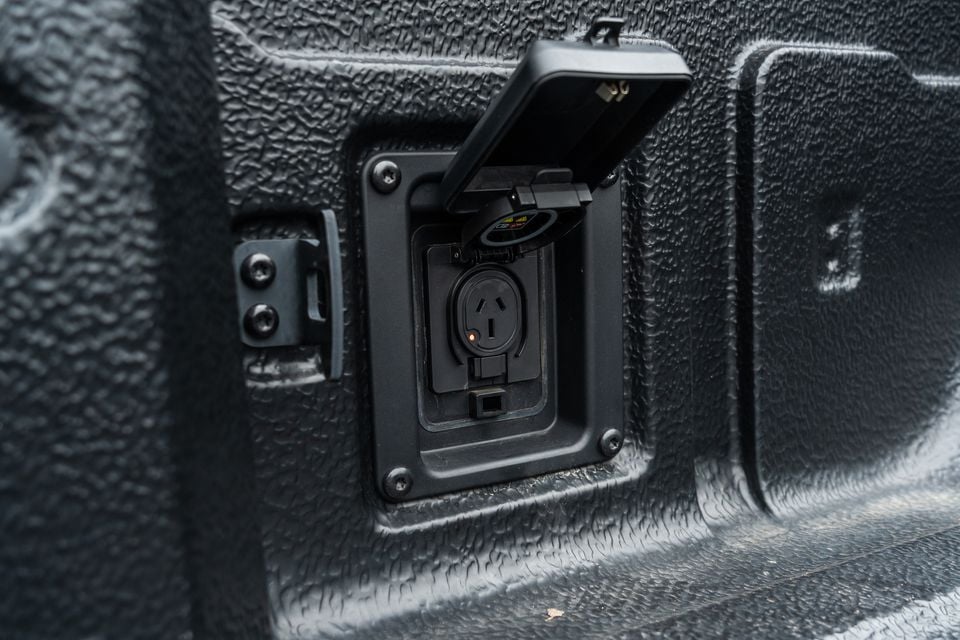
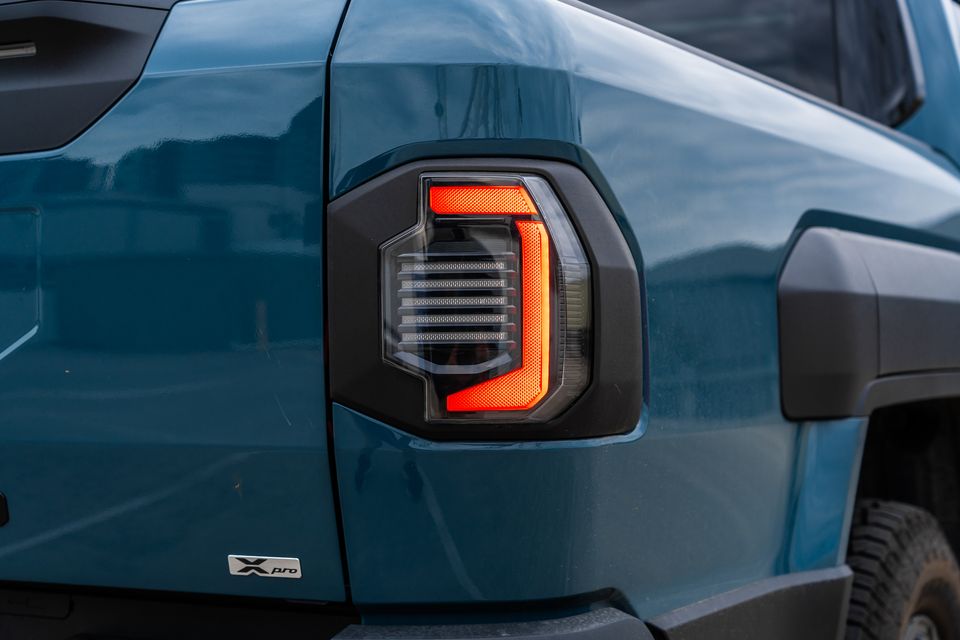
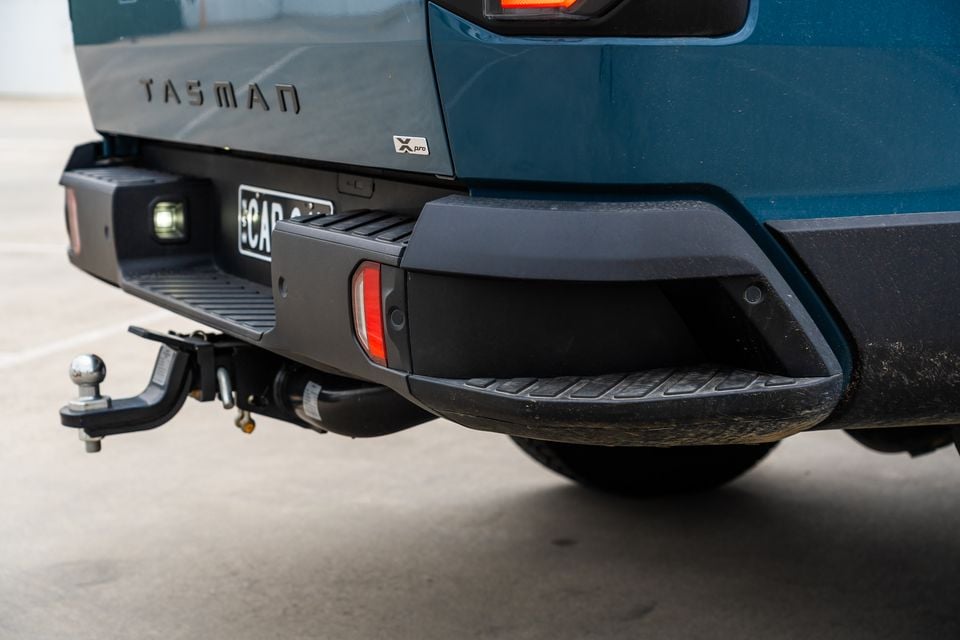
The tub gets a liner with the X-Pro, along with adjustable tie-down points on a rail system, fixed tie-downs, a tailgate with ‘lift assistance’, and another 240V electrical outlet for powering tools, a fridge, or other camping gear. Kia has included a large step at the rear, and two smaller steps at each corner of the rear bumper bar for easier access.
| Dimensions | Kia Tasman X-Pro |
|---|---|
| Length | 5410mm |
| Width | 1930mm |
| Height | 1920mm |
| Wheelbase | 3270mm |
| Tub length | 1512mm |
| Tub width | 1572mm |
| Tub depth | 540mm |
| Tub capacity (VDA) | 1173L |
To see how the Kia Tasman lines up against the competition, check out our comparison tool
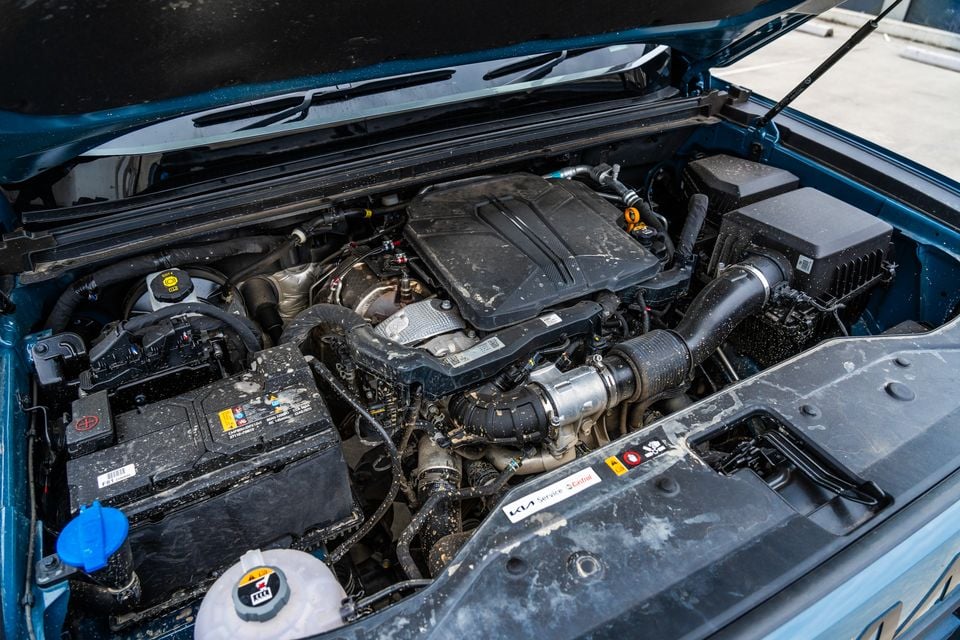
The Kia Tasman is powered by a 2.2-litre turbo-diesel four-cylinder engine putting out 154kW of power and 440Nm of torque, mated to an eight-speed automatic transmission as standard, and with both two- and four-wheel drive available. For those venturing off-road, the Tasman S 4x4 gets a mechanical locking differential at the rear axle, which gets upgraded to an electronic diff lock in the X-Pro.
| Specifications | Kia Tasman X-Pro |
|---|---|
| Engine | 2.2L 4cyl turbo-diesel |
| Power | 154kW |
| Torque | 440Nm |
| Transmission | 8-speed auto |
| Drive type | 4WD |
| Fuel economy (claimed) | 8.1L/100km |
| CO2 emissions (claimed) | 214g/km |
| Fuel tank | 80L |
| Weight | 2237kg |
| Payload | 1013kg |
| Braked towing capacity | 3500kg |
| Gross vehicle mass (GVM) | 3250kg |
| Gross combination mass (GCM) | 6200kg |
Kia claims 8.1L/100km for the combined fuel cycle, though we managed around 8.8L/100km during our extended test.
To see how the Kia Tasman lines up against the competition, check out our comparison tool
Our time with the Kia Tasman proved it to be a useful and comfortable family car – albeit a little larger than our requirements.
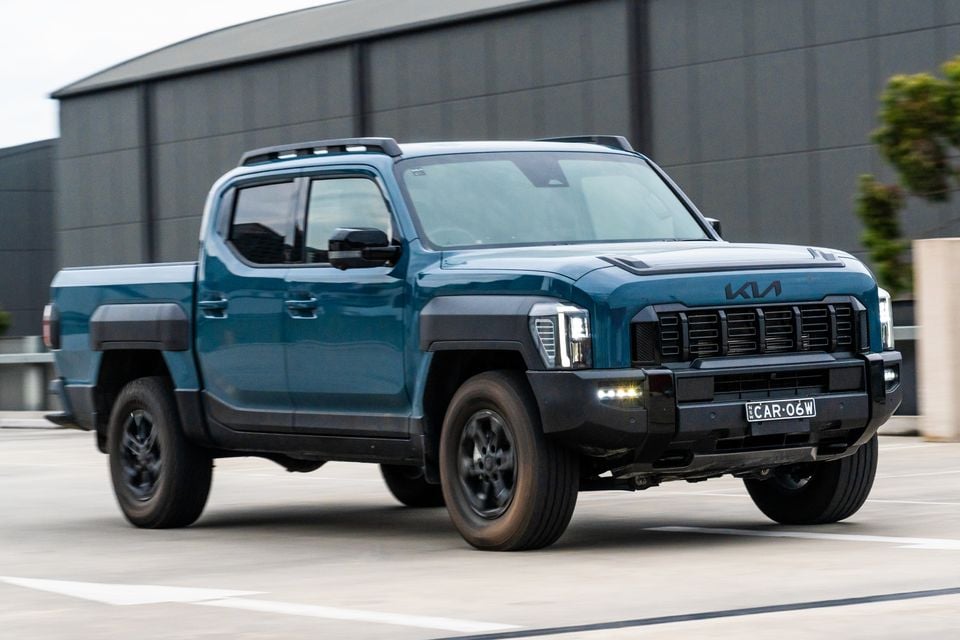
Stepping up into the Tasman, it’s clear this is a big ute. Not at the level of American pickups, but still noticeably more spacious inside, and taking up more room in the lane than segment competitors. That’s nothing new, with several manufacturers pushing the dimensions of their dual-cabs as new models come to market.
My initial impression of the Kia was that it’s pretty soft on the road, and while that certainly is the case, there seems to be reasoning behind this – which we’ll get to in a moment.
While you’re aware of the Tasman’s size while driving, the driving inputs required are all easy. The steering is well weighted, as are the pedals, and the chassis responds well to commands, despite there being a bit of lag as the turbo-diesel comes on song.
Kia appears to have tried to counteract that with low gearing for the eight-speed automatic, allowing the vehicle to shift through ratios and take advantage of its torque band, and there's some eagerness to downshift when you sink the boot in. Overall, the powertrain is eager and willing, with plenty enough power to get most tasks done.
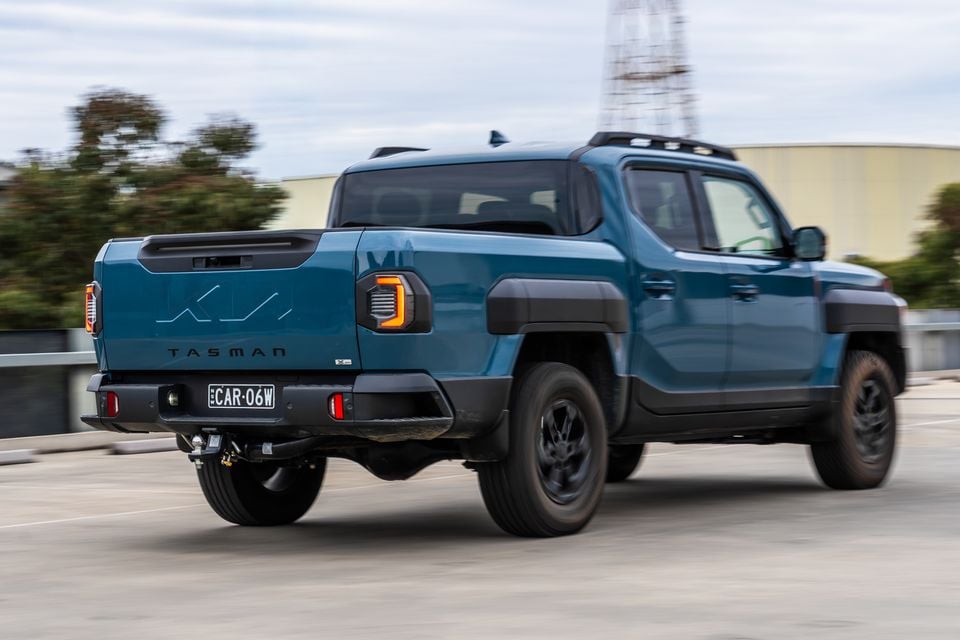
Along with its looks, there was quite a bit of criticism about the Tasman’s engine when it was announced. But it’s roughly on par with the now-defunct turbo-diesel V8 of the LandCruiser 70 Series, and the newer 2.8-litre turbo-diesel in the 70 and the HiLux.
Having said that, there’s nothing special or noteworthy about the engine, other than it has a proven history across Kia and Hyundai products, so it’s not a complete unknown. So, while its numbers are perfectly acceptable for a family SUV, those playing in the dual-cab space often prefer larger engines that are less stressed.
Other than being a little loud, we never had any complaints about the powertrain. And given the softness of the chassis setup, scaling up its performance could make for a hairy driving experience. Sure, it’s not exciting, but Kia has found a good balance here.
One thing we particularly liked was the ability to switch to 4A, which engages part-time four-wheel drive when it starts raining, or you’re driving on gravel. The Ford Ranger V6 (and the related Volkswagen Amarok V6) as well as the Mitsubishi Triton and Nissan Navara twins also offer this handy function, but it’s not as common as you’d think in this segment.
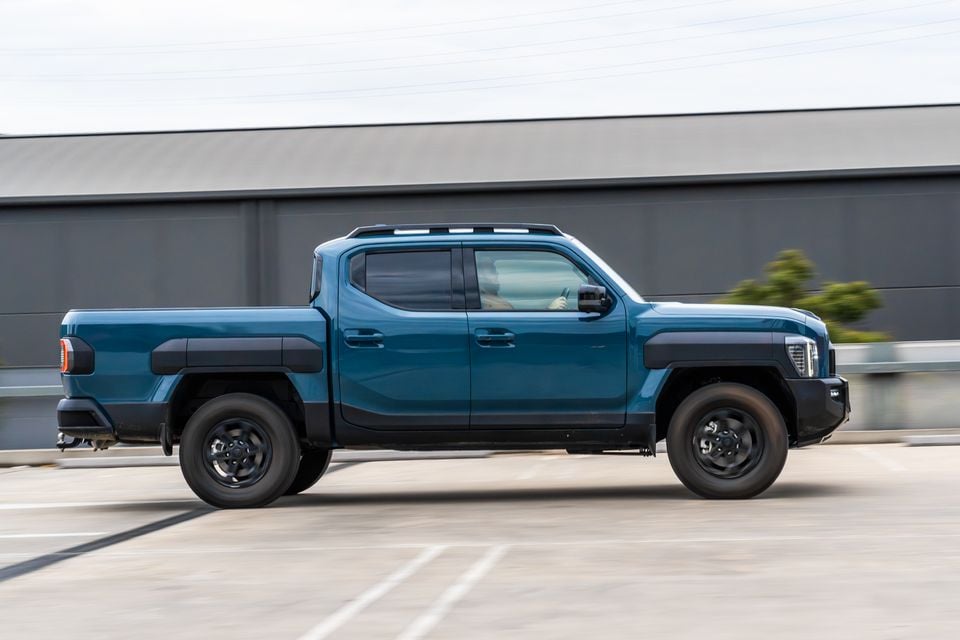
Surprisingly, the Tasman gets around a corner pretty well, helped by the Hankook all-terrain tyres on the X-Pro. It’s not about to scare any Porsches, but load up the suspension as you come into a corner, and the Tasman will get through it with relative confidence, despite there being a bit of weight behind it.
Ride comfort is among the best in its class, soaking up bumps and potholes, even without a load in the back. There is a minor shudder that echoes through the ladder-frame chassis when it encounters a larger shunt; however, it is one of the better off-road utes we’ve driven in recent memory.
The big Kia's advanced driver-assistance system (ADAS) is okay… until it’s not. The ute doesn’t like you moving over to allow motorcycles to filter past; it doesn’t like you spending more than a second or so looking at anything other than the windscreen; and the overspeed warning is overzealous and annoying. Again, it’s not the worst I’ve used, but it’s a long way from the best, and it put a damper on my time with the Tasman.
Some of the ADAS settings can be disabled by pressing and holding a button on the steering wheel, but having to do that every single time was also a drag.
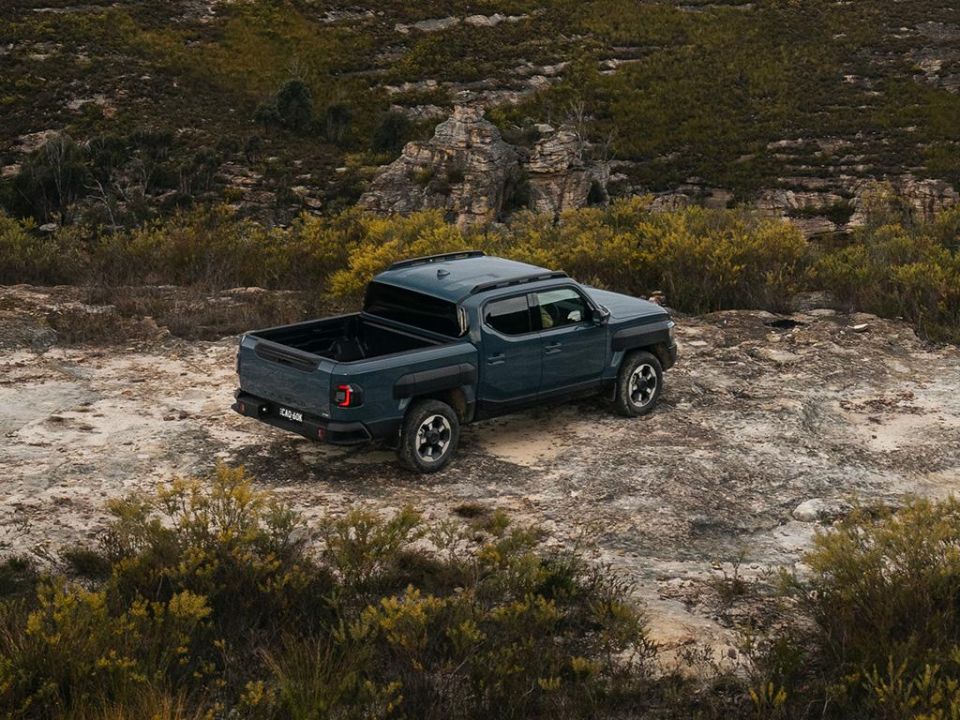
Thankfully, none of that gaffe intrudes when you pull off the blacktop. While our off-road testing didn't include extended hardcore trekking, heading away from the beaten path to stretch its legs off-road confirmed what we’d suspected: the Kia Tasman’s suspension has been designed to dominate in the bush.
That softness means greater wheel articulation and traction, allowing you to get through some challenging tracks straight out of the box. The Tasman was designed with Australia in mind and tested extensively here, and CarExpert has spoken to some of the drivers responsible for its development prior to its launch, so we know Kia put a lot of effort into ensuring it was capable off-road.
There are also terrain modes and a locking rear differential for increased grip, as well as downhill speed control and X-Trek – an advanced off-road cruise control system that's particularly helpful if you’re driving over a bumpy surface and want to avoid stabbing the throttle.
| Off-road dimensions | Kia Tasman X-Pro |
|---|---|
| Ground clearance | 252mm |
| Approach angle | 32.2 degrees |
| Departure angle | 26.2 degrees |
| Ramp breakover angle | 25.8 degrees |
| Wading depth | 800mm |
To see how the Kia Tasman lines up against the competition, check out our comparison tool
Though not on the same level as some of its Chinese competitors, the Tasman doesn't feel as sparse as some of the entry-level versions of utes in this segment. Step up to the X-Pro, like the one we have here, and it's unlikely you'll find yourself wanting for more.
If this is the car for you, we’ll compare offers from trusted dealers, handle the back and forth and manage your purchase from enquiry to delivery.
2026 Kia Tasman S equipment highlights:
The Tasman SX adds:
The Tasman SX+ adds:
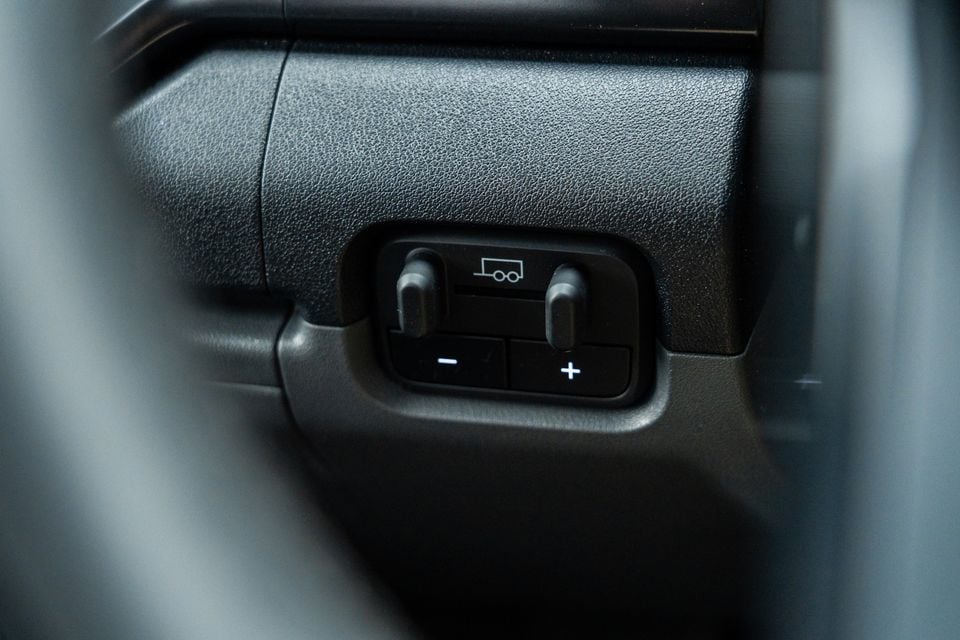
The Tasman X-Line adds:
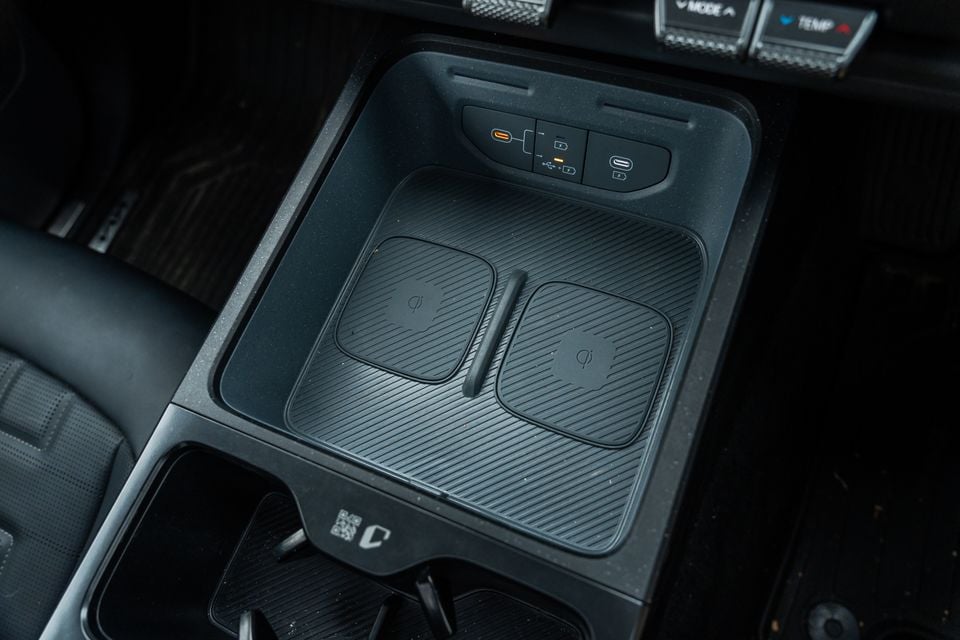
The Tasman X-Pro adds:
To see how the Kia Tasman lines up against the competition, check out our comparison tool
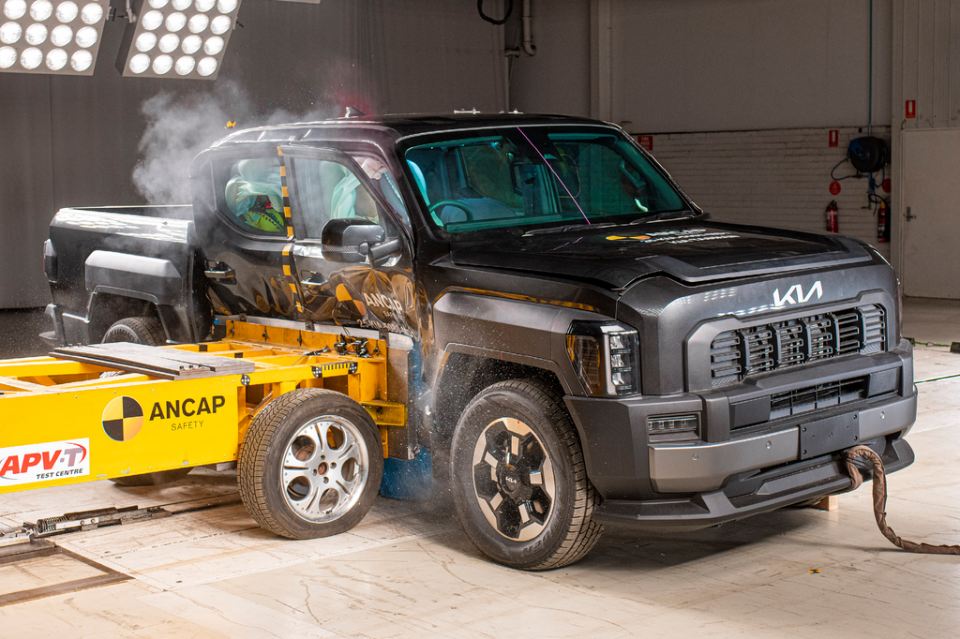
The Australasian New Car Assessment Program, better known as ANCAP, awarded the Kia Tasman a five-star safety rating – though that specifically excludes the premium X-Line and X-Pro variants, like the one we're testing here.
| Category | Kia Tasman |
|---|---|
| Adult occupant protection | 87 per cent |
| Child occupant protection | 85 per cent |
| Vulnerable road user protection | 74 per cent |
| Safety assist | 80 per cent |
According to ANCAP, the off-road bumpers on the X-Line and X-Pro affect vulnerable road users such as pedestrians.
Standard safety equipment includes:
Kia’s Highway Driving Assist 2 system and navigation-based adaptive cruise control are standard in the SX grade and above, while parking collision avoidance assist, blind-spot monitoring, and 360-degree cameras come standard with the X-Line and X-Pro.
To see how the Kia Tasman lines up against the competition, check out our comparison tool
Kia offers a seven-year, unlimited-kilometre warranty for private buyers of the Tasman – reverting to seven years and 150,000km for those using the vehicle for commercial purposes – with up to eight years of roadside assistance if serviced through Kia dealerships.
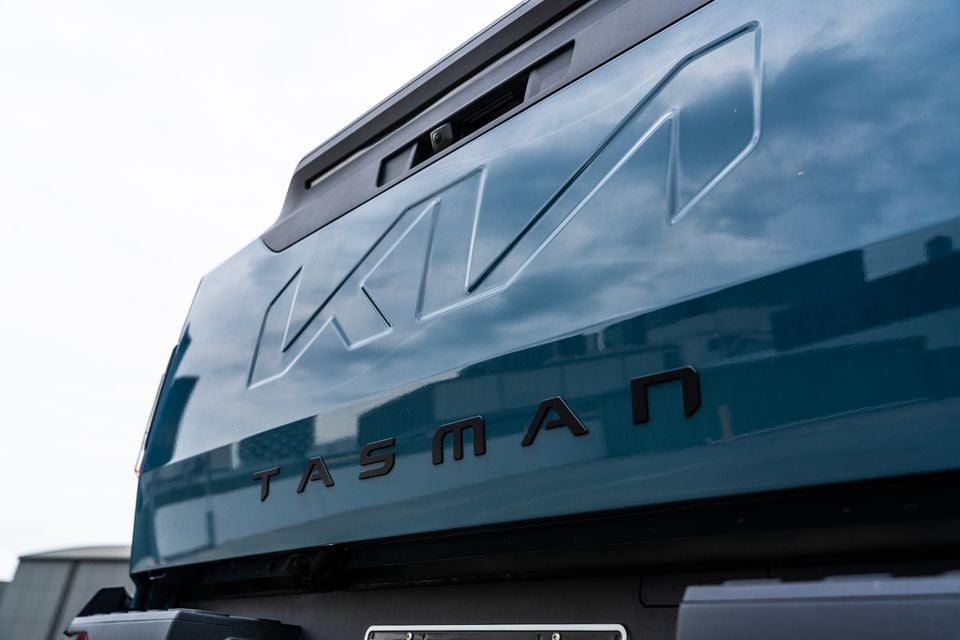
| Servicing and Warranty | Kia Tasman X-Pro |
|---|---|
| Warranty | 7 years, unlimited kilometres |
| Roadside assistance | Up to 8 years |
| Service intervals | 12 months or 15,000km |
| Capped-price servicing | 7 years or 105,000km |
| Average annual service cost | $585 |
| Total capped-price service cost | $4093 |
The Korean car giant also offers capped-price servicing for up to seven years or 105,000km, with the X-Pro costing $172 less than the rest of the Tasman 4x4 range over that period.
To see how the Kia Tasman lines up against the competition, check out our comparison tool
The more time we spent with the Kia Tasman, the more we appreciated it for what it is. And what it is, is a very capable, well-built, and comfortable dual-cab 4x4 ute.
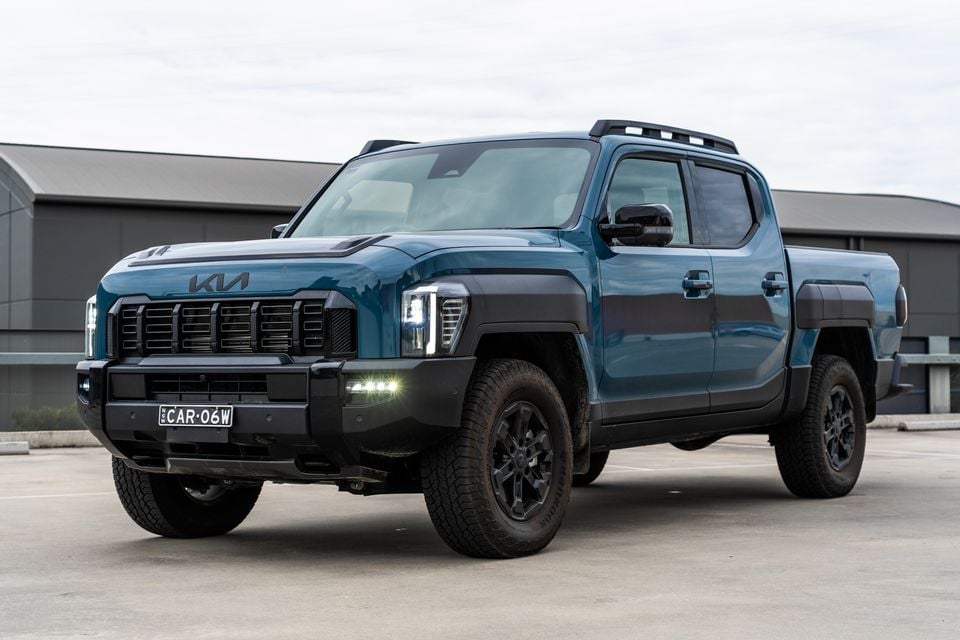
Aussies needing a dual-cab 4x4 ute that has true all-terrain capability but can still handle the duties of being the main family car should seriously consider the Tasman, given its capability, features, and SUV-like cabin.
In the X-Pro particularly, the interior is one of the best in its class. Having a fair bit in common with Kia’s range-topping Telluride SUV in the US, it doesn’t at all feel like it’s a tarted-up commercial vehicle. The quality of the materials and the design put it head and shoulders above most – if not all – competitors on sale today.
The powertrain isn’t going to win you much kudos at a Sunday barbecue, but it’s a decent engine that gets the job done. It also has a proven history, which should count for something, and falls under Kia’s long warranty – providing peace of mind for many years.
Certainly, by the end of our time with it, we’d softened to the controversial looks of the Kia Tasman. Though many won’t be able to see past its design, those who can will be rewarded with an excellent ute that accomplishes a lot – and is proof there’s more to a book than its cover.
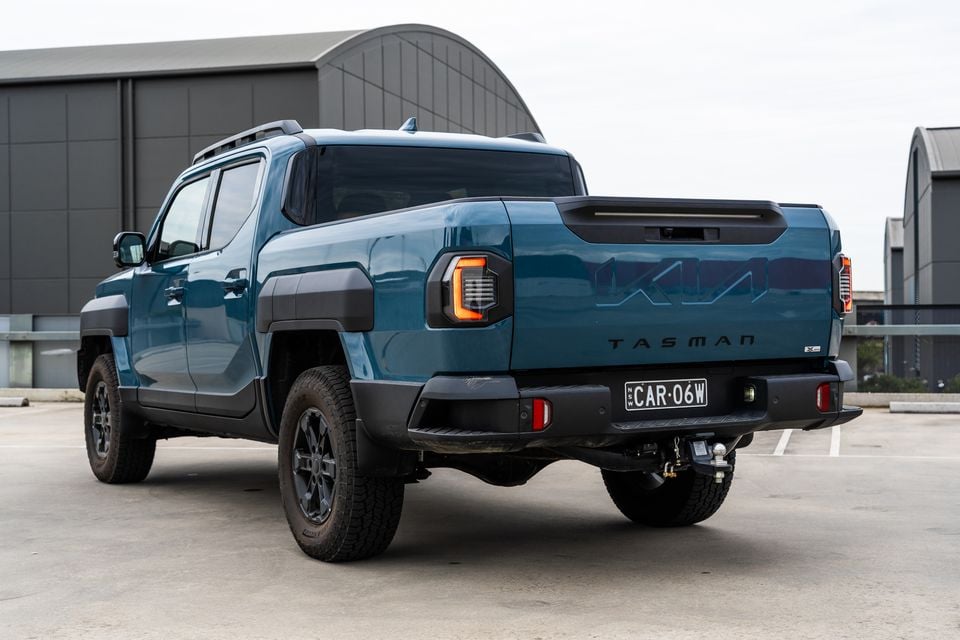
CarExpert can save you thousands on a new Kia Tasman. Click here to get a great deal.
Click the images for the full gallery
MORE: 2026 Kia Tasman X-Pro review: Long-term introduction
MORE: Explore the Kia Tasman showroom
If this is the car for you, we’ll compare offers from trusted dealers, handle the back and forth and manage your purchase from enquiry to delivery.
Quickly see how this car stacks up against its competition. Select any benchmark to see more details.
Kia Tasman
Kia Tasman Sales rolling 12-months#
*Based on VFACTS and EVC data
Looking for complete Kia Tasman price history?
Our Kia Tasman Pricing Page shows exactly how prices have changed over time.
2026
$0
2026
$0
2026
$68,218
2026
$73,986
2026
$81,196
Ben Zachariah has 20-plus years in automotive media, writing for The Age, Drive, and Wheels, and is an expert in classic car investment.
Add CarExpert as a Preferred Source on Google so your search results prioritise writing by actual experts, not AI.
Ben Zachariah
5 Hours Ago

Damion Smy
19 Hours Ago
Damion Smy
2 Days Ago
Damion Smy
2 Days Ago

William Stopford
7 Days Ago
Damion Smy
8 Days Ago
Add CarExpert as a Preferred Source on Google so your search results prioritise writing by actual experts, not AI.
# Based on VFACTS and EVC data
† Displayed prices are based on the drive-away price of the vehicle, which includes delivery charges, registration fees, number plates, and applicable road taxes, based on a Sydney location. However, prices may vary between states and territories, and additional costs such as compulsory third party (CTP) insurance, dealer delivery fees, and optional extras are not included. These prices are subject to change without notice and may not reflect current market pricing or dealer offers.
 Automotive Vehicle Spec Data & 4K images Powered by JATO Dynamics Ltd